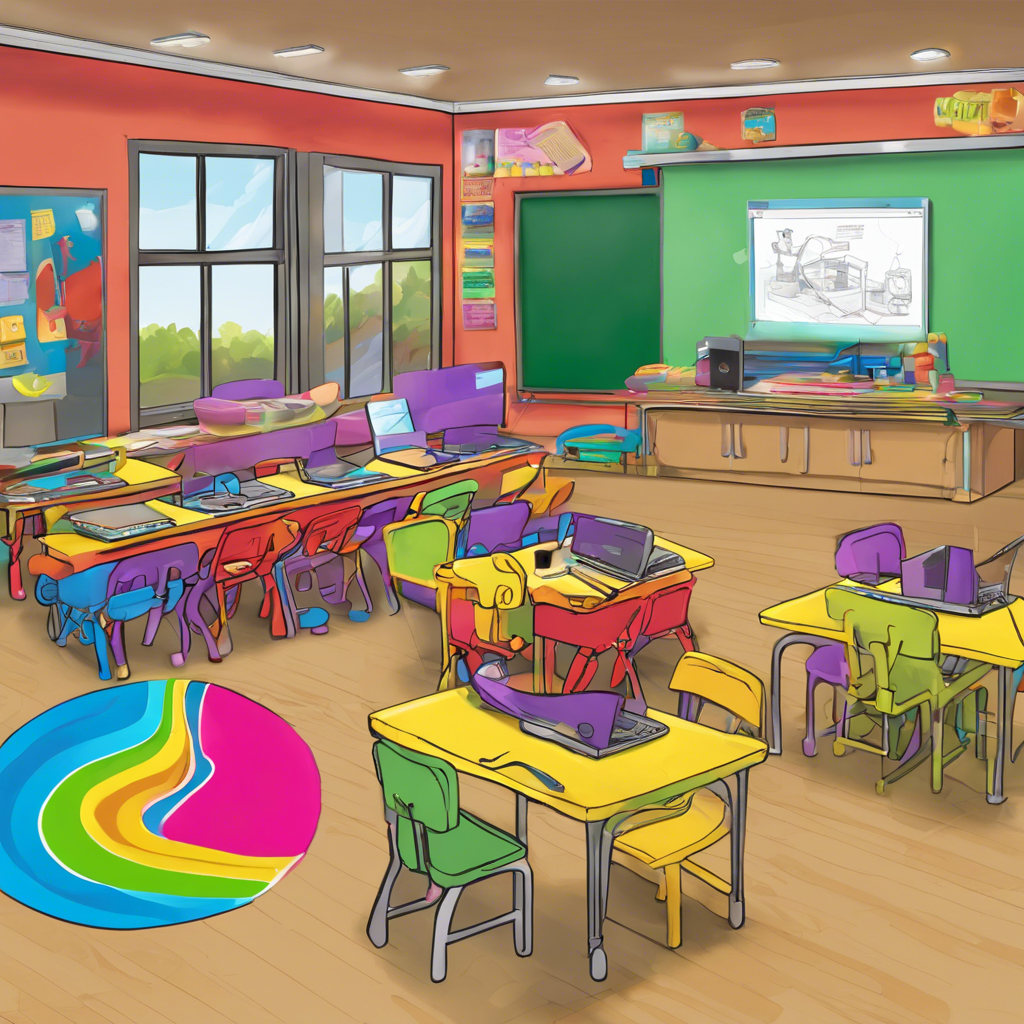
How Can Technology Be Utilized To Improve In-person Classroom Experiences?
Introduction
Technology has become a pivotal element in modern education, providing innovative tools that revolutionize in-person classroom experiences. By effectively integrating educational technology, teachers can cultivate engaging and interactive learning environments that meet the diverse needs of all students.
Enhancing Student Engagement with Interactive Learning Tools
Interactive learning tools like smartboards, audience response systems, and specialized educational software are instrumental in increasing student participation and engagement in the classroom. For example, smartboards facilitate dynamic presentations that incorporate multimedia elements, allowing students to interact directly with the material. Audience response systems provide real-time polling opportunities, empowering teachers to assess student understanding instantaneously and modify their instruction accordingly. These technologies foster a vibrant classroom environment where students are encouraged to actively participate in the learning process.
- Incorporating smartboards to deliver multimedia-rich presentations.
- Utilizing audience response systems for immediate feedback during lessons.
- Implementing educational software to create interactive learning experiences.
Transforming Student Collaboration and Communication
Educational technology significantly alters how students collaborate and communicate with peers and educators. Tools such as group messaging applications, collaborative document editing services, and project management software enable students to work together effectively, even during classroom exercises. For instance, platforms like Google Docs allow real-time collaboration, enabling students to write and edit assignments collectively. This interactive collaboration mimics real-world work environments, equipping students with essential teamwork skills needed for their future careers.
- Using group messaging applications for instant peer communication.
- Implementing collaborative tools such as Google Docs for group assignments.
- Adopting project management software to streamline teamwork and task organization.
Catering to Diverse Learning Styles with Educational Technology
Recognizing that students possess varied learning styles is essential, and technology serves as an effective tool to address these differences. Educators can provide diverse educational resources, including videos, podcasts, and interactive simulations, which cater to visual, auditory, and kinesthetic learners. For instance, a lesson about the solar system can be enriched by incorporating interactive simulations that demonstrate planetary movements, alongside explanatory videos that cover the concepts in varied formats. This multifaceted instructional strategy has proven beneficial in enhancing both engagement and understanding among students with diverse learning preferences.
- Offering a variety of multimedia resources such as instructional videos and podcasts.
- Utilizing simulations to illustrate complex scientific concepts.
- Customizing assignments to align with individual student learning preferences.
Conclusion
Embracing educational technology has the potential to greatly enhance in-person classroom experiences, leading to increased student engagement, improved collaboration, and greater inclusivity in learning. As technological tools continue to advance, their capacity to transform education will expand even further. Educators are encouraged to explore and leverage various educational technologies that align with their classroom dynamics and student needs.
Expert Quote
Dr. Richard E. Mayer, Professor of Psychology at UC Santa Barbara
The use of technology in education can enhance learning experiences by fostering active engagement, collaboration, and support for individual learning preferences, which are essential for effective education.
Mayer, R. E. (2020). Cognitive Theory of Multimedia Learning: An Overview. In The Cambridge Handbook of Multimedia Learning.
Relevant Links
Technology might be making education worse | Stanford Report
https://news.stanford.edu/stories/2023/04/technology-might-be-making-education-worseDevices in the Classroom | Derek Bok Center, Harvard University
https://bokcenter.harvard.edu/technology-and-student-distractionHow In-Person Attendance Drives Better Learning Outcomes
https://blog.polleverywhere.com/in-person-attendanceHow Important Is Technology in Education? | American University
https://soeonline.american.edu/blog/technology-in-education/Using Technology in the Classroom for Student Success | Explorance
https://explorance.com/blog/7-reasons-students-need-technology-classroom/YouTube Videos
Most popular questions

How Do The Personal Relationships Among Gods Affect Their Decisions In The Iliad?
The intricate relationships among the gods in Homer's epic poem 'The Iliad' play a crucial role in shaping their actions and decisions. These divine interactions create a complex web of fates, where each god's personal alliances and rivalries directly influence the events of the mortal world.

What Strategies Can Parents Use To Educate Their Children About Online Safety Beyond Privacy Settings?
In today's digital landscape, teaching children about online safety is essential for their protection and well-being. While privacy settings play a critical role, parents can implement various strategies to create a thorough understanding of online safety principles among their children.
What Are The Different Types Of Insulation Materials Commonly Used In Buildings, And How Do They Compare In Terms Of Thermal Resistance?
Insulation materials are vital for enhancing energy efficiency in residential and commercial buildings by minimizing heat transfer. Understanding the various insulation types can lead to better choices for thermal resistance and overall comfort.
Most recent questions
In What Ways Does The Interactivity In Video Games Influence Players' Empathy Towards Characters Compared To Characters In Films?
Video games have emerged as a significant storytelling medium, providing players with unique interaction opportunities with characters that traditional films struggle to achieve. This level of interactivity profoundly influences players' perceptions and empathy towards characters, leading to an unparalleled emotional engagement in their gaming experiences.
What Are The Top Mobile App Development Trends?
Mobile app development is an ever-evolving industry, heavily influenced by advancements in technology, shifting user expectations, and current market trends. It is essential for both developers and businesses to stay informed about the latest mobile app development trends to create relevant, competitive, and user-friendly applications.
How Can Qualitative Research Methods Complement Quantitative Approaches In Studying Gender Dynamics In Film Adaptations?
Exploring gender dynamics in film adaptations demands a comprehensive, multifaceted approach. By strategically integrating qualitative and quantitative research methods, researchers can uncover a deeper understanding of how gender is represented and perceived in various cinematic texts. This document will analyze the complementary roles of qualitative and quantitative research in this context, enhancing insights and enabling nuanced analyses of gender representation in films.