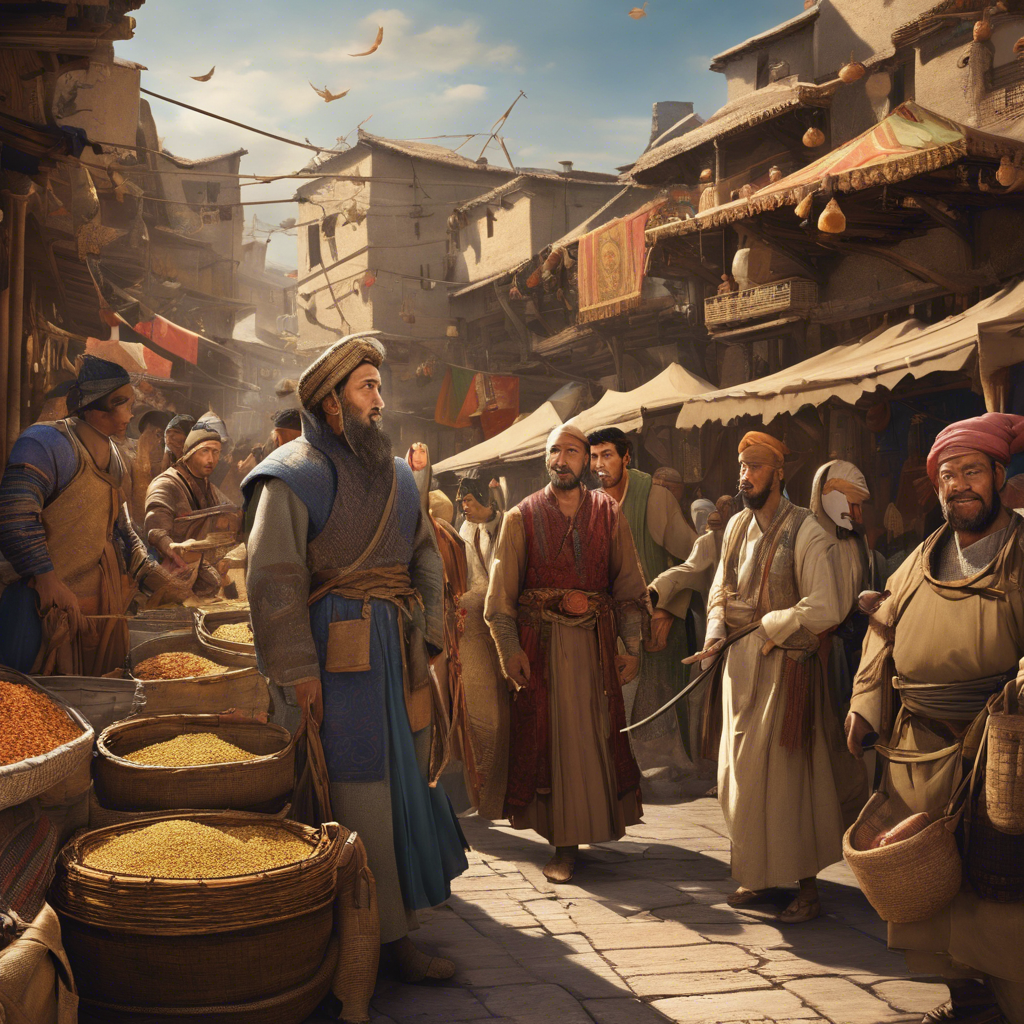
How Did Changes In Trade Routes Affect Social Hierarchies Within Medieval Societies?
Introduction
Medieval trade routes were critical conduits of commerce and culture, profoundly shaping economies and social structures across societies. As these trade pathways evolved, they led to significant transformations in social hierarchies, enabling the emergence of new social classes while altering the status of existing ones.
The Impact of Trade on Social Mobility
The expansion of trade routes, especially with the advent of the Silk Road and maritime commerce, brought together individuals from varied backgrounds in increasing numbers. Merchants, who traditionally occupied lower positions in the feudal hierarchy, began accumulating substantial wealth and influence. This rise in wealth led to the formation of a new social class known as the bourgeoisie, which increasingly challenged the traditional power of the aristocracy.
- Wealth accumulation empowered merchants to finance local initiatives and engage in governance, gradually reducing the absolute authority of feudal lords.
- The interchange of goods and ideas along trade routes facilitated the growth of urban centers, which emerged as thriving trading hubs and social interaction platforms beyond the feudal system.
Transformations in Traditional Hierarchies
As trade routes expanded and became more intricate, the societal focus shifted from landownership to capital and commerce. This change transformed power dynamics as the merchant class began to question the long-standing belief that nobility was the sole avenue to power. Additionally, increased wealth from trade elevated the status of artisans and skilled workers, cementing their roles in the evolving social structure.
- The once-rigid feudal system faced challenges as commoners achieved economic independence through trade, resulting in a more flexible social hierarchy.
- The increased interconnectedness opened societies to fresh ideas about governance and social contracts, laying the groundwork for the advancement of democratic ideals and practices over time.
Conclusion
The evolution of medieval trade routes significantly reshaped social hierarchies, fostering the rise of new classes like the bourgeoisie while diminishing the power of traditional aristocracy. Analyzing these shifts reveals the dynamic interplay between economic forces and global interactions that have historically shaped human societies.
Expert Quote
Dr. Robert Bartlett, Professor of Medieval History at the University of St Andrews
The shift in trade routes was not merely an economic revolution; it fundamentally altered the social fabric of medieval society, allowing new social classes, particularly the bourgeoisie, to emerge and challenge traditional feudal structures.
The Making of Europe: Conquest, Colonization and Cultural Change, 950-1350, 1993
Relevant Links
Slavery before the Trans-Atlantic Trade · African Passages ...
https://ldhi.library.cofc.edu/exhibits/show/africanpassageslowcountryadapt/introductionatlanticworld/slaverybeforetradeSocial and Economic Effects of the Plague
https://www.brown.edu/Departments/Italian_Studies/dweb/plague/effects/social.phpNew York State Grades 9-12 Social Studies Framework
https://www.nysed.gov/sites/default/files/programs/curriculum-instruction/ss-framework-9-12.pdfINSTRUCTIONAL PLANNING GUIDE
https://www.mdek12.org/sites/default/files/Offices/Secondary%20Ed/Social%20Studies/early_world_history_pre-historic_era_to_the_age_of_enlightenment_may_1_2024.pdfHow the Black Death Led to Peasants' Triumph Over the Feudal ...
https://clas.ucdenver.edu/nhdc/sites/default/files/attached-files/entry_147.pdfYouTube Videos
Most popular questions

How Do The Personal Relationships Among Gods Affect Their Decisions In The Iliad?
The intricate relationships among the gods in Homer's epic poem 'The Iliad' play a crucial role in shaping their actions and decisions. These divine interactions create a complex web of fates, where each god's personal alliances and rivalries directly influence the events of the mortal world.

What Strategies Can Parents Use To Educate Their Children About Online Safety Beyond Privacy Settings?
In today's digital landscape, teaching children about online safety is essential for their protection and well-being. While privacy settings play a critical role, parents can implement various strategies to create a thorough understanding of online safety principles among their children.
What Are The Different Types Of Insulation Materials Commonly Used In Buildings, And How Do They Compare In Terms Of Thermal Resistance?
Insulation materials are vital for enhancing energy efficiency in residential and commercial buildings by minimizing heat transfer. Understanding the various insulation types can lead to better choices for thermal resistance and overall comfort.
Most recent questions
How Do Interactive Elements In Video Games Influence Emotional Engagement Compared To Character-driven Storytelling In Serialized TV Shows?
The impact of interactive elements in video games on emotional engagement provides a compelling comparison to character-driven storytelling in serialized television shows. Both video games and TV series leverage narrative techniques and emotional triggers to captivate their audiences, yet they do so in fundamentally unique ways that shape how players and viewers experience and connect with each story.
How Can The Atmosphere Of An Outdoor Gathering Be Enhanced Beyond Food And Drink Offerings?
Enhancing the atmosphere of an outdoor gathering goes beyond merely providing food and drink. Creating rich experiences and engaging elements can elevate guest enjoyment and foster deeper connections with the event.
In What Ways Do Gaming Communities Justify Their Modifications To Existing Games?
Gaming communities frequently engage in modding, a process that involves modifying existing video games to improve the gaming experience, unleash creativity, or rectify perceived issues. This widespread practice is particularly prevalent on PC gaming platforms due to their open architecture and extensive modding support, enabling players to tailor games to their liking.