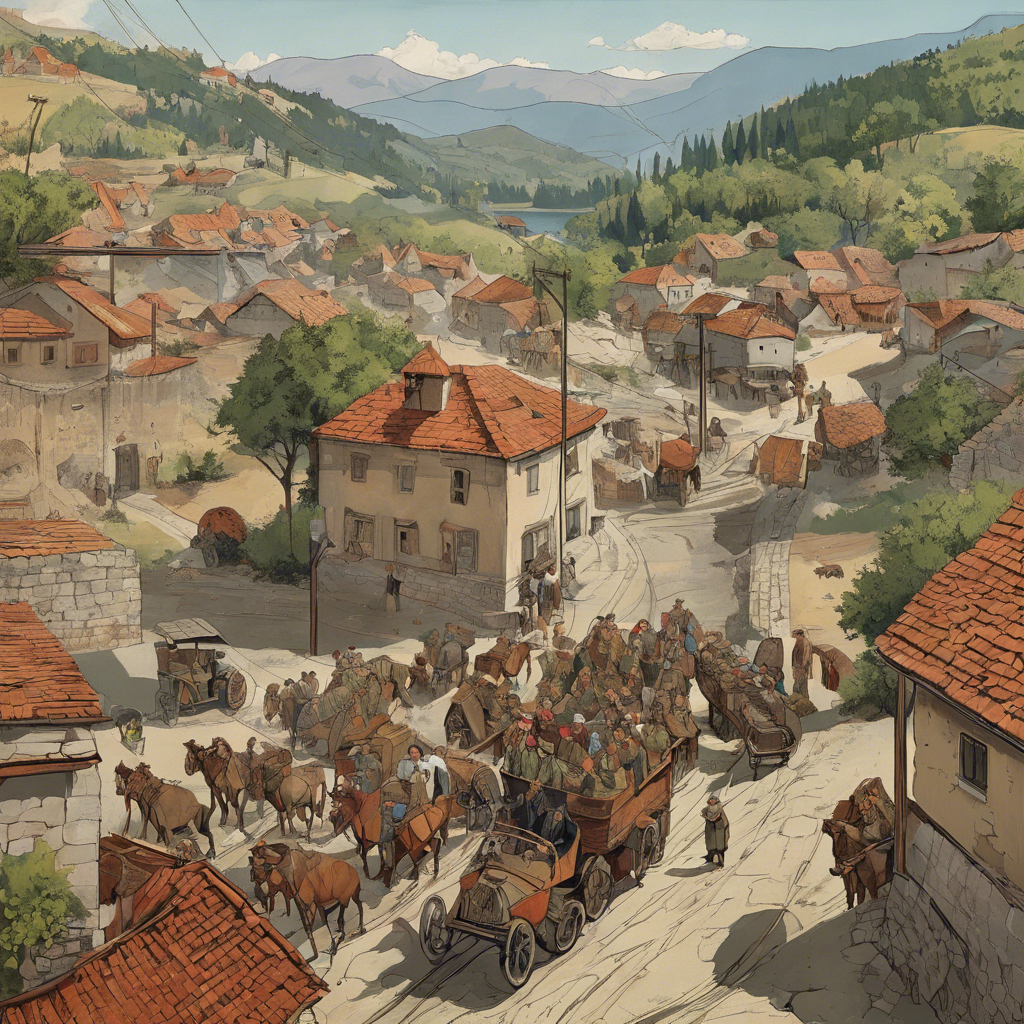
How Did Domestic Trade Policies In Yugoslavia Impact Economic Opportunities For Minority Ethnic Groups During Its Formation?
Introduction
The establishment of Yugoslavia following World War I significantly transformed domestic trade policies, which had enduring effects on economic opportunities for minority ethnic groups within the federation. Analyzing these trade policies is essential for understanding their impact on the socioeconomic landscape of Yugoslavia and the long-term implications for ethnic relations.
Historical Context of Trade Policies in Yugoslavia
In 1918, Yugoslavia emerged as a diverse federation comprising numerous ethnic groups, including Serbs, Croats, Slovenes, Bosniaks, and Macedonians. The federal structure aimed to foster unity among these groups, yet the implementation of domestic trade policies frequently favored specific regions, leading to significant economic imbalances. Policies related to agriculture, industrial grants, and trade regulations were introduced to promote growth in certain areas, which inadvertently resulted in uneven economic development throughout the federation.
- The initial trade policies established a framework that prioritized industrial growth in certain republics, often neglecting economically disadvantaged areas and minority ethnic regions.
- Decentralization policies granted republics some control over trade, but often exacerbated disparities, further marginalizing minority groups.
Impact of Trade Policies on Minority Ethnic Groups in Yugoslavia
Trade policies had a profound influence on the economic opportunities of minority ethnic groups in Yugoslavia. While certain republics thrived with industrial growth, others remained primarily agricultural, restricting economic mobility for minority communities. This disparity bred resentment and a sense of exclusion among these groups, highlighting the importance of equitable trade policies.
- Limited access to industrial employment for minority populations resulted in fewer opportunities for economic advancement, particularly for non-majority ethnic groups.
- The overwhelming focus on industrial development in majority-ethnic regions exacerbated economic inequalities and fueled social unrest among marginalized communities.
Long-Term Consequences of Yugoslav Trade Policies
The repercussions of trade policies extended well beyond economic impact, affecting social and political dynamics within Yugoslavia. Over the years, the disparities fostered by these policies contributed to ethnic tensions and separatist movements, ultimately playing a significant role in the disintegration of Yugoslavia during the 1990s.
- The economic marginalization of minority groups created a deep distrust in the central government, intensifying ethnic nationalism across various populations.
- Selective trade policies that favored specific ethnic regions laid the groundwork for future conflicts, illustrating the intricate link between economic policy and social cohesion in a multi-ethnic federation.
Conclusion
In conclusion, the domestic trade policies of Yugoslavia significantly contributed to economic inequalities impacting minority ethnic groups, resulting in long-standing socio-political tensions. Understanding these complexities is crucial for gaining insights into the broader ramifications of economic policy on ethnic relations and national unity in a diverse, multi-ethnic state.
Expert Quote
Dr. Ivo Goldstein, Historian and Professor at the Faculty of Humanities and Social Sciences, University of Zagreb
The economic policies in early Yugoslavia, particularly those prioritizing certain ethnic regions, established a framework of inequality that not only hindered the economic progress of minority groups but also fostered the ethnic discord that led to the tragic events of the 1990s.
The Politics of Ethnicity in Post-Yugoslav States, 2010
Relevant Links
Declassified: A short history of NATO - NATO
https://www.nato.int/cps/en/natohq/declassified_139339.htmCountry Reports on Terrorism 2019 - United States Department of ...
https://www.state.gov/reports/country-reports-on-terrorism-2019/The Making and Breaking of Yugoslavia and Its Impact on Health ...
https://www.ncbi.nlm.nih.gov/pmc/articles/PMC1448556/United States Strategy to Prevent and Respond to Gender-Based ...
https://www.state.gov/reports/united-states-strategy-to-prevent-and-respond-to-gender-based-violence-globally-2022/The End of Apartheid
https://history.state.gov/milestones/1989-1992/apartheidYouTube Videos
Most popular questions

How Do The Personal Relationships Among Gods Affect Their Decisions In The Iliad?
The intricate relationships among the gods in Homer's epic poem 'The Iliad' play a crucial role in shaping their actions and decisions. These divine interactions create a complex web of fates, where each god's personal alliances and rivalries directly influence the events of the mortal world.

What Strategies Can Parents Use To Educate Their Children About Online Safety Beyond Privacy Settings?
In today's digital landscape, teaching children about online safety is essential for their protection and well-being. While privacy settings play a critical role, parents can implement various strategies to create a thorough understanding of online safety principles among their children.
What Are The Different Types Of Insulation Materials Commonly Used In Buildings, And How Do They Compare In Terms Of Thermal Resistance?
Insulation materials are vital for enhancing energy efficiency in residential and commercial buildings by minimizing heat transfer. Understanding the various insulation types can lead to better choices for thermal resistance and overall comfort.
Most recent questions
How Do Authors Of Original Narratives Use Cultural Context To Inform Their Character Arcs In Ways That Fan Fiction Writers Might Not?
Original narrative authors skillfully integrate rich cultural contexts into their character arcs, creating multifaceted meaning and character development that deeply resonate with readers. Unlike fan fiction creators, who often expand on existing narratives, original authors have the distinct opportunity to shape their characters within unique cultural frameworks, leading to richer storytelling.
What Are The Best Platforms To Use For Promoting Food And Drink Events Through Social Media?
Effective promotion of food and drink events through social media is essential for expanding your reach and generating excitement. Different social media platforms cater to various demographics, making it vital to select the right channels to maximize your visibility and audience engagement for your culinary events.
What Are Alternative Beverage Pairings That Can Elevate A Cheese Tasting Experience Similar To Wine?
Discovering beverage pairings for cheese can enhance your culinary experience and broaden your taste preferences beyond traditional wine suggestions. Unique beverages can beautifully complement a range of cheeses, creating delightful contrasts and taste harmonies that make every cheese plate unforgettable.