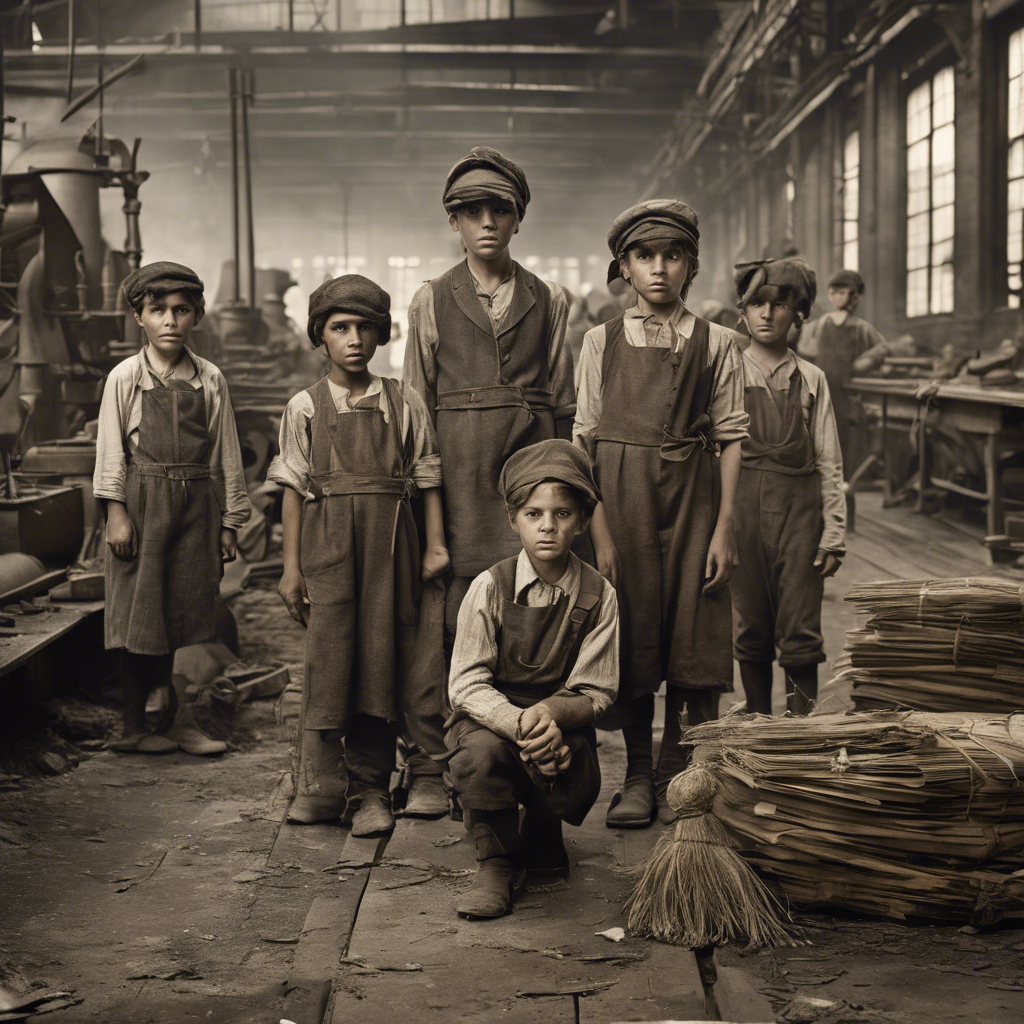
How Did Public Opinion On Child Labor Shift During The Industrial Revolution, And What Factors Influenced This Change?
Introduction
The Industrial Revolution was a pivotal moment in history that dramatically influenced public perceptions of child labor. Initially accepted as a norm, child labor practices faced increased scrutiny as society progressed and evolved its views on ethics and children's rights.
Historical Context of Child Labor During the Industrial Revolution
The Industrial Revolution, commencing in the late 18th century and extending into the 19th, witnessed a surge in factories and industries. Many families depended on child labor for their economic survival. It was standard for children to endure excessive working hours in perilous conditions for meager wages, which significantly aided household finances. For a long time, there was minimal public resistance to child labor practices, overshadowed by the rapid industrial growth that concealed the bleak realities faced by child laborers.
- Children frequently endured 12 to 16 hour shifts in factories.
- They were often employed in dangerous settings with little regard for safety regulations.
Evolution of Public Opinion on Child Labor
As the Industrial Revolution continued, public opinion began to change gradually. Various factors spurred this shift, including social reforms, the emergence of labor movements, and a growing awareness of the dreadful conditions endured by child laborers. Increased public consciousness was fueled by literature, investigative journalism, and reports from social reformers that exposed the grim realities of child labor.
- Literary works such as Charles Dickens' 'Oliver Twist' highlighted the hardships faced by child laborers.
- Champions of reform like Lord Shaftesbury lobbied for labor laws, leading to the introduction of the Factory Acts.
Legislative Changes and Social Reform Regarding Child Labor
The transformation in public perception prompted significant legislative measures. Governments began to take action by enacting laws that curtailed child labor and enhanced working conditions. This shift mirrored a growing belief in the significance of childhood, the necessity of education, and society's duty to protect its vulnerable populations.
- The Factory Act of 1833 restricted working hours for children and mandated education for working children.
- The Education Act of 1870 prioritized primary education for all children and laid the foundation for compulsory schooling.
Impact of Advocacy Efforts on Child Labor Reform
Advocacy efforts were instrumental in altering public opinion regarding child labor. Organizations were established to fight against child labor, campaigning for reforms through petitions, speeches, and educational initiatives. These collaborative efforts significantly raised awareness and garnered support against child labor practices, advocating for essential legislative changes.
- The National Child Labor Committee was founded in the early 20th century in the USA to push for reforms in child labor laws.
- Organized advocacy campaigns engaged the public's sympathy and promoted legislative actions, such as the Keating-Owen Act of 1916 in the USA.
Conclusion
The evolution of public opinion on child labor throughout the Industrial Revolution was a multifaceted process shaped by various social, economic, and cultural influences. As awareness of the adverse effects of child labor grew, substantial legislative reforms were enacted to safeguard children and advocate for their rights. This historical narrative serves as a crucial reminder of the significance of advocacy and moral responsibility in creating lasting social change.
Expert Quote
Dr. Eileen Boris, Professor of History at UC Santa Barbara and expert on labor history
The campaigns against child labor in the 19th century emerged from a growing acceptance of children's rights and a critical view of industrial capitalism, highlighting the need for social intervention and legal protections for the most vulnerable members of society.
Book: 'The World of Child Labor: An Historical and Regional Survey'
Relevant Links
History of child labor in the United States—part 2: the reform ...
https://www.bls.gov/opub/mlr/2017/article/history-of-child-labor-in-the-united-states-part-2-the-reform-movement.htmImmigration and the American Industrial Revolution From 1880 to ...
https://pmc.ncbi.nlm.nih.gov/articles/PMC2760060/10 demographic trends shaping the U.S. and the world in 2016
https://www.pewresearch.org/short-reads/2016/03/31/10-demographic-trends-that-are-shaping-the-u-s-and-the-world/ACCC+commissioned+report+-+The+impact+of+digital+platforms+ ...
https://www.accc.gov.au/system/files/ACCC+commissioned+report+-+The+impact+of+digital+platforms+on+news+and+journalistic+content,+Centre+for+Media+Transition+(2).pdfLabor Movement ‑ America, Reform & Timeline | HISTORY
https://www.history.com/topics/19th-century/laborYouTube Videos
Most popular questions

How Do The Personal Relationships Among Gods Affect Their Decisions In The Iliad?
The intricate relationships among the gods in Homer's epic poem 'The Iliad' play a crucial role in shaping their actions and decisions. These divine interactions create a complex web of fates, where each god's personal alliances and rivalries directly influence the events of the mortal world.

What Strategies Can Parents Use To Educate Their Children About Online Safety Beyond Privacy Settings?
In today's digital landscape, teaching children about online safety is essential for their protection and well-being. While privacy settings play a critical role, parents can implement various strategies to create a thorough understanding of online safety principles among their children.
What Are The Different Types Of Insulation Materials Commonly Used In Buildings, And How Do They Compare In Terms Of Thermal Resistance?
Insulation materials are vital for enhancing energy efficiency in residential and commercial buildings by minimizing heat transfer. Understanding the various insulation types can lead to better choices for thermal resistance and overall comfort.
Most recent questions
How Do You Think Time Travel Could Positively Or Negatively Impact Your Relationships With Others?
Time travel is an intriguing concept that captivates our imagination in literature and cinema. The potential effects of time travel on personal relationships raise compelling questions about how our interactions with others may change if we had the ability to travel through time.
What Specific Types Of User-generated Content Are Most Influential In Maintaining Player Engagement Within Gaming Communities?
User-generated content (UGC) is vital for boosting player engagement in gaming communities. It includes various creative expressions from players that significantly enhance the gaming experience while cultivating a dynamic community atmosphere.
How Do Different Design Styles In Web Layout Affect User Interaction And Retention On Websites?
The design style of a website is essential for enhancing user engagement and retention. Various design styles not only enhance visual appeal but also influence user navigation and information perception, making them critical for online success.