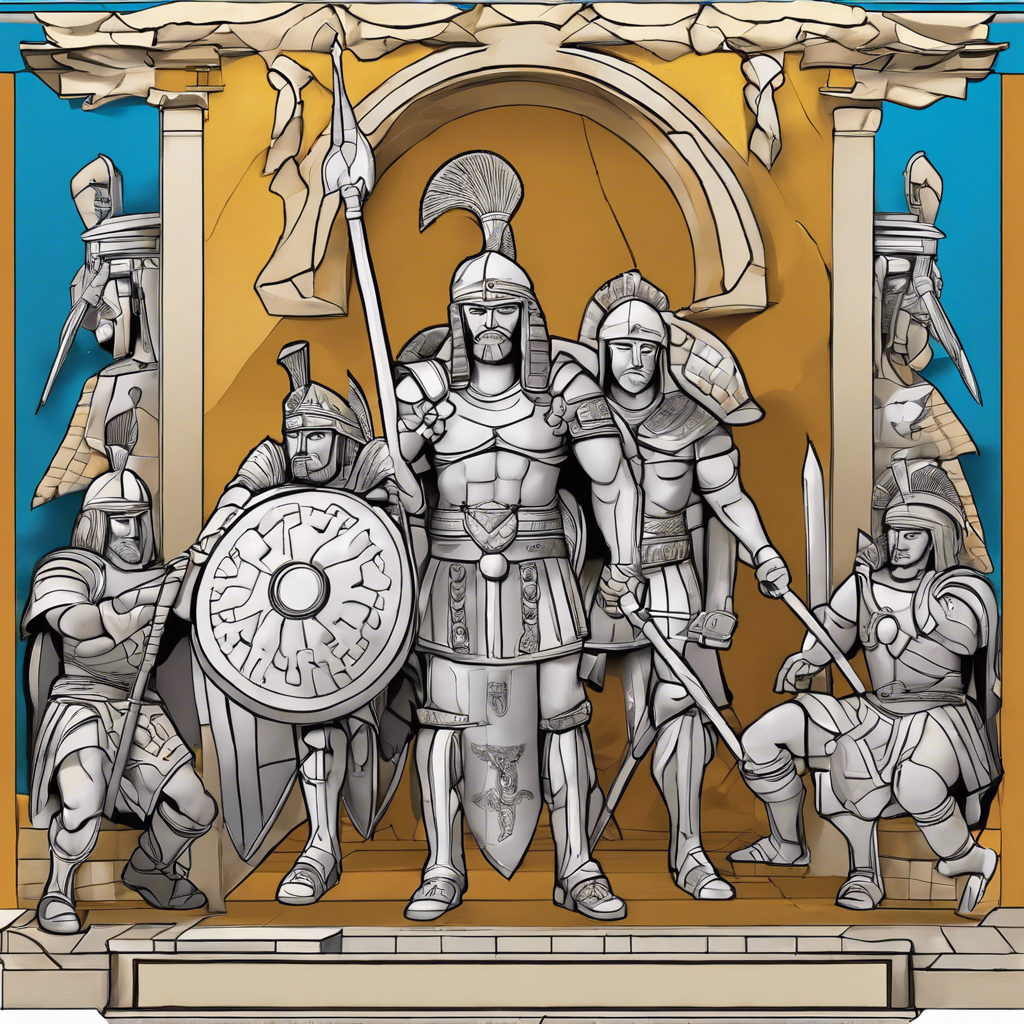
How Did The Concept Of Honor In The Trojan War Parallel Ideas Of Reputation In Modern Leadership Decisions?
Introduction
The concept of honor in the Trojan War intricately weaves into contemporary ideas of reputation and leadership. In both contexts, the decisions of leaders are profoundly shaped by the expectations surrounding honor and the perceptions of their reputation in society.
The Significance of Honor in the Trojan War
In the Trojan War, the theme of honor was crucial, significantly impacting the decisions and actions of pivotal characters like Achilles, Agamemnon, and Hector. The pursuit of honor influenced their motivations and ideals, leading to numerous acts of bravery, intense conflict, and the quest for glory. For instance, Achilles' choice to withdraw from battle was not just a strategic move, but a deep manifestation of his wounded pride and his perceived loss of honor. In an environment where personal reputation formed the core of one's legacy, actions taken during battle were critically evaluated against the standards of honor.
- Honor shaped the dynamics of alliances and enmities among warriors.
- A loss of honor often resulted in severe consequences, such as social ostracism or a decline in status.
- Legends of glory were built around honorable acts, leaving an impact on both contemporaries and future generations.
Parallels Between Honor and Modern Leadership Reputation
In today's world, the idea of reputation holds a similar significance to honor in the context of the Trojan War. Modern leaders must consider how their choices will affect their reputation within their organizations, among peers, and in public perception. Like in ancient battles, a leader's reputation can inspire loyalty or provoke opposition. Decisions aimed at preserving a strong reputation can lead to cohesive teamwork and successful results. For example, leaders who uphold their values during challenging times often gain respect, thereby enhancing their reputation for integrity. Recognizing the importance of reputation can help leaders make informed decisions that foster trust and collaboration.
- Leaders are frequently faced with moral dilemmas that challenge their values and reputation.
- Public perception wields influence equivalent to any weapon in determining a leader's success.
- Upholding integrity cultivates enduring respect and loyalty among followers.
Conclusion
In conclusion, both the honor exhibited during the Trojan War and the reputation maintained by modern leaders are essential for understanding the motivations behind pivotal decisions. These themes illustrate that effective leadership is as much about personal legacy and societal expectations as it is about strategic execution and governance.
Expert Quote
Dr. David J. Pollock, Professor of Leadership Studies at the University of Richmond
Reputation serves as a leader's essential currency; similar to how the heroes of the Trojan War were guided by their sense of honor, contemporary leaders navigate their roles based on the perceptions and expectations of their stakeholders.
The Role of Reputation in Leadership, Leadership Quarterly, 2021
Relevant Links
If Hector is the moral hero/good guy of the Iliad, why is Achilles the ...
https://www.quora.com/If-Hector-is-the-moral-hero-good-guy-of-the-Iliad-why-is-Achilles-the-main-characterCharacter Analysis Achilles
https://www.cliffsnotes.com/literature/i/the-iliad/character-analysis/achillesMarine Corps Values: A User's Guide for Discussion Leaders
https://www.fitness.marines.mil/Portals/211/Docs/FFI/MCRP%206-11B%20%20W%20CH%201%20Marine%20Corps%20Values_A%20User's%20Guide%20for%20Discussion%20Leaders.pdfTHE ILIAD CHAPTER NOTES Flashcards | Quizlet
https://quizlet.com/369493994/the-iliad-chapter-notes-flash-cards/YouTube Videos
Most popular questions

How Do The Personal Relationships Among Gods Affect Their Decisions In The Iliad?
The intricate relationships among the gods in Homer's epic poem 'The Iliad' play a crucial role in shaping their actions and decisions. These divine interactions create a complex web of fates, where each god's personal alliances and rivalries directly influence the events of the mortal world.

What Strategies Can Parents Use To Educate Their Children About Online Safety Beyond Privacy Settings?
In today's digital landscape, teaching children about online safety is essential for their protection and well-being. While privacy settings play a critical role, parents can implement various strategies to create a thorough understanding of online safety principles among their children.
What Are The Different Types Of Insulation Materials Commonly Used In Buildings, And How Do They Compare In Terms Of Thermal Resistance?
Insulation materials are vital for enhancing energy efficiency in residential and commercial buildings by minimizing heat transfer. Understanding the various insulation types can lead to better choices for thermal resistance and overall comfort.
Most recent questions
How Do The Ingredient Compositions Of Cocktails Influence Their Flavor Profiles Compared To Wine Styles?
The captivating world of cocktails and wines invites enthusiasts to delve into a rich exploration of flavors, driven by their diverse ingredient compositions. While both cocktails and wines present delightful tasting experiences, the interaction of their ingredients defines unique flavor profiles that set them apart.
What Desserts Would Contrast Nicely With A Seafood Main Dish?
When it comes to pairing desserts with seafood dishes, it's essential to select flavors that both contrast and enhance the meal. Seafood typically features a light and fresh profile, making desserts with sweet, fruity, or creamy elements the perfect complement to elevate the dining experience.
What Specific Visual Storytelling Techniques Can Be Employed To Enhance The Emotional Impact Of Classical Music?
Visual storytelling is an impactful medium that, when integrated with classical music, can evoke deep emotions and create unforgettable experiences for audiences. By implementing effective techniques, creators can enhance the emotional connection between the audience and the music being performed, making these performances truly memorable.