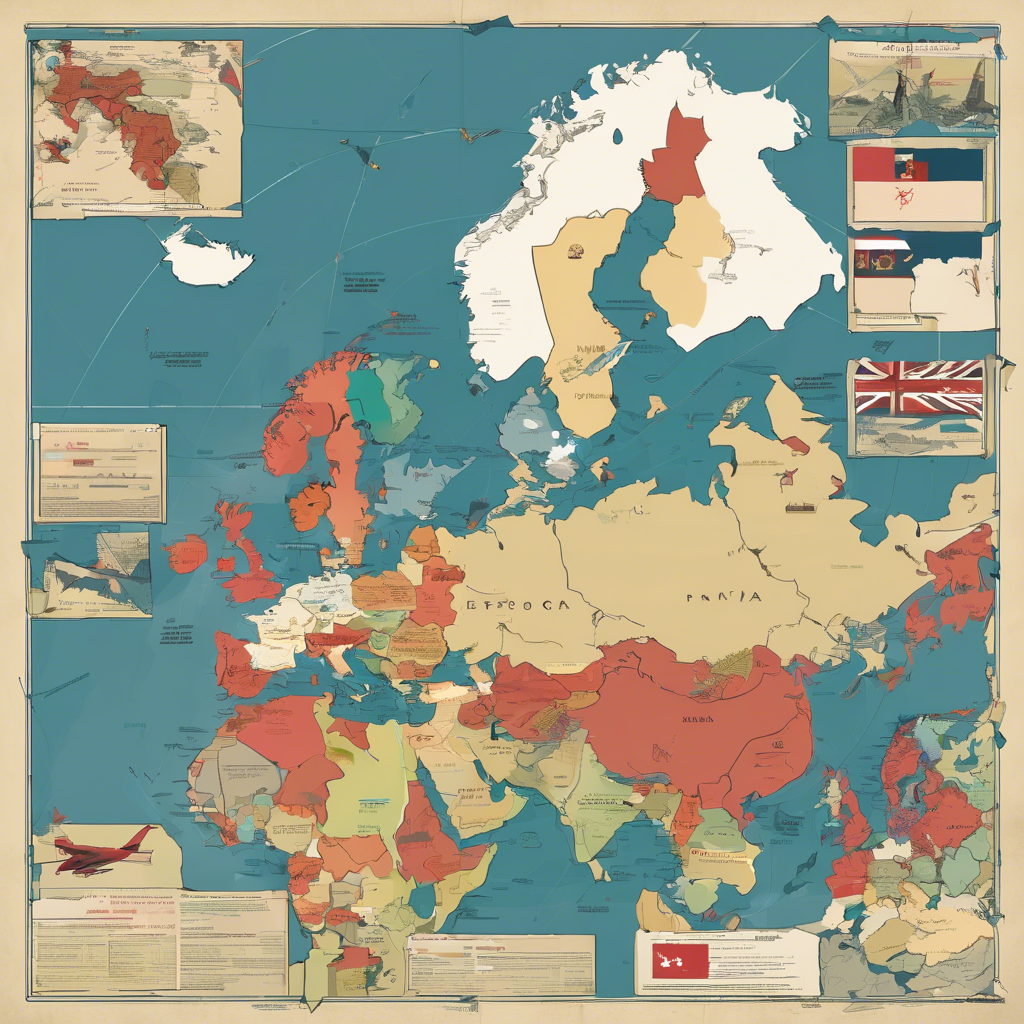
How Did The Geopolitical Strategies Of Foreign Powers Influence The Economic Policies Of Post-Soviet States?
Introduction
The geopolitical strategies of foreign powers have profoundly influenced the economic policies of post-Soviet states since the dissolution of the Soviet Union in 1991. This historical shift has led to a thorough reevaluation of alliances, foreign influences, and economic directives that are crucial for shaping the futures of these nations.
The Impact of Western Influence on Economic Restructuring
In the wake of the Soviet Union’s collapse, Western nations, particularly the United States and the European Union, have played an essential role in the economic transformation of post-Soviet states. The transition towards capitalist market economies has been significantly influenced by this engagement, facilitating crucial governance and economic practice reforms.
- Substantial financial support and investments from Western countries aimed at stabilizing economies, particularly through initiatives by the International Monetary Fund (IMF) and the World Bank.
- The implementation of free-market reforms has been heavily inspired by Western economic models, including strategies like privatization and deregulation.
The Role of Neighboring Powers and Regional Influence
In contrast to Western influences, regional powers such as Russia and China have also sought to assert their geopolitical strategies in post-Soviet territories. These influences have resulted in a complex duality in economic policymaking, where states navigate the tension between Western ideals and regional alliances.
- Russian economic interests prioritize energy resources, leading several states into a precarious dependency on Russia for energy.
- China's Belt and Road Initiative aims to weave these economies into a broader Asian connectivity network, characterized by infrastructure investments that fortify regional trade links.
Domestic Political Dynamics Shaping Economic Policies
The internal political dynamics of each post-Soviet state play an essential role in crafting their economic policies. Domestic leaders align with foreign powers based on fluctuating political needs, impacting their international and economic relations significantly over time.
- Leaders often adopt policies favoring foreign partnerships that align with their political agendas, particularly during electoral cycles.
- Public sentiment and the emergence of nationalist movements can trigger resistance to foreign influence, complicating international diplomacy.
Conclusion
The interplay of foreign geopolitical strategies and domestic economic policies in post-Soviet states illustrates a multifaceted landscape where external pressures significantly influence internal decision-making. Understanding these dynamics offers insight into the economic trajectories of these nations while highlighting the delicate balance they strive to maintain in their international relations.
Expert Quote
Dr. Andrew Wilson, Senior Policy Fellow at the European Council on Foreign Relations
The economic policies of post-Soviet states are a direct reflection of both external geopolitical pressures and internal political dynamics, illustrating a complex interplay that often leads to economic vulnerabilities and dependencies.
Article in 'Post-Soviet Affairs', 2020
Relevant Links
Global Programme | CGSRS | Centre For Geopolitics & Security in ...
https://cgsrs.org/programmes/1Consequences of the Collapse of the Soviet Union | Norwich ...
https://online.norwich.edu/online/about/resource-library/consequences-collapse-soviet-unionRussia's Wartime Foreign Policy: Regional Hegemony in Question ...
https://carnegieendowment.org/2023/08/17/russia-s-wartime-foreign-policy-regional-hegemony-in-question-pub-91107Ukraine: Conflict at the Crossroads of Europe and Russia | Council ...
https://www.cfr.org/backgrounder/ukraine-conflict-crossroads-europe-and-russiaFour Myths about Russian Grand Strategy | The Post-Soviet Post ...
https://www.csis.org/blogs/post-soviet-post/four-myths-about-russian-grand-strategyYouTube Videos
Most popular questions

How Do The Personal Relationships Among Gods Affect Their Decisions In The Iliad?
The intricate relationships among the gods in Homer's epic poem 'The Iliad' play a crucial role in shaping their actions and decisions. These divine interactions create a complex web of fates, where each god's personal alliances and rivalries directly influence the events of the mortal world.

What Strategies Can Parents Use To Educate Their Children About Online Safety Beyond Privacy Settings?
In today's digital landscape, teaching children about online safety is essential for their protection and well-being. While privacy settings play a critical role, parents can implement various strategies to create a thorough understanding of online safety principles among their children.
What Are The Different Types Of Insulation Materials Commonly Used In Buildings, And How Do They Compare In Terms Of Thermal Resistance?
Insulation materials are vital for enhancing energy efficiency in residential and commercial buildings by minimizing heat transfer. Understanding the various insulation types can lead to better choices for thermal resistance and overall comfort.
Most recent questions
How Can Emerging Musical Artists Themselves Leverage Social Media Platforms To Enhance Their Visibility And Reach?
Emerging musical artists face the challenge of gaining visibility in an increasingly competitive music industry. Social media platforms have become essential tools for these artists to engage with audiences, promote their music, and establish a distinctive personal brand.
How Do Marginalized Voices Within Fan Communities Influence The Creation Of Cultural Content?
The significance of marginalized voices in fan communities cannot be overstated, as they transform cultural narratives and greatly influence artistic content creation across various platforms.
How Can Cultural Elements From Traditional Folk Music Be Incorporated Into Modern Marketing Techniques To Appeal To Younger Audiences?
In the rapidly evolving digital landscape, marketers are on a constant quest to find fresh and innovative strategies to engage younger audiences. A highly effective approach is to infuse elements of traditional folk music into contemporary marketing techniques. This creative blend not only draws from rich cultural heritage but also resonates on an emotional level with consumers, making it an ideal strategy for modern brands.