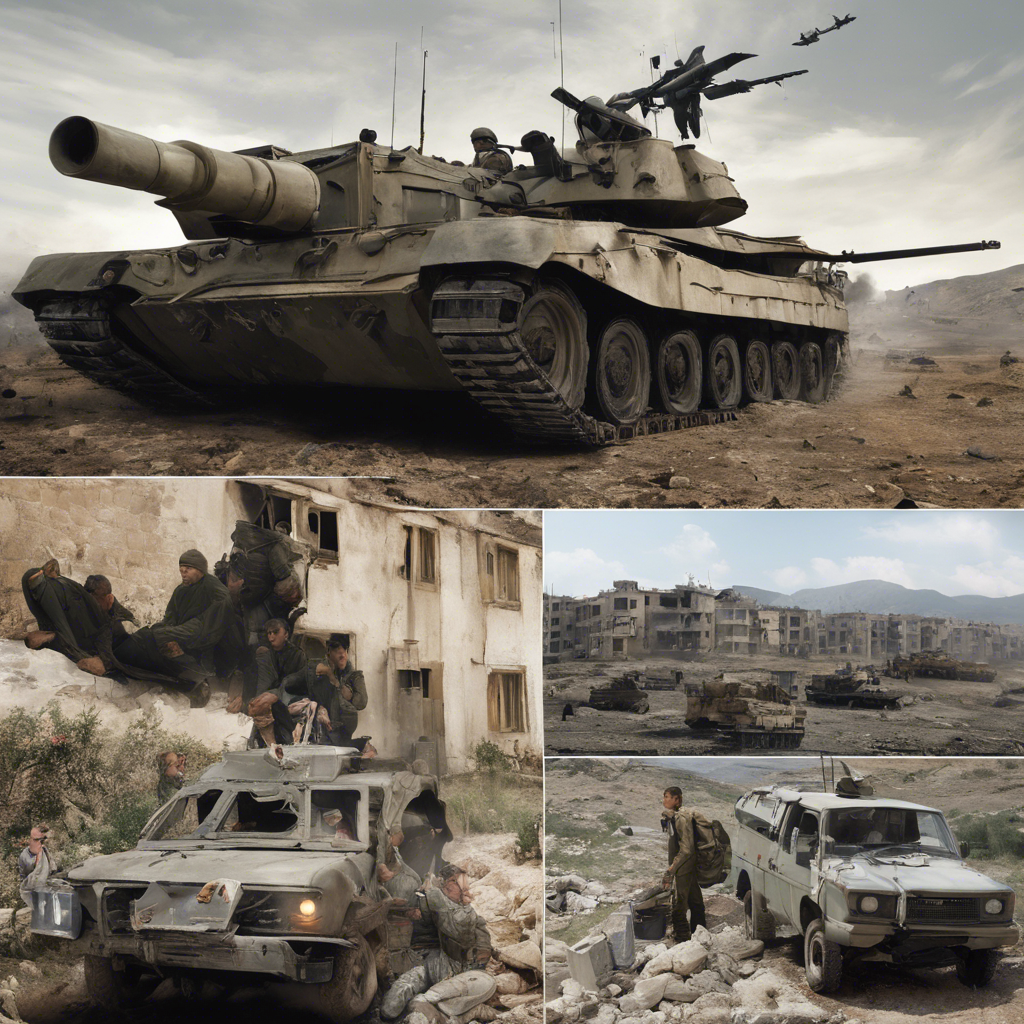
How Did The International Community's Response To The Humanitarian Crises In The Yugoslav Wars Compare To Other Conflicts, Such As The Syrian Civil War?
Introduction
The global response to humanitarian crises plays a crucial role in determining the outcomes of conflicts. This analysis explores the differing ways the international community reacted to the humanitarian crises during the Yugoslav Wars in the 1990s and the Syrian Civil War that erupted in 2011, emphasizing the variations in international intervention strategies, humanitarian aid distribution, and political outcomes.
International Response to the Yugoslav Wars
The Yugoslav Wars were marked by a complex series of ethnic conflicts, resulting in significant humanitarian crises that included widespread displacement, ethnic cleansing, and severe violations of human rights. The international community's response involved various strategies, including military intervention and diplomatic initiatives aimed at ceasing hostilities. Key actions taken include:
- The creation of the International Criminal Tribunal for the former Yugoslavia (ICTY) in 1993, focusing on prosecuting war crimes and advancing accountability standards.
- NATO's significant intervention in 1999 during the Kosovo War, which represented a pivotal moment in humanitarian military intervention policies and reinforced the 'Responsibility to Protect' (R2P) principle.
International Response to the Syrian Civil War
In stark contrast, the international response to the Syrian Civil War has been characterized by protracted inaction and political paralysis, largely driven by competing geopolitical interests and the involvement of major world powers. This humanitarian crisis has resulted in enormous displacement and the deployment of chemical weapons. Major points include:
- Over 6.8 million Syrian refugees have fled to neighboring countries and Europe, resulting in a significant strain on global humanitarian resources.
- Numerous peace talks have failed, as external powers pursue conflicting interests and often obstruct cohesive international humanitarian action.
Comparative Analysis of Responses
A comparison of the two conflicts reveals several important differences in how the international community addressed the humanitarian crises. These disparities underscore the varying capabilities and priorities of global actors when responding to humanitarian emergencies.
- Military intervention in the Yugoslav Wars aimed for swift conflict resolution, whereas in Syria, intervention has been limited and often unilateral, lacking a cohesive strategy.
- The establishment of legal accountability mechanisms in the Yugoslav conflict, such as the ICTY, contrasts sharply with the ongoing lack of accountability for war crimes in Syria, where no similar framework exists.
- Diplomatic efforts in the 1990s were more unified compared to the fragmented and often counterproductive diplomatic initiatives in Syria, where competing national interests have hindered effective action.
Conclusion
The contrasting international responses to the Yugoslav Wars and the Syrian Civil War highlight how geopolitical dynamics, military strategies, and the political will of nations significantly shape humanitarian outcomes. Understanding these differences is essential for enhancing future conflict resolution efforts and improving global responses to humanitarian crises.
Expert Quote
Dr. Michael J. Williams, Professor of International Relations at Stanford University
The international community's response to humanitarian crises often reflects the geopolitical landscape of the time. In the case of the Yugoslav Wars, there was a clear commitment to collective action, whereas the Syrian conflict has been mired in competing national interests that have hindered effective intervention.
Humanitarian Responses in Global Politics: A Comparative Study (2020)
Relevant Links
ATA-2024-Unclassified-Report.pdf
https://www.dni.gov/files/ODNI/documents/assessments/ATA-2024-Unclassified-Report.pdfGlobal Crisis Response Platform: Home
https://crisisresponse.iom.int/Declassified: A short history of NATO - NATO
https://www.nato.int/cps/en/natohq/declassified_139339.htmExploiting Disorder: al-Qaeda and the Islamic State | Crisis Group
https://www.crisisgroup.org/global/exploiting-disorder-al-qaeda-and-islamic-stateInternational systems unfit to deal with global crises
https://www.amnesty.org/en/latest/news/2023/03/international-system-unfit-to-deal-with-global-crises-annual-report-2022/YouTube Videos
Most popular questions

How Do The Personal Relationships Among Gods Affect Their Decisions In The Iliad?
The intricate relationships among the gods in Homer's epic poem 'The Iliad' play a crucial role in shaping their actions and decisions. These divine interactions create a complex web of fates, where each god's personal alliances and rivalries directly influence the events of the mortal world.

What Strategies Can Parents Use To Educate Their Children About Online Safety Beyond Privacy Settings?
In today's digital landscape, teaching children about online safety is essential for their protection and well-being. While privacy settings play a critical role, parents can implement various strategies to create a thorough understanding of online safety principles among their children.
What Are The Different Types Of Insulation Materials Commonly Used In Buildings, And How Do They Compare In Terms Of Thermal Resistance?
Insulation materials are vital for enhancing energy efficiency in residential and commercial buildings by minimizing heat transfer. Understanding the various insulation types can lead to better choices for thermal resistance and overall comfort.
Most recent questions
What Role Does Scoring Play In Team Dynamics And Player Roles In Basketball Compared To Football And Hockey?
Scoring is a critical element in the dynamics of team sports, playing a significant role in determining the outcome of games and influencing individual player roles. Basketball, football, and hockey all revolve around scoring, but the relevance and consequences of scoring on player responsibilities and team strategies can greatly differ among these sports.
How Do The Motivations Behind Playing Educational Games Differ From Those For Playing Entertainment-focused Games?
The motivations for playing games span a wide spectrum, influenced by the game's purpose, including educational and entertainment-focused designs. By understanding these distinctions, we can enhance our appreciation for both types of games and their effects on players' experiences and learning outcomes.
How Has The Portrayal Of Poker In Films Shaped Public Perception Of The Game?
The portrayal of poker in movies has significantly shaped public perception of this popular card game, influencing how audiences grasp its intricacies, strategies, and cultural relevance. Through compelling storytelling and character arcs, filmmakers create narratives that capture the thrill and psychological aspects of poker, leading to a mix of misconceptions and an increased fascination with the game.