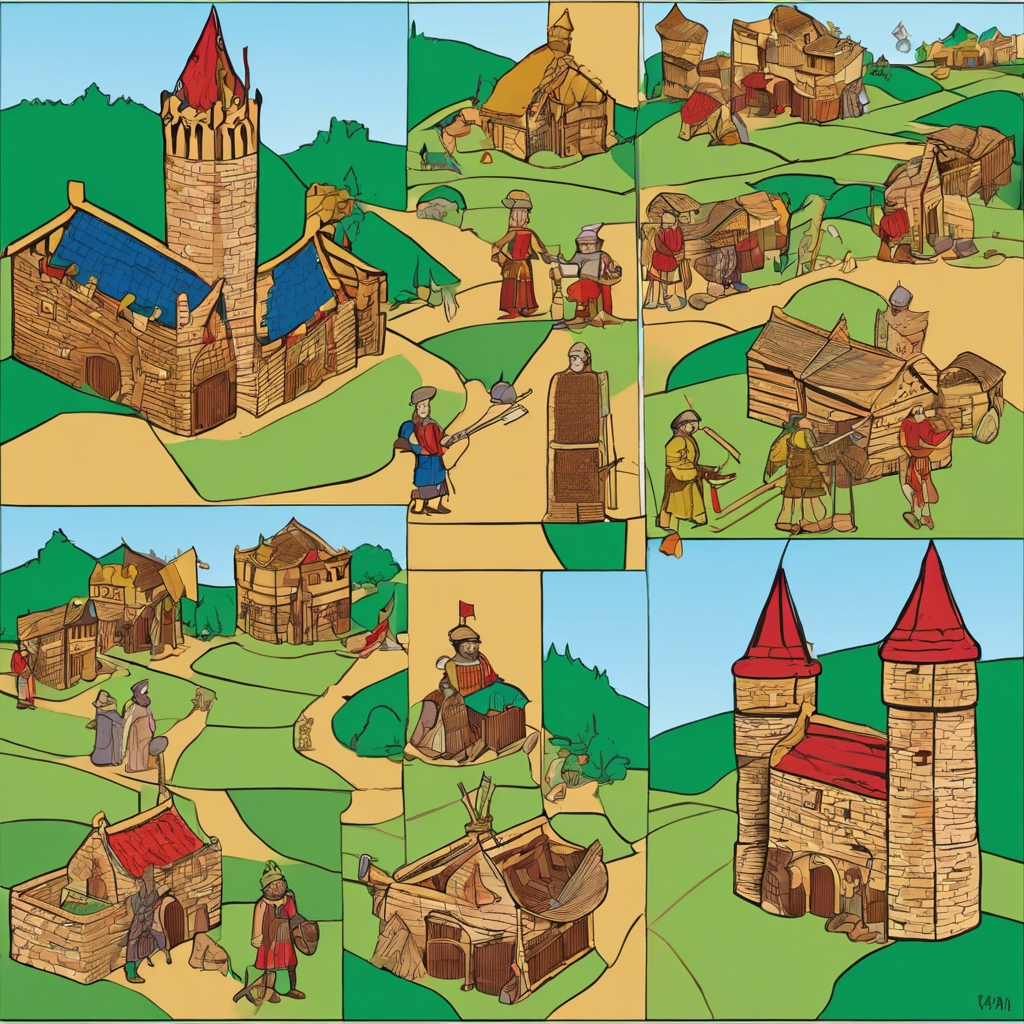
How Did The Introduction Of New Forms Of Governance Affect The Economies Of Medieval European States?
Introduction
The emergence of innovative governance models during the medieval period led to a pivotal transformation in European states, significantly intertwining political frameworks with economic development and prosperity.
Feudalism and Its Economic Consequences
Feudalism reigned in medieval Europe from the 9th to the 15th century, establishing a hierarchical social structure based on land ownership and mutual obligations. In this system, landowners, or lords, controlled vast estates worked by serfs and peasants. The economy was primarily agrarian in nature, with serfs bound to the land, obligated to share a portion of their agricultural produce with their lords. Consequently, feudalism fostered a decentralized economy where local production overshadowed more extensive trade networks.
- Lords offered protection and governance in return for military and labor services from vassals and serfs, strengthening feudal ties.
- The structure inhibited large-scale trade initiatives, as localized economies focused mostly on subsistence agriculture.
- Surplus agricultural output was often taken from peasants to support the opulence and demands of the noble class.
Emergence of Towns and Trade Growth
With the advent of new governance systems, towns gained charters and pursued autonomy, resulting in a flourishing trade environment by the late medieval period. The growth of the merchant class and the formation of guilds transformed the economic framework towards a more market-driven economy. Regulatory measures enacted by town councils encouraged trade, leading to heightened commerce and the rise of financial innovations, such as currency utilization.
- Towns provided new rights and privileges that attracted diverse populations, driving economic growth.
- Guild establishments regulated trade practices and improved the quality of goods and services sold.
- The introduction of currency and banking systems allowed for broader trading opportunities and networks.
Centralization Under Monarchies
Medieval monarchies began to centralize authority, which paved the way for the creation of nation-states. This shift transitioned governance from feudal systems to a centralized framework, financially enabling the introduction of taxes and support for state-sponsored infrastructure, including roads and marketplaces, which were vital for commercial growth.
- Tax revenues empowered monarchies to fund military campaigns and develop public infrastructure.
- Standardized weight and measurement systems were introduced to streamline trade practices across various regions.
- Stronger central authority reduced the influence of local lords, fostering a stable economic environment.
Economic Influence of the Church
The Catholic Church was a critical player in medieval governance and economic matters. With extensive land holdings, the Church wielded significant political and economic power. Monastic communities played a vital role in agricultural productivity and education, thus indirectly impacting local economic systems.
- The Church's major land holdings improved agricultural output through enhanced management practices and cultivation techniques.
- Clerical charters secured protections for trade activities, fostering market expansion and stability.
- The Church also shaped economic ethics and practices, influencing trade norms and behaviors throughout the medieval period.
Conclusion
The transformation in governance structures during medieval Europe was a driving force behind profound economic changes, transitioning from a feudal and agriculture-dominated economy to one that increasingly emphasized trade and centralization. The growth of towns, enhanced power of monarchs, and significant influence of the Church collectively reshaped the economic landscape of medieval societies.
Expert Quote
Dr. Robert S. Lopez
The unique interaction between evolving governance structures and economic practices formed the bedrock of medieval European society, illustrating that political and economic realms were inextricably linked during this transformative period.
The Commercial Revolution of the Middle Ages, 950-1350, Yale University Press, 1971
Relevant Links
Social Security History
https://www.ssa.gov/history/briefhistory3.htmlHistory Social Science Content Standards - Content Standards (CA ...
https://www.cde.ca.gov/be/st/ss/documents/histsocscistnd.pdfNew York State Grades 9-12 Social Studies Framework
https://www.nysed.gov/sites/default/files/programs/curriculum-instruction/ss-framework-9-12.pdfOhio's Learning Standards for Social Studies
https://education.ohio.gov/getattachment/Topics/Learning-in-Ohio/Social-Studies/Ohio-s-Learning-Standards-for-Social-Studies/SSFinalStandards01019.pdf.aspx?lang=en-USNew Jersey Student Learning Standards – Social Studies Introduction
https://www.nj.gov/education/cccs/2020/2020%20NJSLS-SS.pdfYouTube Videos
Most popular questions

How Do The Personal Relationships Among Gods Affect Their Decisions In The Iliad?
The intricate relationships among the gods in Homer's epic poem 'The Iliad' play a crucial role in shaping their actions and decisions. These divine interactions create a complex web of fates, where each god's personal alliances and rivalries directly influence the events of the mortal world.

What Strategies Can Parents Use To Educate Their Children About Online Safety Beyond Privacy Settings?
In today's digital landscape, teaching children about online safety is essential for their protection and well-being. While privacy settings play a critical role, parents can implement various strategies to create a thorough understanding of online safety principles among their children.
What Are The Different Types Of Insulation Materials Commonly Used In Buildings, And How Do They Compare In Terms Of Thermal Resistance?
Insulation materials are vital for enhancing energy efficiency in residential and commercial buildings by minimizing heat transfer. Understanding the various insulation types can lead to better choices for thermal resistance and overall comfort.
Most recent questions
How Do Changes In Social Media Algorithms Affect The Visibility Of Fan Fiction Narratives?
Social media algorithms significantly influence the visibility of content shared online. For fan fiction writers and readers, ongoing changes in these algorithms can substantially affect how narratives are accessed and appreciated. Understanding these algorithmic fluctuations empowers creators to navigate the digital environment more effectively and maximize their audience reach.
How Has The Portrayal Of Poker In Films Shaped Public Perception Of The Game?
The portrayal of poker in movies has significantly shaped public perception of this popular card game, influencing how audiences grasp its intricacies, strategies, and cultural relevance. Through compelling storytelling and character arcs, filmmakers create narratives that capture the thrill and psychological aspects of poker, leading to a mix of misconceptions and an increased fascination with the game.
What Are The Common Challenges Faced When Merging Genres In Filmmaking?
Merging film genres is a powerful technique that can lead to groundbreaking storytelling. However, filmmakers face significant challenges in blending different styles and themes effectively to ensure a seamless and compelling narrative experience for viewers.