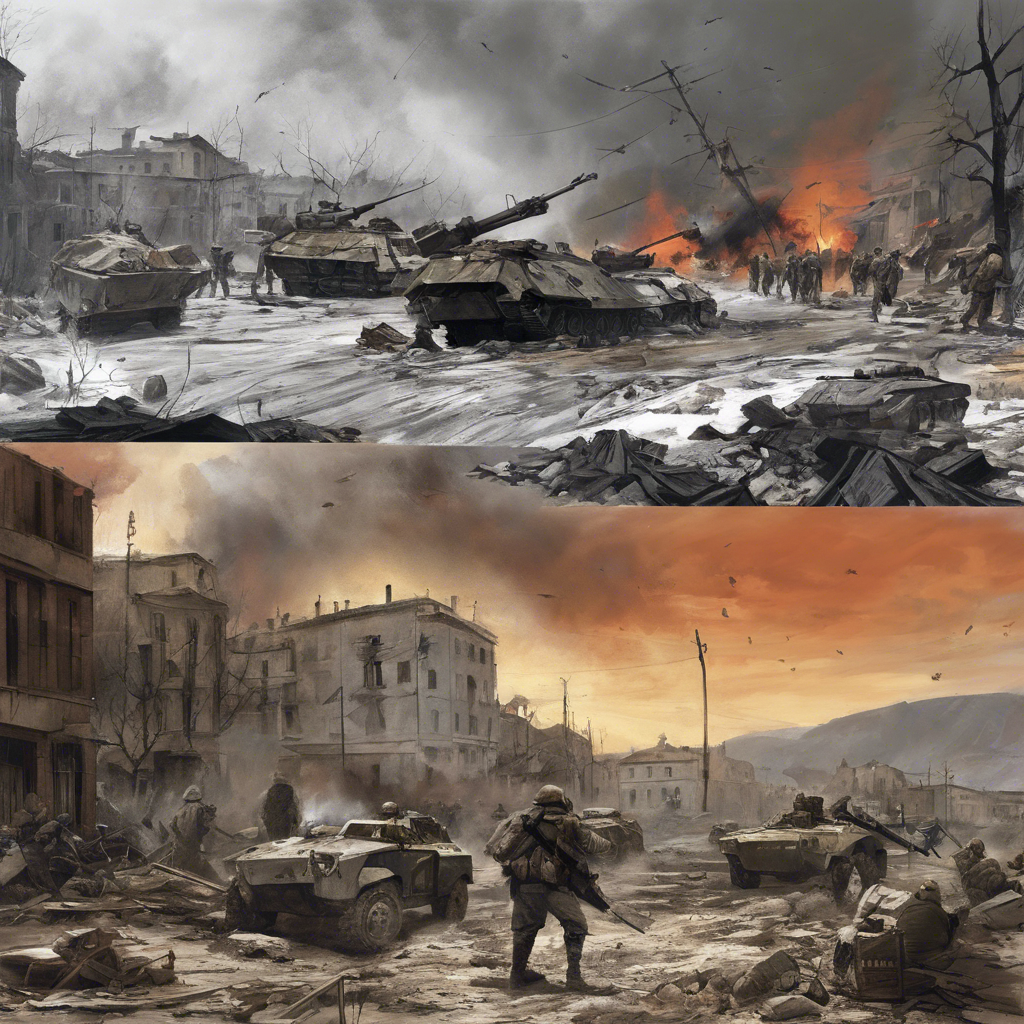
How Did The Media Influence Public Perception Of The Yugoslav Wars And The Roles Of International Organizations?
Introduction
The Yugoslav Wars, which spanned from 1991 to 1999 and are often mistakenly noted to have lasted until 2001, were marked by severe ethnic conflicts and significant humanitarian crises. The role of media was crucial in shaping both public perception and the global response to these tragic events. The impact of media representation was further enhanced by the involvement of international organizations, whose actions were frequently analyzed through various media narratives that portrayed both their efforts and shortcomings in addressing the atrocities.
Media Representation of the Yugoslav Wars
During the Yugoslav Wars, media coverage was highly variable, often reflecting the political and ideological biases of the reporting outlets. The manner in which the conflicts were portrayed significantly informed the public's comprehension of the complex ethnic tensions and violence. Reports that showcased the suffering of civilians in Bosnia and Kosovo invoked strong international reactions, driving governments to respond with humanitarian aid and military support. Conversely, many media narratives reduced the conflicts to simplistic good versus evil dichotomies, obscuring the underlying issues.
- Powerful visual imagery of suffering civilians triggered emotional global reactions.
- Selective news coverage heightened the perceived urgency of humanitarian crises.
- The specific language and terminology used by media shaped the collective understanding of the conflicts.
Influence of International Organizations in the Media
International organizations, such as the United Nations (UN) and NATO, were frequently featured in media reports, with their roles undergoing rigorous scrutiny. Media portrayals significantly influenced the public's perception of these organizations' effectiveness in managing humanitarian crises and establishing peace. Accounts highlighting failures, like the tragic Srebrenica massacre in 1995, contributed to a narrative of ineffectiveness, ultimately tarnishing the reputation of organizations responsible for maintaining global stability.
- Media headlines that emphasized international failures bred public skepticism.
- Positive media framing of successful interventions, such as NATO airstrikes, supported militaristic responses.
- Media narratives surrounding peace negotiations offered both optimism and critical viewpoints.
Conclusion
In conclusion, media representation played a critical role in shaping public perceptions of the Yugoslav Wars, crafting the narratives surrounding these conflicts and the actions of international organizations. A comprehensive understanding of these historical events demands a nuanced examination of media coverage, which can act as both a catalyst for advocacy and a source of misinformation. It is essential to engage critically with media representations to fully comprehend the complex realities of such impactful historical events.
Expert Quote
Dr. John F. McMahon, Professor of Political Science at the University of Massachusetts
The media's framing of the Yugoslav conflicts not only shaped public perception but also influenced policy decisions made by international organizations, demonstrating the vital role media narratives hold in situations of conflict.
McMahon, John F. 'Media Influence on International Relations and Humanitarian Intervention.' Journal of Conflict Studies, 2004.
Relevant Links
International Criminal Tribunal for the former Yugoslavia | United ...
https://www.icty.org/An Introduction to Human Trafficking: Vulnerability, Impact and Action
https://www.unodc.org/documents/human-trafficking/An_Introduction_to_Human_Trafficking_-_Background_Paper.pdfThe Breakup of Yugoslavia, 1990–1992
https://history.state.gov/milestones/1989-1992/breakup-yugoslaviaAchievements and benefits | European Union
https://european-union.europa.eu/priorities-and-actions/eu-priorities/achievements_enThe Long Fight: How Serbian and Albanian Media Narratives ...
https://research.library.fordham.edu/cgi/viewcontent.cgi?article=1148&context=international_seniorYouTube Videos
Most popular questions

How Do The Personal Relationships Among Gods Affect Their Decisions In The Iliad?
The intricate relationships among the gods in Homer's epic poem 'The Iliad' play a crucial role in shaping their actions and decisions. These divine interactions create a complex web of fates, where each god's personal alliances and rivalries directly influence the events of the mortal world.

What Strategies Can Parents Use To Educate Their Children About Online Safety Beyond Privacy Settings?
In today's digital landscape, teaching children about online safety is essential for their protection and well-being. While privacy settings play a critical role, parents can implement various strategies to create a thorough understanding of online safety principles among their children.
What Are The Different Types Of Insulation Materials Commonly Used In Buildings, And How Do They Compare In Terms Of Thermal Resistance?
Insulation materials are vital for enhancing energy efficiency in residential and commercial buildings by minimizing heat transfer. Understanding the various insulation types can lead to better choices for thermal resistance and overall comfort.
Most recent questions
How Do Audience Dynamics Differ Between Immersive Theater Experiences And Traditional Play Settings?
The dynamics of audience interaction differ significantly between immersive theater experiences and traditional theater settings. These differences greatly influence how audiences engage, perceive, and involve themselves in the narrative, ultimately impacting their overall theater experience.
How Did The Audience Reception Of Independent Films In The 1990s Differ From Blockbuster Films Of The 1980s?
The 1990s marked a transformative period in the film industry, significantly shifting how audiences engaged with independent films compared to the blockbuster-dominated 1980s. This decade witnessed a burgeoning appreciation for independent cinema, which strayed from conventional Hollywood methods, ushering in an era of innovative storytelling and unique cinematic voices.
In What Ways Does The Interactivity In Video Games Influence Players' Empathy Towards Characters Compared To Characters In Films?
Video games have emerged as a significant storytelling medium, providing players with unique interaction opportunities with characters that traditional films struggle to achieve. This level of interactivity profoundly influences players' perceptions and empathy towards characters, leading to an unparalleled emotional engagement in their gaming experiences.