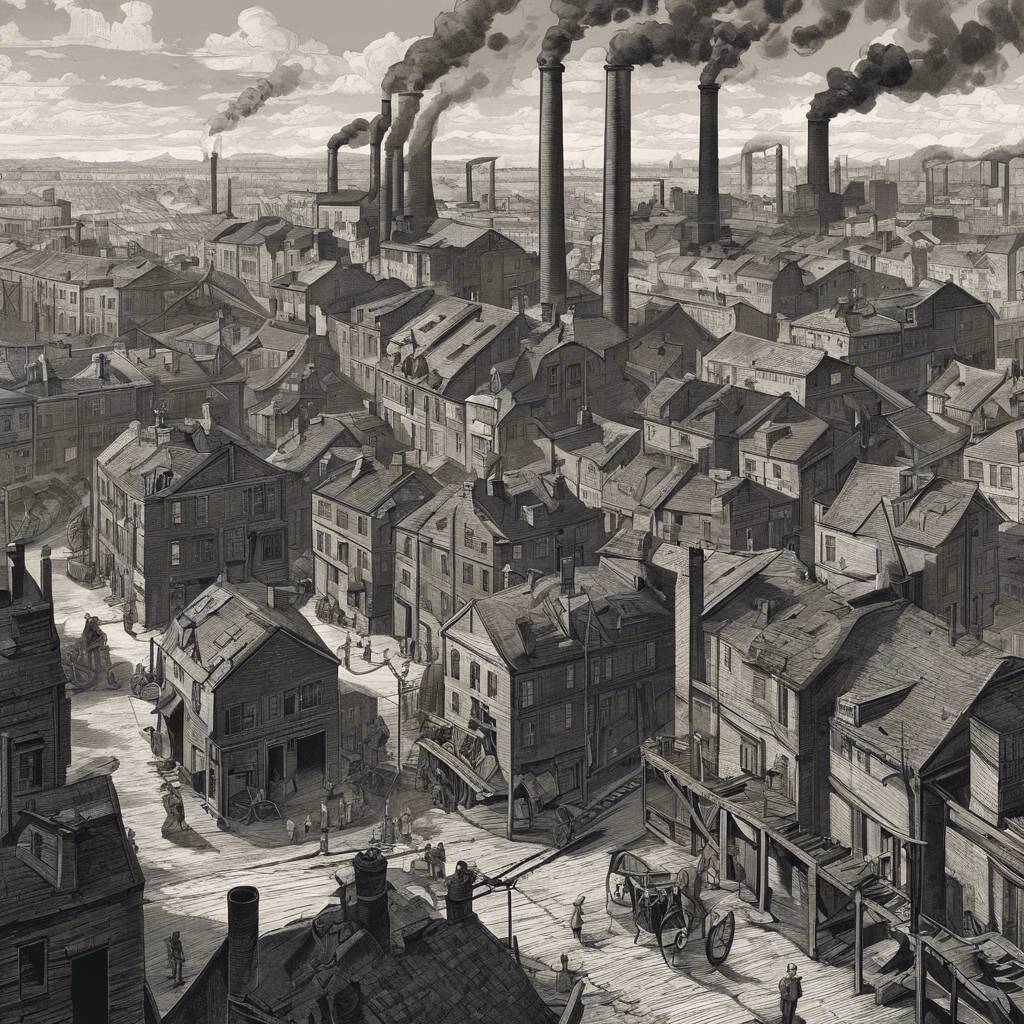
How Did Urbanization During The Industrial Revolution Affect Social Class Structures?
Introduction
The Industrial Revolution represents a pivotal moment in global history, fundamentally transforming economies, societies, and urban landscapes. Its most significant impact was on urbanization and the evolution of social classes, drastically changing how individuals lived, worked, and engaged within their communities.
Impact of Urbanization on Social Class Structures
Urbanization during the Industrial Revolution catalyzed the swift expansion of cities as individuals migrated from rural areas in search of employment in burgeoning factories. This mass movement of people marked a profound shift in social class dynamics, leading to the establishment of a robust working class and a more prominent middle class, alongside a wealthy industrial elite. The transition from agrarian lifestyles to urban settings greatly influenced social mobility and the interaction between different classes.
- The working class consisted of laborers who often endured long hours in factories under challenging and unsafe conditions.
- The middle class expanded to include factory owners, skilled professionals, and merchants who accumulated wealth and gained increasing social influence.
- The wealthy elite, comprising industrialists and landowners, held significant political and economic power, which intensified social class tensions.
Consequences of Changes in Social Class Dynamics
The transformation in social class structures resulting from urbanization brought about crucial consequences for society. Access to education, quality of living conditions, and political power became increasingly stratified, leading to widespread social unrest and demands for reform. The growing disparities among social classes often sparked movements advocating for labor rights and improved living standards.
- Educational opportunities became predominantly accessible to the wealthy, while the working class faced significant barriers to schooling and career advancement.
- Living conditions for the impoverished in urban areas frequently worsened, with overcrowded housing and poor sanitation services being common issues.
- Labor movements emerged, advocating for workers' rights, equitable wages, and improved working conditions, ultimately catalyzing significant reforms in labor legislation.
Conclusion
In conclusion, the urbanization experienced during the Industrial Revolution had a profound impact on social class structures, establishing a clear divide among the emerging working class, an expanding middle class, and a powerful elite. These shifts prompted significant societal changes, sparking social reforms and movements aimed at enhancing labor rights and living conditions for the working population.
Expert Quote
Dr. Eric Hobsbawm, Historian and Author
The Industrial Revolution created a new social order, characterized by a distinct working class and a burgeoning middle class, both of which were products of urbanization and industrialization processes that reshaped modern society.
The Age of Revolution: Europe 1789-1848, 1962
Relevant Links
Industrialization, Labor, and Life
https://education.nationalgeographic.org/resource/industrialization-labor-and-life/Urbanization - Industrial Revolution, Population, Infrastructure ...
https://www.britannica.com/topic/urbanization/Impact-of-the-Industrial-RevolutionImmigration and the American Industrial Revolution From 1880 to ...
https://www.ncbi.nlm.nih.gov/pmc/articles/PMC2760060/Society and the Industrial Age | AP World History: Modern Class ...
https://library.fiveable.me/ap-world/unit-5/social-effects-industrialization-1750-1900/study-guide/yz9JKbQAG6X4xBMGJGWoNew York State Grades 9-12 Social Studies Framework
https://www.nysed.gov/sites/default/files/programs/curriculum-instruction/ss-framework-9-12.pdfYouTube Videos
Most popular questions

How Do The Personal Relationships Among Gods Affect Their Decisions In The Iliad?
The intricate relationships among the gods in Homer's epic poem 'The Iliad' play a crucial role in shaping their actions and decisions. These divine interactions create a complex web of fates, where each god's personal alliances and rivalries directly influence the events of the mortal world.

What Strategies Can Parents Use To Educate Their Children About Online Safety Beyond Privacy Settings?
In today's digital landscape, teaching children about online safety is essential for their protection and well-being. While privacy settings play a critical role, parents can implement various strategies to create a thorough understanding of online safety principles among their children.
What Are The Different Types Of Insulation Materials Commonly Used In Buildings, And How Do They Compare In Terms Of Thermal Resistance?
Insulation materials are vital for enhancing energy efficiency in residential and commercial buildings by minimizing heat transfer. Understanding the various insulation types can lead to better choices for thermal resistance and overall comfort.
Most recent questions
How Do User Feedback And Ratings Affect The Evolution Of Recommendation Algorithms In Streaming Services?
User feedback and ratings are vital for optimizing recommendation algorithms in streaming services. These algorithms analyze viewer preferences and behaviors to continuously improve user satisfaction and engagement with personalized content offerings.
If You Could Choose Between Teleportation Or Time Travel, Which Would You Choose And Why?
Choosing between teleportation and time travel is a captivating exploration that merges elements of science fiction with profound philosophical inquiries about existence and decision-making. Each extraordinary ability offers unique advantages and challenges, influencing our understanding of time and space.
How Have Advancements In Technology Influenced The Way Consumers Discover New Music?
The rapid evolution of technology in recent decades has transformed how consumers find and connect with music. With the rise of the internet and streaming platforms, innovations in technology have dramatically reshaped the way we explore and enjoy music.