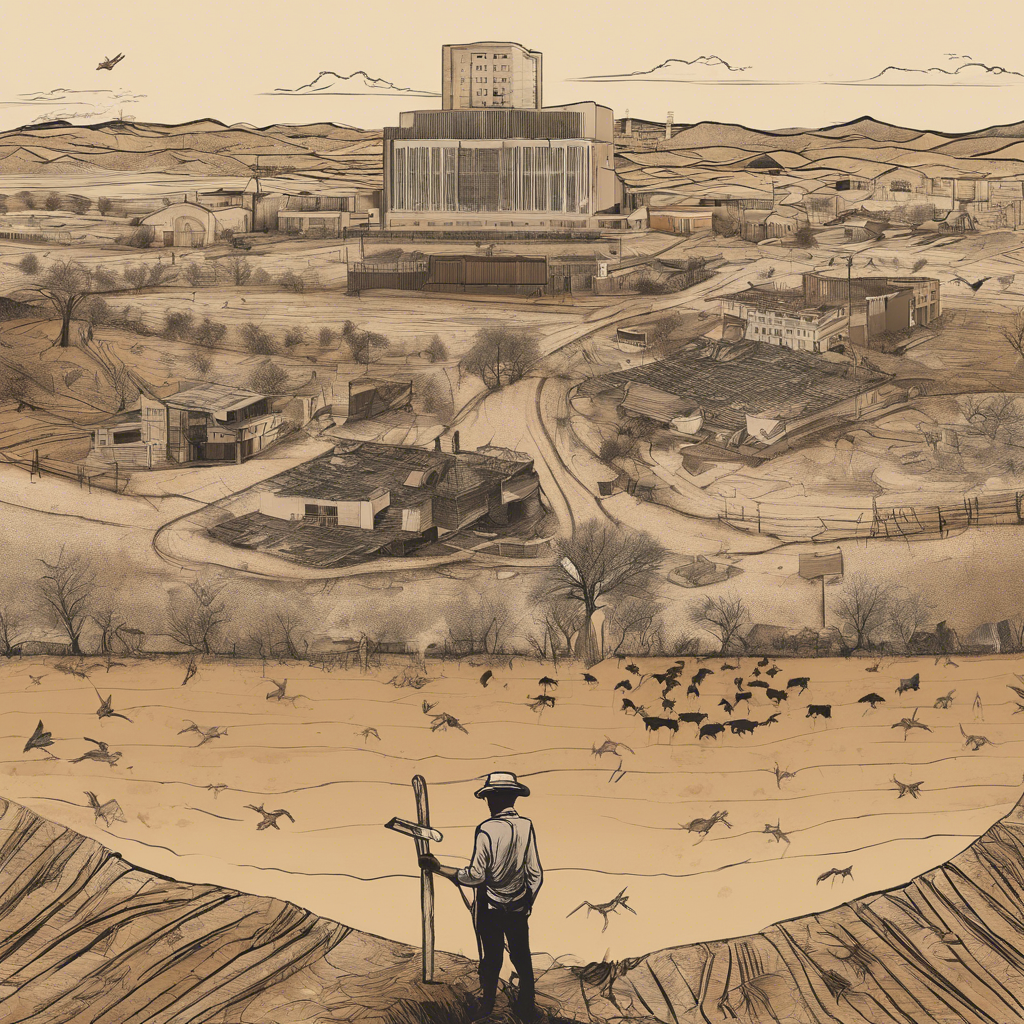
How Do Political Factors In Addition To Economic Factors Affect Migration Choices In Climate-affected Regions?
Introduction
Migration decisions in regions affected by climate change are shaped by a complex interplay of economic and political factors. Understanding how these elements interplay is crucial for gaining insights into the challenges of human mobility resulting from environmental shifts and crises.
Economic Drivers of Migration
Economic factors play a critical role in driving migration patterns. Residents may be compelled to leave their homes due to significant reductions in agricultural productivity, loss of jobs, or financial challenges posed by the effects of climate change. For instance, a farmer in an area experiencing prolonged drought may relocate to urban centers in pursuit of more stable employment, illustrating how climate change leads to economic hardship and subsequent migration.
- Declining job prospects in climate-affected regions due to environmental degradation.
- Rising economic inequality prompts migration from disadvantaged areas to more affluent urban centers.
Political Influences on Migration Patterns
Political factors have a profound impact on migration decisions, particularly in regions facing challenges from climate change. Government policies can either enable or hinder individuals' ability to stay in their homes or migrate effectively. Moreover, political instability can exacerbate the effects of climate crises, leading to increased displacement. For example, governance failures related to resource management can intensify conflicts, further driving migration.
- Legislation on land rights and ownership significantly influences who can remain in or leave affected areas.
- Political instability can create hazardous conditions, driving people to migrate in search of safety.
Synergy Between Economic and Political Influences
The relationship between economic and political factors regarding migration is complex and interconnected. Economic challenges can instigate political unrest, which may, in turn, reshape migration patterns. For example, severe flooding that destroys crops and livelihoods could lead to economic stress and protests against ineffective governance, further complicating the migration landscape.
- Economic crises can lead to social instability, highlighting the relationship between economic conditions and migration.
- Political strategies regarding climate action directly affect economic prospects in vulnerable regions.
Conclusion
In conclusion, both economic and political influences significantly shape migration choices in climate-affected regions. Economic pressures often propel individuals to seek improved circumstances, while the political environment can either facilitate or hinder this movement. Understanding these dynamics is essential for crafting effective policies to support affected communities.
Expert Quote
Professor David Satterthwaite, Senior Fellow at the International Institute for Environment and Development (IIED)
The interplay between climate change and migration involves not only economic factors but also critical political influences that determine whether individuals can adapt or must seek new homes.
Satterthwaite, D. (2021). 'Climate Change, Migration, and Politics.' IIED Research Report.
Relevant Links
Migration drivers | Migration data portal
https://www.migrationdataportal.org/themes/migration-driversClimate Change and International Responses Increasing ...
https://www.dni.gov/files/ODNI/documents/assessments/NIE_Climate_Change_and_National_Security.pdfCalifornia's High Housing Costs: Causes and Consequences
https://www.lao.ca.gov/reports/2015/finance/housing-costs/housing-costs.aspxChapter 5 : Food Security — Special Report on Climate Change and ...
https://www.ipcc.ch/srccl/chapter/chapter-5/Drivers of international migration | EMM2
https://emm.iom.int/handbooks/global-context-international-migration/drivers-international-migrationYouTube Videos
Most popular questions

How Do The Personal Relationships Among Gods Affect Their Decisions In The Iliad?
The intricate relationships among the gods in Homer's epic poem 'The Iliad' play a crucial role in shaping their actions and decisions. These divine interactions create a complex web of fates, where each god's personal alliances and rivalries directly influence the events of the mortal world.

What Strategies Can Parents Use To Educate Their Children About Online Safety Beyond Privacy Settings?
In today's digital landscape, teaching children about online safety is essential for their protection and well-being. While privacy settings play a critical role, parents can implement various strategies to create a thorough understanding of online safety principles among their children.
What Are The Different Types Of Insulation Materials Commonly Used In Buildings, And How Do They Compare In Terms Of Thermal Resistance?
Insulation materials are vital for enhancing energy efficiency in residential and commercial buildings by minimizing heat transfer. Understanding the various insulation types can lead to better choices for thermal resistance and overall comfort.
Most recent questions
If You Could Choose Between Teleportation Or Time Travel, Which Would You Choose And Why?
Choosing between teleportation and time travel is a captivating exploration that merges elements of science fiction with profound philosophical inquiries about existence and decision-making. Each extraordinary ability offers unique advantages and challenges, influencing our understanding of time and space.
How Does User-generated Content Influence Purchasing Decisions Among Millennials?
User-generated content, often abbreviated as UGC, is essential in influencing purchasing decisions, especially among Millennials who prioritize authenticity and relatability in their shopping experiences.
What Factors Influence The Complexity Of Red Wine Flavors?
The intricate flavor profiles of red wine are shaped by many elements, including the grape varieties chosen and the methods of winemaking. Understanding these factors enhances your enjoyment and appreciation of red wine and its vast array of tasting notes.