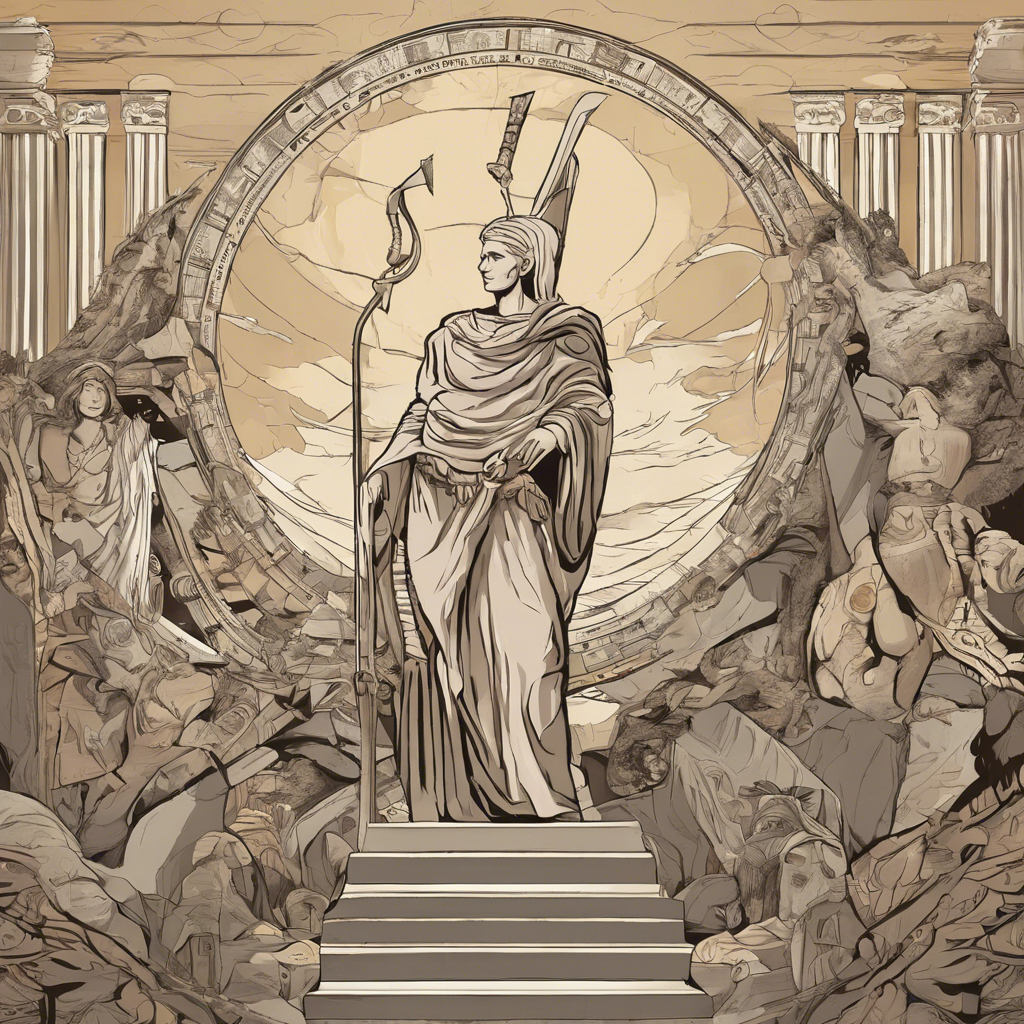
How Does The Belief In Fate In Ancient Civilizations Compare With Modern Views On Destiny And Free Will In Contemporary Society?
Introduction
The concept of fate has profoundly influenced human thought and cultural narratives throughout history. From ancient civilizations that embraced a deterministic view of the universe to the modern debate between destiny and free will, the evolution of these ideas reveals much about our understanding of life's purpose. Recent academic studies have uncovered how the beliefs surrounding fate have transformed across different cultures and epochs, encouraging a nuanced exploration of their significance in contemporary society.
Ancient Civilizations and the Concept of Fate
In ancient societies, the notion of fate was often embodied as an omnipotent force that orchestrated the universe. For instance, in Greek mythology, the Moirai, or Fates, represented the belief that life was a predetermined journey, with their roles of spinning, measuring, and cutting the thread of life signifying the inevitability of fate. Similarly, Roman culture revered Fortuna, a goddess associated with fortune and chance, reflecting the unpredictable aspects of fate, as articulated in classical literature by poets like Virgil. This shared understanding of fate shaped social norms, influenced decision-making, and instilled a sense of moral duty among individuals. Indeed, people regarded fate as a divine decree, often leading to a communal acceptance of life's predetermined course, where personal efforts seemed paltry against the backdrop of cosmic order.
- Fate viewed as a divine force or supernatural element influenced by the gods or the universe.
- Acceptance of fate cultivated resilience and stoicism in ancient cultures.
- The moral implications of fate where outcomes were often interpreted as ordained or unjust.
Modern Perspectives on Destiny and Free Will
In contemporary society, our interpretation of fate has significantly evolved. While ancient philosophies often highlighted predestination, modern viewpoints advocate for a synthesis between destiny and free will. Many individuals now understand that although external factors may influence certain events, they ultimately retain the power to make choices that significantly shape their personal narratives. This idea resonates with the 'butterfly effect,' suggesting that small actions can yield substantial and unpredictable consequences, thereby empowering individuals to steer their own destinies. This transformation is apparent in modern literature, psychological theories, and philosophical discussions that underscore the importance of personal accountability and the intricate nature of moral agency.
- Increased focus on individual agency and the significance of moral responsibility.
- Recognition of the interplay between external factors and personal choices.
- Cultural storytelling that champions self-determination and proactive living.
Conclusion
The comparison between ancient and modern beliefs about fate and free will underscores the adaptive nature of human thought. While historical perspectives predominantly acknowledged a predetermined life shaped by deities or cosmic forces, contemporary viewpoints illuminate the interplay between destiny and personal choice, marking a significant shift in our comprehension of these essential concepts.
Expert Quote
Dr. Martin Eliseo, Professor of Philosophy at Stanford University
The tension between fate and free will reflects a fundamental aspect of the human experience; we must navigate our lives between accepting the limits of our control and asserting our agency.
Exploring Free Will and Fate: A Philosophical Inquiry, Stanford University Press, 2020
Relevant Links
Why did God Create a World that He Knew was Going to Go Wrong ...
https://ymi.today/2016/11/why-did-god-create-a-world/The Age of AI has begun | Bill Gates
https://www.gatesnotes.com/The-Age-of-AI-Has-BegunFree will - Wikipedia
https://en.wikipedia.org/wiki/Free_willFree Will (Stanford Encyclopedia of Philosophy)
https://plato.stanford.edu/entries/freewill/If god knows our future then how does free will exist? : r/Christianity
https://www.reddit.com/r/Christianity/comments/w1mp5r/if_god_knows_our_future_then_how_does_free_will/YouTube Videos
Most popular questions

How Do The Personal Relationships Among Gods Affect Their Decisions In The Iliad?
The intricate relationships among the gods in Homer's epic poem 'The Iliad' play a crucial role in shaping their actions and decisions. These divine interactions create a complex web of fates, where each god's personal alliances and rivalries directly influence the events of the mortal world.

What Strategies Can Parents Use To Educate Their Children About Online Safety Beyond Privacy Settings?
In today's digital landscape, teaching children about online safety is essential for their protection and well-being. While privacy settings play a critical role, parents can implement various strategies to create a thorough understanding of online safety principles among their children.
What Are The Different Types Of Insulation Materials Commonly Used In Buildings, And How Do They Compare In Terms Of Thermal Resistance?
Insulation materials are vital for enhancing energy efficiency in residential and commercial buildings by minimizing heat transfer. Understanding the various insulation types can lead to better choices for thermal resistance and overall comfort.
Most recent questions
What Are The Primary Motivations For Readers To Engage With Fan Fiction On Various Platforms?
Fan fiction has emerged as a lively and engaging community where readers delve into narratives that expand their cherished universes. This immersive experience is fueled by diverse motivations unique to every fan fiction reader.
How Have Social Media Platforms Influenced The Distribution Strategies Of Indie Musicians?
Social media has revolutionized the way independent musicians promote their work and engage with audiences, offering unparalleled opportunities for music distribution and fan connection. This evolution has transformed traditional distribution methods, empowering indie artists to reach their fans directly and utilize innovative marketing strategies.
In What Ways Did The Emergence Of Different Political Ideologies During Global Conflicts Impact The Themes And Subjects Chosen By Artists?
The emergence of diverse political ideologies during major global conflicts has profoundly influenced artists, shaping the themes and subjects of their creations. This dynamic interplay not only reflects societal changes, tensions, and aspirations but also the artists' personal and creative responses to these powerful ideologies.