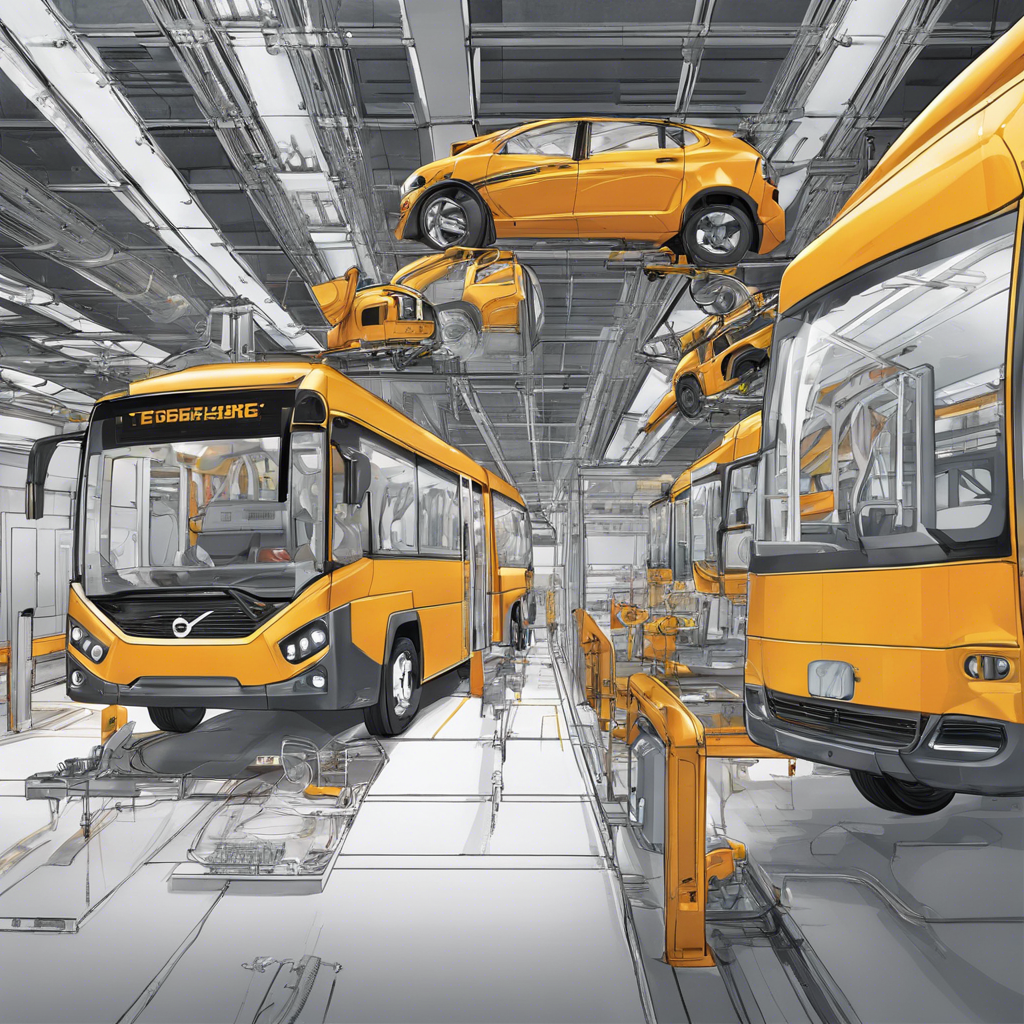
How Does Volvo's Bus Manufacturing Differ From Its Car Production?
Introduction
Volvo's bus manufacturing process is distinct from its car production, tailored to meet the unique market demands and engineering challenges associated with each vehicle type. This analysis highlights the key differences between the manufacturing of Volvo buses and cars, providing a comprehensive understanding of the nuances involved.
Production Volume and Customization in Bus Manufacturing
A key difference in Volvo's manufacturing of buses versus cars lies in production volume and the degree of customization. Buses are typically produced in lower volumes, allowing for a higher level of customization that meets the specific needs of transit agencies and individual customers. Volvo focuses on unique specifications for each bus model, ensuring they address community demands for transportation solutions effectively.
- Buses are produced in smaller quantities, enabling extensive customization options.
- Cars are mass-produced, featuring standardized specifications for widespread market appeal.
Engineering Challenges and Safety Standards for Buses
The engineering requirements for buses contrast sharply with those for cars, primarily due to the larger size and intended usage of buses. Buses must comply with rigorous safety regulations that consider the increased passenger capacity and operational environments. Volvo employs advanced engineering technologies and best practices to prioritize safety, durability, and performance, particularly in enhancing stability for urban navigation.
- Buses are engineered with reinforced structures to support higher weights and ensure passenger safety.
- Cars focus on aerodynamic designs and fuel efficiency, optimizing performance alongside comfort.
Technological Integration Differences
Technological advancements in Volvo's buses and cars are designed with different priorities. Buses incorporate technology aimed at enhancing passenger comfort and operational efficiency within public transport systems. Conversely, cars benefit from technological features that amplify driver experience and vehicle performance. Innovations such as driver-assistance systems are tailored to buses to improve logistics management, including fleet tracking and proactive maintenance monitoring.
- Buses focus on features that improve passenger comfort and safety, such as automated stop announcements and real-time tracking.
- Cars incorporate technology that enhances driving performance, infotainment options, and navigation systems.
Conclusion
In conclusion, Volvo's manufacturing of buses emphasizes customization, safety standards suited for larger vehicles, and technologies that enhance the passenger experience, while its car production prioritizes mass-market efficiency, performance refinement, and innovative driver-assist technologies. Recognizing these differences highlights the specific complexities and tailored approaches inherent in the manufacturing of each vehicle type.
Expert Quote
Dr. David H. Ackerman, Transportation Engineering Expert
The complexity of manufacturing buses requires attention to specialized design needs that prioritize public safety and operational effectiveness, while contrasting sharply with the mass production techniques utilized for automobiles.
Research Paper on Public Transit Safety Standards, Journal of Transportation Engineering, 2022
Relevant Links
Why are there so many differences between North American and ...
https://www.reddit.com/r/transit/comments/o4f48s/why_are_there_so_many_differences_between_north/Life cycle assessment of city buses powered by electricity ...
https://www.sciencedirect.com/science/article/pii/S1361920919302792Volvo Cars - Wikipedia
https://en.wikipedia.org/wiki/Volvo_CarsOur global presence | Volvo Group
https://www.volvogroup.com/en/about-us/organization/our-global-presence.htmlCheck for Recalls: Vehicle, Car Seat, Tire, Equipment | NHTSA
https://www.nhtsa.gov/recallsYouTube Videos
Most popular questions

How Do The Personal Relationships Among Gods Affect Their Decisions In The Iliad?
The intricate relationships among the gods in Homer's epic poem 'The Iliad' play a crucial role in shaping their actions and decisions. These divine interactions create a complex web of fates, where each god's personal alliances and rivalries directly influence the events of the mortal world.

What Strategies Can Parents Use To Educate Their Children About Online Safety Beyond Privacy Settings?
In today's digital landscape, teaching children about online safety is essential for their protection and well-being. While privacy settings play a critical role, parents can implement various strategies to create a thorough understanding of online safety principles among their children.
What Are The Different Types Of Insulation Materials Commonly Used In Buildings, And How Do They Compare In Terms Of Thermal Resistance?
Insulation materials are vital for enhancing energy efficiency in residential and commercial buildings by minimizing heat transfer. Understanding the various insulation types can lead to better choices for thermal resistance and overall comfort.
Most recent questions
What Are Some Examples Of Artworks That Incorporate Audience Participation, And How Do They Differ From Traditional Art Forms?
Art has undergone a remarkable evolution over the years, with audience participation emerging as a dynamic and essential component of contemporary art. This transformation contrasts with traditional art forms, which typically present a fixed array of artistic expressions requiring little to no active engagement from viewers.
How Do Auditory Elements In Film Contribute To Emotional Responses In Viewers Compared To The Use Of Language In Literature?
The relationship between auditory elements in film and the use of language in literature plays a vital role in shaping audience experiences and triggering diverse emotional reactions. While both forms of narrative art deliver meaning, they utilize distinctly different approaches, resulting in unique effects on moviegoers and readers alike.
What Are The Socio-economic Impacts Of Tourism Generated By Film Festivals Compared To Music Festivals?
Festivals play a pivotal role in boosting tourism and enhancing local economies, yet the socio-economic impacts of film festivals significantly differ from those of music festivals. This detailed comparison highlights various benefits and challenges associated with both types of festivals, influencing local communities in distinct ways.