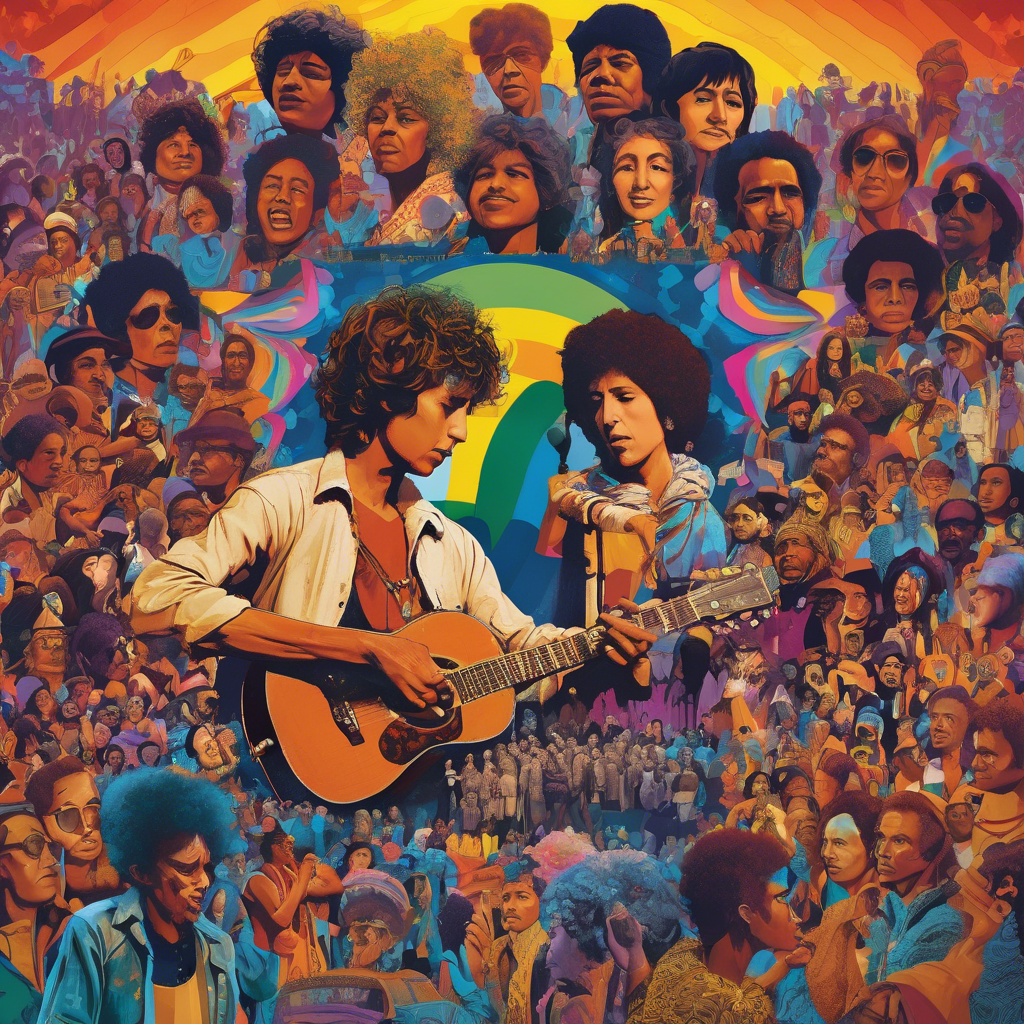
In What Ways Did The Lyrics Of 1960s Music Directly Address Political And Social Issues?
Introduction
The 1960s marked a pivotal era in music and societal transformation. Musicians began utilizing their songs as powerful channels to highlight urgent political and social issues, mirroring and shaping the significant changes of this dynamic decade.
Protest Songs: A Powerful Voice for Social Change
Music in the 1960s emerged as a potent instrument of activism, vocalizing the struggles of civil rights, anti-war movements, and social justice initiatives. Renowned artists like Bob Dylan and Joan Baez crafted deeply impactful lyrics that captured the frustrations and aspirations of individuals during this transformative period. Their protest songs became anthems, resonating with various movements and reflecting the challenges faced by marginalized communities. For instance, Bob Dylan’s iconic track "The Times They Are A-Changin'" encouraged listeners to advocate for change and confront injustices. The song not only mirrored the evolving cultural landscape but also galvanized youth activism. Similarly, songs like "We Shall Overcome," which gained prominence during the Civil Rights Movement, promoted messages of hope and resilience, even though it originated as an African American spiritual reinterpreted by artists like Baez.
- Protest songs embodied the ethos of the Civil Rights Movement.
- Anti-war songs expressed strong opposition to the Vietnam War.
The Impact of Folk and Rock Music on Social Awareness
Folk and rock genres became essential mediums for communicating messages about inequality, war, and pervasive societal issues. With their authentic and relatable lyrics, these musical styles resonated with a wide audience and fueled collective activism. Notable bands like The Beatles addressed themes of peace and love amidst global conflict. Their anthem "All You Need Is Love" conveyed vital messages of unity and peace, aligning with a broader counterculture movement that challenged societal norms. This transition towards socially aware lyrics signified a monumental shift within the music industry, where entertainment increasingly merged with social advocacy for transformative societal change.
- Folk music highlighted critical social injustices prevalent in society.
- Rock music effectively combined entertainment with poignant political commentary.
Conclusion
The lyrics and melodies of 1960s music not only reflected the societal challenges of the time but also actively encouraged listeners to engage with these pressing issues. This era exemplifies the deep connection between music and social change, as artists harnessed their platforms to inspire and challenge future generations.
Expert Quote
Dr. David Hajdu, Music Historian and Professor at Columbia University
The songs of the 1960s were not just entertainment; they were vital expressions of the time’s political and social consciousness, giving voice to a generation fighting for change.
The New York Times
Relevant Links
Bob Dylan and the Sixties: A Social Commentary Reflecting Politics ...
https://digitalcommons.pace.edu/cgi/viewcontent.cgi?article=1037&context=honorscollege_theses50 years of Hip-Hop: Exploring the Transformative Influence of Hip ...
https://socialwork.columbia.edu/news/50-years-hip-hop-exploring-transformative-influence-hip-hop-field-social-workThe Influence of the 1960s and Psychedelic Music on Culture of the ...
https://medium.com/rock-history-class-page/the-influence-of-the-1960s-and-psychedelic-music-on-culture-of-the-day-d68e296a1a7510 Protest Songs of Johnny Cash – The Ongoing History of Protest ...
https://www.ongoinghistoryofprotestsongs.com/2024/01/09/10-protest-songs-of-johnny-cash/29. The Triumph of the Right | THE AMERICAN YAWP
http://www.americanyawp.com/text/29-the-triumph-of-the-right/YouTube Videos
Most popular questions

How Do The Personal Relationships Among Gods Affect Their Decisions In The Iliad?
The intricate relationships among the gods in Homer's epic poem 'The Iliad' play a crucial role in shaping their actions and decisions. These divine interactions create a complex web of fates, where each god's personal alliances and rivalries directly influence the events of the mortal world.

What Strategies Can Parents Use To Educate Their Children About Online Safety Beyond Privacy Settings?
In today's digital landscape, teaching children about online safety is essential for their protection and well-being. While privacy settings play a critical role, parents can implement various strategies to create a thorough understanding of online safety principles among their children.
What Are The Different Types Of Insulation Materials Commonly Used In Buildings, And How Do They Compare In Terms Of Thermal Resistance?
Insulation materials are vital for enhancing energy efficiency in residential and commercial buildings by minimizing heat transfer. Understanding the various insulation types can lead to better choices for thermal resistance and overall comfort.
Most recent questions
In What Ways Do Different Genres Of Music Explore And Comment On Political And Social Themes?
Music has always been a potent medium for articulating political and social themes. Various music genres not only reflect societal issues but actively engage listeners, shedding light on diverse narratives and perspectives. Whether it is through poignant lyrics or compelling rhythms, music plays a crucial role in shaping social consciousness.
In What Ways Can We Measure The Impact Of Audience Interaction On The Reception And Interpretation Of Contemporary Art Compared To Traditional Art Forms?
Exploring audience interaction in art reveals crucial distinctions in the perception and understanding of contemporary art versus traditional art. This interaction significantly influences the emotional and intellectual responses to artworks, making it a vital factor for art interpretation and appreciation.
How Do Secondary Characters Influence The Romantic Choices Of Primary Characters In Modern Romantic Comedies?
In contemporary romantic comedies, secondary characters play a vital role in influencing the romantic decisions and journeys of the main characters. These pivotal supporting characters can serve as friends, mentors, or even adversaries, significantly shaping the narrative arc and the choices of the protagonists throughout the film.