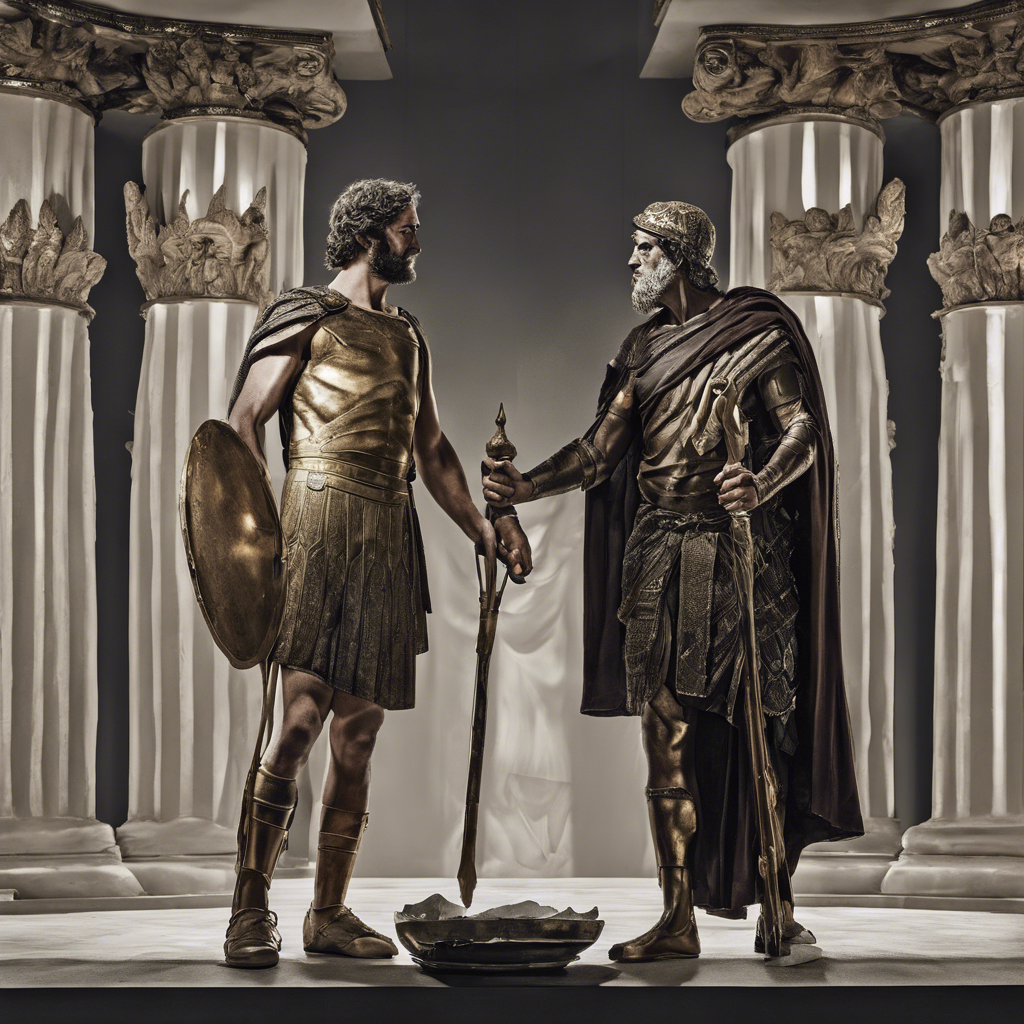
In What Ways Do The Portrayals Of Fate And Free Will Differ Between The Aeneid And The Iliad, And How Does This Affect The Story Arcs Of The Protagonists?
Introduction
The exploration of fate and free will in ancient literature, particularly in epic poems like Homer's 'Iliad' and Virgil's 'Aeneid', has significant implications for understanding character development and narrative themes. Both texts intricately weave these themes into the protagonists' lives, influencing their choices and defining their destinies within the rich tapestry of Greek and Roman mythology.
Fate in the Iliad
In the 'Iliad', the notion of fate is portrayed as an inevitable force, often expressed as 'moira', which shapes the outcomes of critical events. This theme of fate is revealed through prophecies and interactions among the gods, who frequently intervene yet remain powerless to change fate's decree. Characters such as Achilles struggle with their fates, coming to terms with the reality that their extraordinary abilities can't change their predetermined ends. This acknowledgment prompts deeper existential reflections and fosters a sense of acceptance among the epic's heroes.
- Fate predominantly directs the plot, with characters frequently resigning themselves to their destined fates.
- The conflict between personal desires and fate profoundly influences Achilles' character development, particularly in his choice to withdraw from battle, symbolizing his internal conflict with destiny.
Fate in the Aeneid
In contrast, the 'Aeneid' presents fate as a guiding power that collaborates with the will of the deities and the protagonist's decisions. Aeneas is destined to establish Rome, and despite facing numerous obstacles, his journey illustrates that free will has a significant impact within the structure of fate. The tension between adhering to destiny and pursuing personal desires reveals itself in Aeneas' sacrifices, ultimately emphasizing the synergy between fate and personal agency throughout his journey.
- Aeneas exemplifies the tension between personal ambitions and the responsibilities dictated by fate, influencing moral decisions, particularly regarding his relationship with Dido.
- Divine interventions provide both guidance and challenges, reinforcing the concept that while fate is immutable, personal choices still shape life’s outcomes.
Comparative Analysis
A comparative analysis of fate and free will in these two epic poems uncovers distinct thematic differences. The 'Iliad' highlights the tragic nature of predetermined fates and the heroic acceptance that accompanies it, while the 'Aeneid' offers a more hopeful perspective where destiny is influenced by individual choices. This contrast significantly impacts character arcs, with Achilles representing the tragic plight of humanity, while Aeneas symbolizes the potential for greatness achieved through dedication and resolve.
- Achilles' story showcases the constraints of free will against an unavoidable fate, leading to his realization of fate's supremacy during key moments.
- Aeneas' journey illustrates how exercising freedom within limitations can fulfill a greater purpose, especially evident in his commitment to establish Rome despite personal sacrifices.
Conclusion
In conclusion, the exploration of fate and free will in the 'Iliad' and 'Aeneid' presents diverse perspectives on human agency versus predetermined fates. Achilles confronts a tragic fate that leads to his downfall, whereas Aeneas maneuvers through his narrative with a blend of duty and personal choice that ensures the realization of his destiny. These contrasting portrayals not only influence the characters' journeys but also provide timeless insights into the human condition, linking ancient storytelling to contemporary philosophical discussions.
Expert Quote
Dr. Emily Wilson, Professor of Classical Studies at the University of Pennsylvania
In both the 'Iliad' and the 'Aeneid', the interplay of fate and free will provides deep insights into the characters' engagements with their destinies; Achilles epitomizes the tragic acceptance of fate, while Aeneas illustrates the power of shaping one's future through commitment and choice.
Translation of the 'Iliad' and 'Aeneid' with Commentary, 2015
Relevant Links
How does homer portray the relationship between gods and men in ...
https://www.quora.com/How-does-homer-portray-the-relationship-between-gods-and-men-in-the-OdysseyWhat is the role of the gods in The Iliad? How do they impact the ...
https://www.quora.com/What-is-the-role-of-the-gods-in-The-Iliad-How-do-they-impact-the-characters-Do-you-think-that-the-gods-were-driven-by-human-characters-in-any-wayThe Silence of Girls changed my perspective on The Song of ...
https://www.reddit.com/r/books/comments/otkow7/the_silence_of_girls_changed_my_perspective_on/Fate and Free Will in Vergil's "Aeneid"
https://www.jstor.org/stable/3293518Iliad, Odyssey, Aeneid: An Epic Trilogy — An essay by Tomas Rocha
https://samrocha.medium.com/iliad-odyssey-aeneid-an-epic-trilogy-9d3bc49d0631YouTube Videos
Most popular questions

How Do The Personal Relationships Among Gods Affect Their Decisions In The Iliad?
The intricate relationships among the gods in Homer's epic poem 'The Iliad' play a crucial role in shaping their actions and decisions. These divine interactions create a complex web of fates, where each god's personal alliances and rivalries directly influence the events of the mortal world.

What Strategies Can Parents Use To Educate Their Children About Online Safety Beyond Privacy Settings?
In today's digital landscape, teaching children about online safety is essential for their protection and well-being. While privacy settings play a critical role, parents can implement various strategies to create a thorough understanding of online safety principles among their children.
What Are The Different Types Of Insulation Materials Commonly Used In Buildings, And How Do They Compare In Terms Of Thermal Resistance?
Insulation materials are vital for enhancing energy efficiency in residential and commercial buildings by minimizing heat transfer. Understanding the various insulation types can lead to better choices for thermal resistance and overall comfort.
Most recent questions
What Role Did Synthesizers Play In The Evolution Of Music Genres Beyond Film, Such As Pop And Electronic Music?
Synthesizers have revolutionized the music industry, profoundly impacting diverse genres beyond their original applications in film scores. Their exceptional versatility and capacity to produce distinctive sounds have been instrumental in the development of pop and electronic music, solidifying their place in modern culture.
How Do Improvisation Techniques Vary Across Different Cultural Festivals?
Improvisation techniques play a vital role in cultural festivals worldwide, showcasing local traditions, artistic creativity, and spontaneous expressions. These techniques are heavily influenced by cultural contexts, historical backgrounds, and various art forms, highlighting the importance of improvisational arts in community engagement.
How Can Foreshadowing Be Effectively Used To Hint At A Character's True Motivations Without Revealing Them Too Early?
Foreshadowing is a powerful literary device that effectively builds suspense and subtly hints at a character’s true motivations without revealing them outright. By strategically incorporating hints and clues throughout the narrative, writers can engage readers and deepen their understanding of intricate character dynamics.