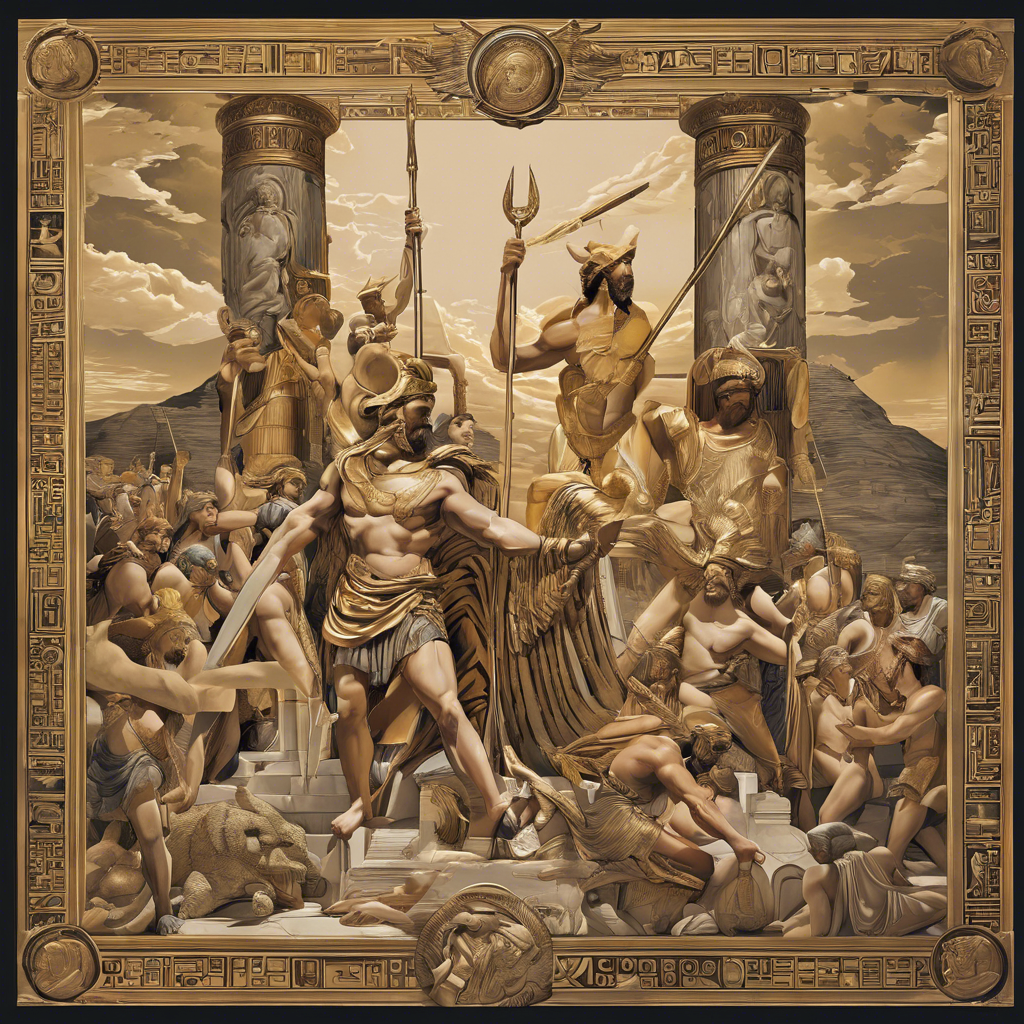
In What Ways Does The Role Of The Gods In The Iliad Influence The Concept Of Fate, And How Does This Compare To Their Role In The Odyssey?
Introduction
The significance of gods in ancient Greek literature, particularly in Homer's epic poems 'The Iliad' and 'The Odyssey', showcases how divine powers interact with human fate. Analyzing these roles offers valuable insights into the values and beliefs of ancient Greek culture regarding destiny, human agency, and the complexities of divine intervention.
The Influence of Gods in The Iliad
In 'The Iliad', the presence of gods deeply impacts the lives of mortals, who are often subject to divine intervention during battles and personal struggles. The gods symbolize not only their immense power but also personal attachments, rivalries, and human-like emotions. For instance, the gods take sides during the Trojan War, thus influencing its outcomes and the destinies of prominent characters. Hera and Athena champion the Greeks, while Aphrodite aids the Trojans. This engagement of gods illustrates a belief system where fate can be influenced or altered by divine powers as well as the actions of the characters themselves.
- The gods exhibit human-like characteristics, including jealousy and vengeance.
- Fate is depicted as a predetermined path, yet divine beings can manipulate certain outcomes, often challenging the characters' morals and virtues.
- Key figures are portrayed as pawns in the divine schema, emphasizing human susceptibility to the caprices of the gods.
The Role of Gods in The Odyssey
In contrast, 'The Odyssey' maintains the presence of gods but depicts them with a more nuanced approach. The divine figures provide guidance to Odysseus, assisting him on his arduous journey home instead of directly controlling his choices. For example, Athena acts as a mentor, offering wisdom and support while also allowing Odysseus to rely on his intelligence and determination. This evolution signifies a more balanced view of fate; although Odysseus encounters various trials, his ingenuity and persistence resonate with divine favor, illustrating how human initiative is essential in navigating destiny.
- Odysseus's quest highlights personal development, cleverness, and endurance instead of sole reliance on fate.
- Divine figures offer assistance, enhancing the importance of human experience and resilience over outright control of outcomes.
- The gods' involvement is less direct and occurs with subtlety, focusing on guidance rather than interference.
A Comparative Analysis of Fate and Divine Influence
Analyzing the roles of the gods in 'The Iliad' versus 'The Odyssey' reveals an evolving perspective on fate. 'The Iliad' portrays fate as a strict construct shaped significantly by divine interventions and human choices. In contrast, 'The Odyssey' proposes a more collaborative relationship in which human actions significantly shape fate. Each hero confronts their destiny uniquely, deeply influenced by their rapport with divine entities. Hektor’s fate is bound to his dedication to Troy and the assistance of gods like Apollo, while Odysseus’s fate is emblematic of his cleverness and resilience, guided by Athena to help him overcome challenges.
- The Iliad underscores the randomness of divine favor influencing fate profoundly, indicating that characters must adeptly navigate their fates amidst divine interventions.
- The Odyssey advocates for a partnership between human endeavors and divine guidance, shifting focus to individual agency.
- Both epic narratives portray the complexities of fate, yet they do so from distinct viewpoints that illustrate different elements of the human-divine experience.
Conclusion
The portrayal of gods in both 'The Iliad' and 'The Odyssey' illustrates a complex interplay of beliefs regarding fate and divine influence. In 'The Iliad', the gods frequently dictate the fates of mortals through overt and sometimes arbitrary interventions, while in 'The Odyssey', they embody a more guiding presence that promotes human initiative. Together, these epic stories highlight the intricate dynamics between fate, human agency, and divine influence in Greek mythology, showcasing the dual nature of divine interaction as both a burden and a boon.
Expert Quote
Dr. Barry B. Powell, Professor of Classics at the University of Wisconsin-Madison
In Homer's epics, the interplay between divine forces and human beings encapsulates the Greek belief that while fate is a guiding force, it is the choices and resilience of individuals, influenced by the gods, that ultimately shape their destinies.
Homer: The Iliad and The Odyssey, 2004
Relevant Links
Do the gods play a more significant role in Homer's works (Iliad and ...
https://www.quora.com/Do-the-gods-play-a-more-significant-role-in-Homers-works-Iliad-and-Odyssey-or-Virgils-Aeneid-Or-is-it-roughly-the-same-level-of-involvement-throughoutDivine Intervention, Loyalty, and the Inevitability of Odysseus and ...
https://wonglavelle.medium.com/divine-intervention-loyalty-and-the-inevitability-of-odysseus-and-penelope-fc9d5e1f1f32How does homer portray the relationship between gods and men in ...
https://www.quora.com/How-does-homer-portray-the-relationship-between-gods-and-men-in-the-OdysseyThe Homeric Epics and Gender Relations: What can we learn from ...
https://violyp.medium.com/the-homeric-epics-and-gender-relations-what-can-we-learn-from-the-greek-mythology-7a84f1376d20The Gods Role In Homer's The Odyssey | ipl.org
https://www.ipl.org/essay/The-Gods-Role-In-Homers-The-Odyssey-PCR5HBQGYTYouTube Videos
Most popular questions

How Do The Personal Relationships Among Gods Affect Their Decisions In The Iliad?
The intricate relationships among the gods in Homer's epic poem 'The Iliad' play a crucial role in shaping their actions and decisions. These divine interactions create a complex web of fates, where each god's personal alliances and rivalries directly influence the events of the mortal world.

What Strategies Can Parents Use To Educate Their Children About Online Safety Beyond Privacy Settings?
In today's digital landscape, teaching children about online safety is essential for their protection and well-being. While privacy settings play a critical role, parents can implement various strategies to create a thorough understanding of online safety principles among their children.
What Are The Different Types Of Insulation Materials Commonly Used In Buildings, And How Do They Compare In Terms Of Thermal Resistance?
Insulation materials are vital for enhancing energy efficiency in residential and commercial buildings by minimizing heat transfer. Understanding the various insulation types can lead to better choices for thermal resistance and overall comfort.
Most recent questions
What Role Does Public Opinion Play In The Adaptation Of Classic Literature Into Modern Films?
The adaptation of classic literature into modern films is a multifaceted process deeply influenced by audience perceptions and public opinion. Analyzing how these perceptions shape adaptations provides valuable insights into contemporary cultural trends and the film industry.
What Design Elements In A Concert Venue Contribute Most To Sound Quality During Live Performances?
The acoustic design of a concert venue is essential in delivering an exceptional sound experience during live music performances. Multiple factors influence sound production, transmission, and audience perception, making these elements vital for any concert hall or performance space.
How Do Cognitive Biases Influence Betting Strategies In Poker And Blackjack?
Cognitive biases significantly influence the decisions of poker and blackjack players, often resulting in poor choices. By understanding these biases, players can gain a competitive edge by identifying and counteracting their effects on decision-making and betting strategies.