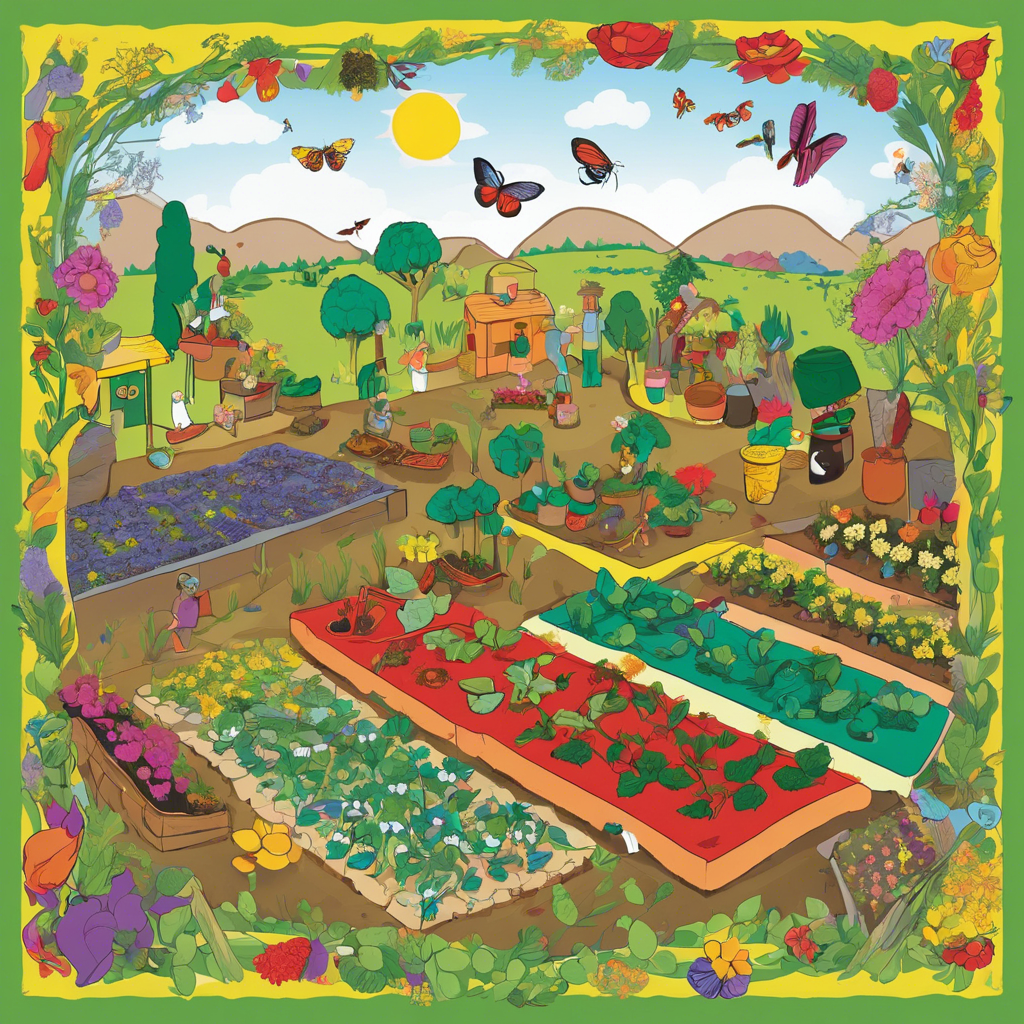
What Are The Environmental Impacts Of Community Gardens Versus Conventional Farming Practices?
Introduction
Community gardens and conventional farming practices have distinctly different impacts on the environment, affecting local ecosystems, biodiversity, and soil health. Understanding these differences is crucial for promoting sustainable agricultural practices and enhancing food security in urban areas.
Environmental Benefits of Community Gardens
Community gardens offer a variety of environmental benefits compared to traditional farming methods. They enhance urban biodiversity, contribute to carbon sequestration, and improve soil quality. By often utilizing organic farming practices, community gardens minimize harmful chemical use, which supports healthier ecosystems. Furthermore, they promote local food production, significantly reducing the carbon footprint associated with food transport.
- Enhance biodiversity by supporting a variety of plant species and attracting essential pollinators.
- Improve air quality through plants that absorb carbon dioxide and other harmful pollutants.
- Utilize organic soil amendments like compost to bolster soil health without introducing toxic chemicals.
- Minimize food miles since produce from community gardens is typically consumed locally, thereby lowering emissions.
Environmental Challenges of Conventional Farming
Conventional farming practices frequently lead to numerous environmental challenges. Large-scale monoculture farming reduces biodiversity and soil fertility, while reliance on pesticides and synthetic fertilizers contaminates water supplies and harms wildlife. Additionally, conventional agriculture is a significant source of greenhouse gas emissions due to the use of heavy machinery, land conversions, and long-distance food transport.
- Engage in monoculture practices, resulting in reduced biodiversity and greater susceptibility to pests and diseases.
- Rely on synthetic fertilizers, which can leach into nearby waterways, causing nutrient pollution that damages aquatic habitats.
- Emit greenhouse gases through machinery usage, land conversions, and the production of chemicals used in farming.
- Require substantial water resources, potentially depleting local aquifers and adversely affecting surrounding ecosystems.
Conclusion
In conclusion, community gardens are vital for enhancing biodiversity and promoting sustainable practices that reduce negative environmental impacts. In contrast, conventional farming often presents significant challenges to ecosystems. Transitioning towards more community-driven agricultural approaches can help alleviate many detrimental effects associated with conventional farming methods, fostering a more sustainable future.
Expert Quote
Dr. Marcia McNutt, President of the National Academy of Sciences
Community gardens play a crucial role in promoting biodiversity and sustainability in urban environments, offering a counterbalance to the detrimental effects of conventional agricultural practices that often compromise ecosystems.
Address at the National Academies of Sciences, Engineering, and Medicine Conference on Sustainability, 2022
Relevant Links
Are backyard food gardens better or worse for the environment than ...
https://www.reddit.com/r/sustainability/comments/12bjllf/are_backyard_food_gardens_better_or_worse_for_the/Confronting the Dark Side of Urban Agriculture – The Nature of Cities
https://www.thenatureofcities.com/2016/04/08/confronting-the-dark-side-of-urban-agriculture/Study examines carbon footprint of urban-farmed food | The ...
https://record.umich.edu/articles/study-examines-carbon-footprint-of-urban-farmed-food/Study finds that urban agriculture must be carefully planned to have ...
https://news.umich.edu/study-finds-that-urban-agriculture-must-be-carefully-planned-to-have-climate-benefits/Life cycle assessment of eight urban farms and community gardens ...
https://www.sciencedirect.com/science/article/abs/pii/S0921344923000587YouTube Videos
Most popular questions

How Do The Personal Relationships Among Gods Affect Their Decisions In The Iliad?
The intricate relationships among the gods in Homer's epic poem 'The Iliad' play a crucial role in shaping their actions and decisions. These divine interactions create a complex web of fates, where each god's personal alliances and rivalries directly influence the events of the mortal world.

What Strategies Can Parents Use To Educate Their Children About Online Safety Beyond Privacy Settings?
In today's digital landscape, teaching children about online safety is essential for their protection and well-being. While privacy settings play a critical role, parents can implement various strategies to create a thorough understanding of online safety principles among their children.
What Are The Different Types Of Insulation Materials Commonly Used In Buildings, And How Do They Compare In Terms Of Thermal Resistance?
Insulation materials are vital for enhancing energy efficiency in residential and commercial buildings by minimizing heat transfer. Understanding the various insulation types can lead to better choices for thermal resistance and overall comfort.
Most recent questions
In What Ways Do The Platforms Used By Online Critics Affect Their Review Styles Compared To Traditional Critics?
The emergence of digital platforms has profoundly changed how film and book critics publish reviews, resulting in notable distinctions between online critics and traditional critics. This evolution has not only transformed the writing style and format of reviews but has also significantly impacted audience engagement with content.
How Do Secondary Characters Influence The Romantic Choices Of Primary Characters In Modern Romantic Comedies?
In contemporary romantic comedies, secondary characters play a vital role in influencing the romantic decisions and journeys of the main characters. These pivotal supporting characters can serve as friends, mentors, or even adversaries, significantly shaping the narrative arc and the choices of the protagonists throughout the film.
In What Ways Did Sound And Music Contribute To The Narrative Themes Of 1980s Sci-fi Films Compared To Fantasy Films?
In the vibrant 1980s, sound design and music emerged as crucial components in shaping the narrative themes of both sci-fi and fantasy films. While both genres aimed to immerse audiences in imaginative worlds, the contributions of sound and music to their storytelling diverged significantly, with each genre employing distinct techniques to enhance viewer engagement.