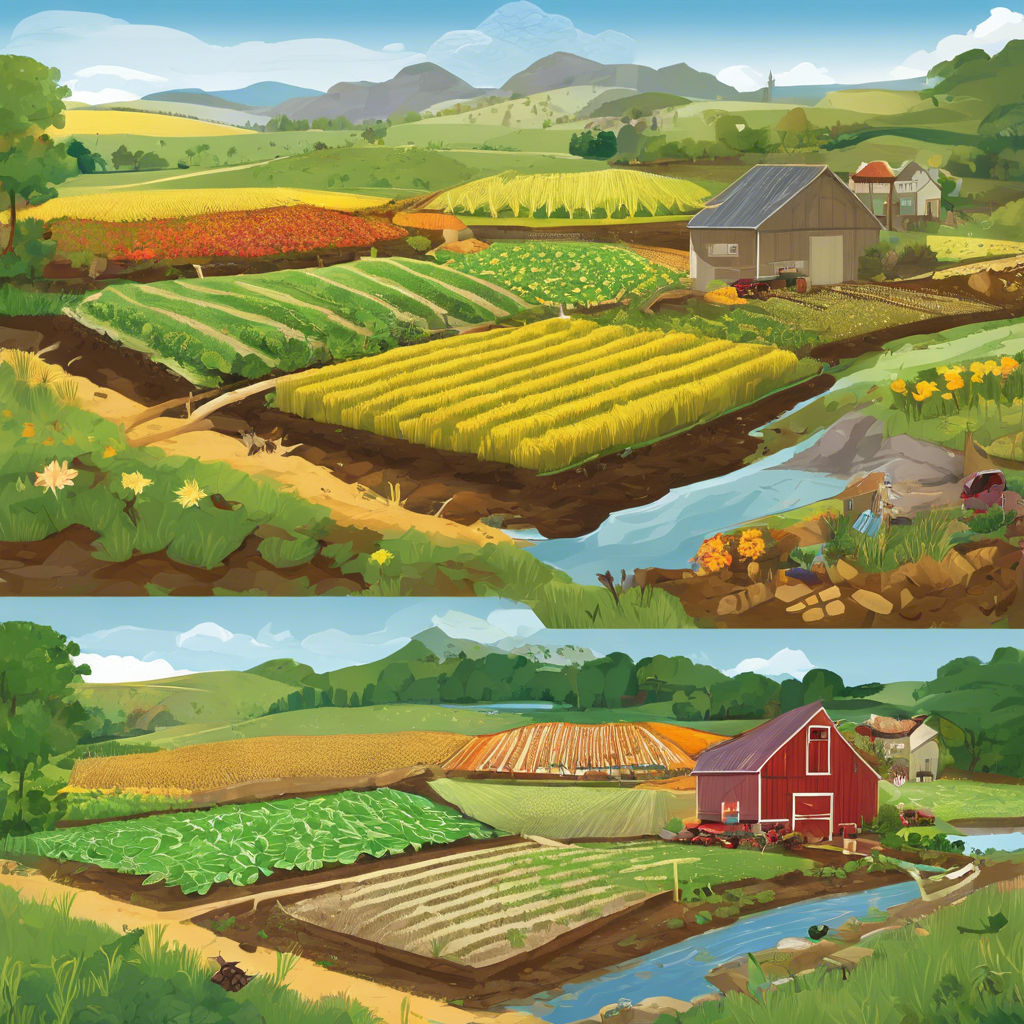
What Are The Environmental Impacts Of Organic Farming Compared To Traditional Farming?
Introduction
The environmental impacts of agricultural practices are crucial in shaping ecosystems and influencing climate change. Organic farming and conventional farming are two contrasting agricultural methodologies, each contributing differently to environmental health. This comparison explores the critical differences and implications of these farming methods.
Environmental Benefits of Organic Farming Practices
Organic farming methods prioritize sustainability and environmental health, steering clear of synthetic pesticides and fertilizers that can cause soil degradation, water contamination, and biodiversity loss. By promoting healthy ecosystems and enhancing agricultural resilience, organic farming offers a holistic approach to food production.
- Enhances soil health through natural composting and crop rotations, boosting nutrient retention and structure.
- Promotes biodiversity by diversifying crops and fostering beneficial insect populations within the ecosystem.
- Reduces water pollution significantly by preventing chemical runoff, thereby safeguarding aquatic ecosystems.
- Lowers greenhouse gas emissions since organic farming techniques typically require less fossil fuel, contributing to climate change mitigation.
Environmental Challenges of Conventional Farming Techniques
Conventional farming frequently depends on chemical inputs to maximize crop yields. Although this method can temporarily increase productivity, it incurs substantial environmental costs. Understanding these challenges is vital for assessing the overall sustainability of food production systems.
- Causes soil degradation due to excessive chemical fertilizer applications, contributing to erosion and nutrient depletion.
- Contributes to water scarcity and pollution through agricultural runoff loaded with pesticides and synthetic fertilizers.
- Results in biodiversity loss as monoculture practices restrict various plant and animal populations.
- Increases carbon footprint because of the production and transportation requirements for chemical inputs.
Conclusion
In conclusion, organic farming presents numerous environmental benefits compared to conventional farming, especially in enhancing soil health and biodiversity while minimizing pollution and emissions. The decision between these two agricultural practices has significant environmental repercussions, and consumers can positively influence sustainability by supporting organic and eco-friendly farming methods.
Expert Quote
Dr. Charles Benbrook, Agricultural Scientist and Researcher
Organic farming systems can enhance biodiversity, improve soil health, and reduce the dependency on chemical inputs, ultimately leading to more sustainable agricultural practices that benefit the environment.
Benbrook, C. (2012). 'Organic Production and the Global Food Supply'. In: 'Sustainable Agriculture Reviews'.
Relevant Links
Organic vs. Conventional Farming
https://rodaleinstitute.org/why-organic/organic-basics/organic-vs-conventional/Is organic really better for the environment than conventional ...
https://ourworldindata.org/is-organic-agriculture-better-for-the-environmentIs Organic Food Really Better for the Environment? – State of the ...
https://news.climate.columbia.edu/2019/10/22/organic-food-better-environment/Conventional vs. Organic Agriculture–Which One Promotes Better ...
https://pmc.ncbi.nlm.nih.gov/articles/PMC9261957/Long-term impacts of organic and conventional farming on the soil ...
https://www.sciencedirect.com/science/article/pii/S1164556321000509YouTube Videos
Most popular questions

How Do The Personal Relationships Among Gods Affect Their Decisions In The Iliad?
The intricate relationships among the gods in Homer's epic poem 'The Iliad' play a crucial role in shaping their actions and decisions. These divine interactions create a complex web of fates, where each god's personal alliances and rivalries directly influence the events of the mortal world.

What Strategies Can Parents Use To Educate Their Children About Online Safety Beyond Privacy Settings?
In today's digital landscape, teaching children about online safety is essential for their protection and well-being. While privacy settings play a critical role, parents can implement various strategies to create a thorough understanding of online safety principles among their children.
What Are The Different Types Of Insulation Materials Commonly Used In Buildings, And How Do They Compare In Terms Of Thermal Resistance?
Insulation materials are vital for enhancing energy efficiency in residential and commercial buildings by minimizing heat transfer. Understanding the various insulation types can lead to better choices for thermal resistance and overall comfort.
Most recent questions
What Strategies Do Local Influencers Use To Measure The Effectiveness Of Their Engagement Tactics On Social Media?
Local influencers are crucial in shaping public opinion and driving engagement across social media platforms. To assess the effectiveness of their engagement strategies, they employ various techniques that facilitate a better understanding of their audience connection.
In What Ways Can International Cuisine Collaborations Impact Culinary Innovation Over Time?
International cuisine collaborations play a vital role in culinary innovation by seamlessly blending diverse flavors, cooking techniques, and cultural practices from around the globe. This dynamic process not only enhances culinary creativity but also fosters cultural exchange and mutual understanding among different communities.
What Factors Contribute To The Variation In Fan Interpretations Of Characters Across Different Cultures?
The interpretation of characters in media varies significantly across diverse cultures, influenced by a multitude of factors that reflect the unique values, beliefs, and lived experiences of each culture. Understanding how cultural differences shape these interpretations is essential in today's globalized media landscape.