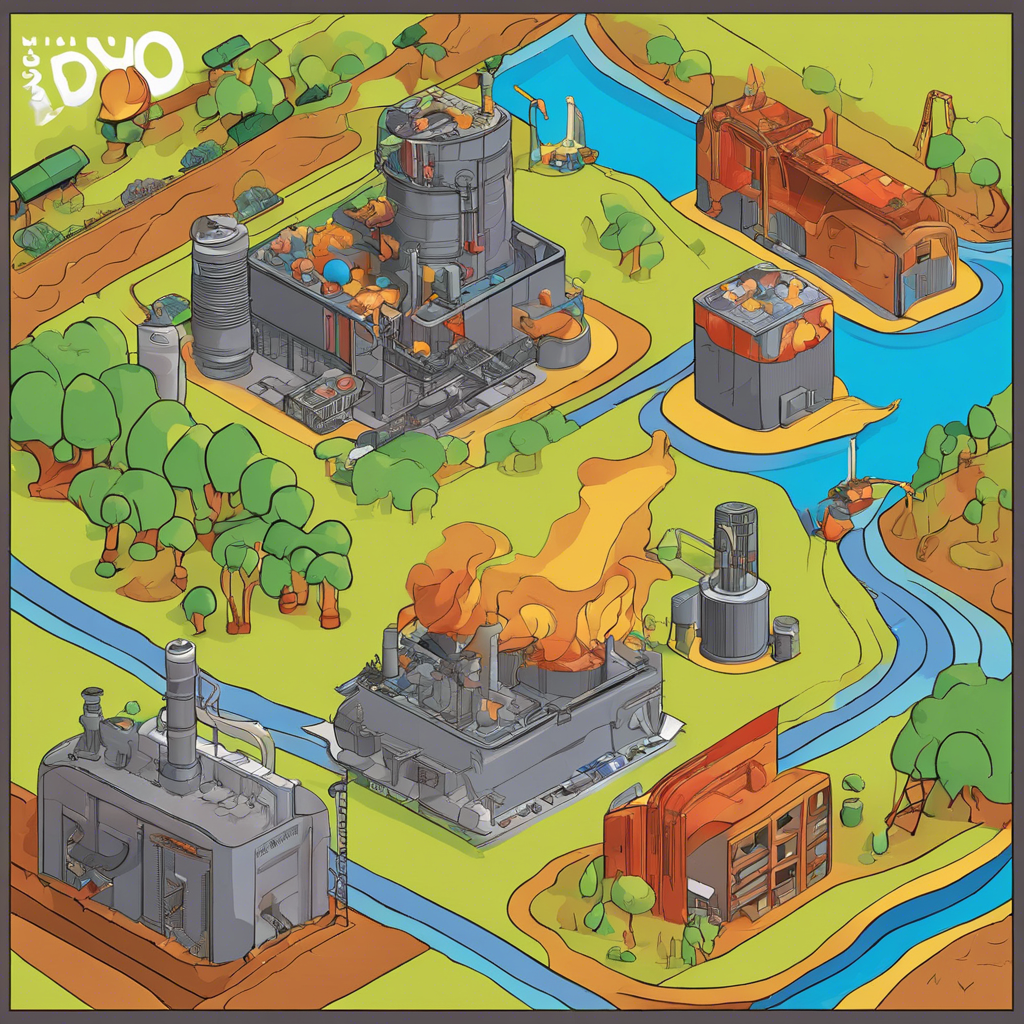
What Are The Environmental Impacts Of Waste Produced During Sustainable Versus Synthetic Material Production?
Introduction
The production of materials significantly impacts the environment, particularly when comparing sustainable materials to synthetic materials. Understanding the environmental waste and its repercussions is crucial for making informed choices about consumption and production practices.
Environmental Effects of Synthetic Material Manufacturing
Synthetic materials, including plastics and polyester, are primarily sourced from fossil fuels. Their manufacturing entails several processes that can adversely impact the environment. Extracting fossil fuels leads to habitat destruction, soil degradation, and water pollution. Moreover, the production process emits greenhouse gases and toxic pollutants into the air and waterways. The waste created during this phase includes not only excess raw materials but also hazardous byproducts that necessitate careful disposal. It is also essential to acknowledge the social implications of synthetic material production, encompassing labor conditions and the health impacts on communities.
- Habitat destruction from fossil fuel extraction
- Emission of greenhouse gases during manufacturing
- Generation of toxic pollutants in production
- Challenges in managing waste after production
- Social and community health impacts of material production
Environmental Impact of Sustainable Material Manufacturing
Sustainable materials, such as those derived from recycled materials or bio-based alternatives, strive to minimize environmental impacts. Producing these eco-friendly materials typically emphasizes lower energy consumption and conservation of raw resources. Although waste is still generated, it generally consists of fewer hazardous byproducts. Sustainable production methods may yield organic or recyclable waste, which is often compostable or can be repurposed. The design approach aims to minimize waste production and maximize resource efficiency, promoting a closed-loop system whenever feasible.
- Lower energy consumption compared to synthetic material production
- Generation of compostable or recyclable waste
- Focus on conserving resources during manufacturing
- Reduced hazardous byproducts compared to synthetic production
- Commitment to closed-loop systems to enhance eco-friendliness
Conclusion
In conclusion, both synthetic and sustainable material production create waste, but the characteristics and effects of that waste vary significantly. Synthetic production is generally more detrimental to the environment and raises social justice concerns, whereas sustainable production aims to minimize adverse effects and promote recycling. Understanding these distinctions is vital for making environmentally responsible choices in material consumption, particularly as consumer awareness increases.
Expert Quote
Dr. William McDonough, Architect and Author of 'Cradle to Cradle'
We must design waste out of the system entirely. The more we can create materials that return to the environment safely or can be reused, the better the future we will create.
'Cradle to Cradle: Remaking the Way We Make Things', 2002
Relevant Links
Plastic in textiles: towards a circular economy for synthetic textiles in ...
https://www.eea.europa.eu/publications/plastic-in-textiles-towards-a/filePlastic in textiles: towards a circular economy for synthetic textiles in ...
https://www.eea.europa.eu/publications/plastic-in-textiles-towards-aPolyester | Materials Index | CFDA
https://cfda.com/resources/materials/detail/polyesterEnvironmental Sustainability in the Fashion Industry – Geneva ...
https://www.genevaenvironmentnetwork.org/resources/updates/sustainable-fashion/The global environmental injustice of fast fashion | Environmental ...
https://ehjournal.biomedcentral.com/articles/10.1186/s12940-018-0433-7YouTube Videos
Most popular questions

How Do The Personal Relationships Among Gods Affect Their Decisions In The Iliad?
The intricate relationships among the gods in Homer's epic poem 'The Iliad' play a crucial role in shaping their actions and decisions. These divine interactions create a complex web of fates, where each god's personal alliances and rivalries directly influence the events of the mortal world.

What Strategies Can Parents Use To Educate Their Children About Online Safety Beyond Privacy Settings?
In today's digital landscape, teaching children about online safety is essential for their protection and well-being. While privacy settings play a critical role, parents can implement various strategies to create a thorough understanding of online safety principles among their children.
What Are The Different Types Of Insulation Materials Commonly Used In Buildings, And How Do They Compare In Terms Of Thermal Resistance?
Insulation materials are vital for enhancing energy efficiency in residential and commercial buildings by minimizing heat transfer. Understanding the various insulation types can lead to better choices for thermal resistance and overall comfort.
Most recent questions
What Role Does Gender Play In The Exploration Of Power Dynamics In Films Versus The Exploration Of Class Struggles In Historical Texts?
The interplay of gender dynamics and class struggles in media and literature serves as a powerful lens for examining socioeconomic power structures. In films, gender representation significantly influences narratives and character development, while historical texts delve into the class conflicts that expose societal disparities and the quest for power. This analysis explores how these two themes prompt critical reflections on societal constructs related to gender and class power.
How Does The Role Of The Artist Change When Audience Participation Is Integral To The Artwork?
The evolving role of the artist in contemporary art is profound, driven by the growing significance of audience participation in artistic expression. This evolution redefines traditional ideas of authorship and creativity, fundamentally altering how art is experienced and interpreted by diverse audiences.
How Does The Choice Of Cinematography Impact The Audience's Perception Of Historical Authenticity In Both Documentaries And Fictional Films?
The choice of cinematography is essential for conveying historical authenticity in both documentaries and fictional films. By employing various techniques such as lighting, composition, and camera movement, filmmakers can evoke a rich sense of time and place that greatly influences audience understanding and emotional engagement with historical material.