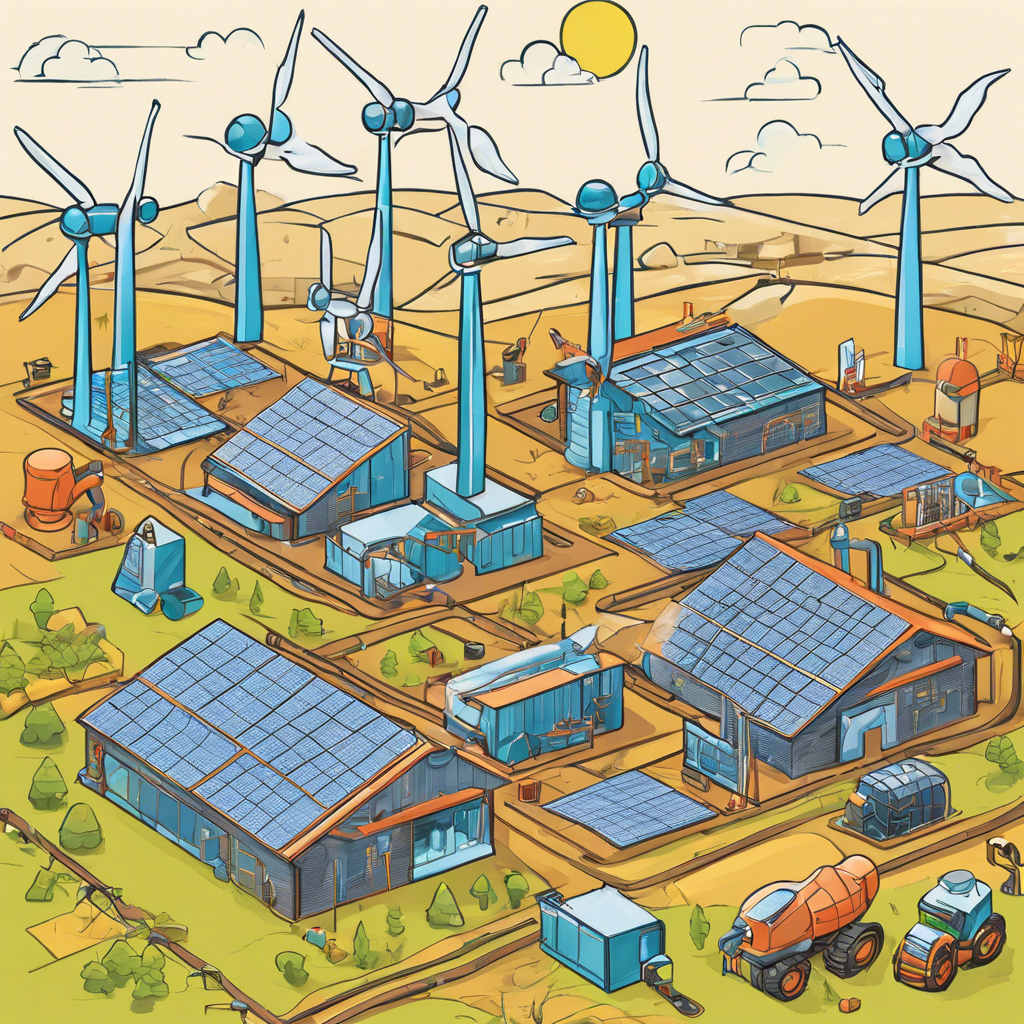
What Are The Potential Job Impacts Of Transitioning To Renewable Energy Sources In Manufacturing?
Introduction
The shift to renewable energy sources in manufacturing is a crucial transformation that addresses pressing environmental issues while reshaping the labor market. This energy transition offers both challenges and new opportunities for the manufacturing workforce, promising significant potential for growth and adaptation in the evolving energy landscape.
Job Creation in the Renewable Energy Sector
The transition to renewable energy technologies is anticipated to generate numerous job opportunities, particularly in fields focused on the installation, maintenance, and innovation of renewable energy systems.
- Growing demand for skilled professionals in solar energy installation and maintenance.
- Expansion in wind energy roles through the development and maintenance of wind energy facilities.
- Increase in job opportunities related to battery technology, energy storage solutions, and electric vehicle production.
Concerns About Job Displacement
While job opportunities increase, there is a corresponding risk of job displacement for workers in traditional energy sectors. Recognizing this impact is essential for developing effective workforce transition strategies and ensuring social equity throughout this energy shift.
- Potential job losses in fossil fuel sectors as manufacturing adopts cleaner energy solutions.
- Urgent need for retraining initiatives to assist displaced workers in transitioning to new careers within the renewable energy sector.
- Crucial role of collaboration between government entities and private industry in enabling workforce adaptation and providing essential support for affected employees.
Essential Skills and Training for the Future
With the manufacturing sector's shift toward renewable energy, the demand for specific skills will evolve. Prioritizing educational programs and training initiatives is vital for facilitating a seamless transition for workers entering emerging job markets.
- Essential technical training in renewable technologies such as solar and wind energy systems.
- Significance of upskilling current employees to meet the demands of new manufacturing practices, including advanced smart manufacturing techniques.
- Partnerships between educational institutions and industry leaders are vital for aligning training programs with future job market requirements and technological advancements.
Economic Gains from the Renewable Energy Shift
The transition to renewable energy not only affects job creation but also holds the potential for broader economic benefits that can strengthen the manufacturing sector and local economies.
- Decrease in energy expenses for manufacturers utilizing renewable energy sources.
- Attraction of fresh investments in green technologies and sustainable manufacturing processes that boost economic resilience.
- Opportunity for increased competitiveness and market access for businesses that embrace sustainable practices and contribute to carbon footprint reduction efforts.
Conclusion
The shift towards renewable energy sources in the manufacturing industry creates significant opportunities for new job growth while also presenting challenges related to job displacement. Through strategic investments in education, training, and collaboration, industries can leverage the advantages of this energy transition while mitigating negative impacts on the workforce and ensuring an equitable transition for all stakeholders.
Expert Quote
Prof. Daniel Kammen, Professor of Energy at University of California, Berkeley
The transition to a clean energy economy could create millions of jobs, but it requires proactive planning, investment in training, and policies that support workers affected by the move away from fossil fuels.
Interview in The Guardian, 2021
Relevant Links
Jobs Impacts of US Clean Energy Growth | World Resources Institute
https://www.wri.org/insights/us-jobs-clean-energy-growthRenewable energy – powering a safer future | United Nations
https://www.un.org/en/climatechange/raising-ambition/renewable-energyThe role of renewable energy in the global energy transformation ...
https://www.sciencedirect.com/science/article/pii/S2211467X19300082Transitioning to sustainable energy: opportunities ... - Frontiers
https://www.frontiersin.org/journals/energy-research/articles/10.3389/fenrg.2023.1258044/fullYouTube Videos
Most popular questions

How Do The Personal Relationships Among Gods Affect Their Decisions In The Iliad?
The intricate relationships among the gods in Homer's epic poem 'The Iliad' play a crucial role in shaping their actions and decisions. These divine interactions create a complex web of fates, where each god's personal alliances and rivalries directly influence the events of the mortal world.

What Strategies Can Parents Use To Educate Their Children About Online Safety Beyond Privacy Settings?
In today's digital landscape, teaching children about online safety is essential for their protection and well-being. While privacy settings play a critical role, parents can implement various strategies to create a thorough understanding of online safety principles among their children.
What Are The Different Types Of Insulation Materials Commonly Used In Buildings, And How Do They Compare In Terms Of Thermal Resistance?
Insulation materials are vital for enhancing energy efficiency in residential and commercial buildings by minimizing heat transfer. Understanding the various insulation types can lead to better choices for thermal resistance and overall comfort.
Most recent questions
What Specific Technologies Have Historic Venues Implemented To Enhance Visitor Experience?
Historically significant venues are increasingly adopting cutting-edge technologies to enhance visitor engagement. These advancements not only preserve the essence of historical sites but also enrich the visitor experience, making history more accessible, interactive, and educational.
How Do The Themes Of Political Dramas Reflect Historical Events Compared To The Allegories Used In Modern Science Fiction Films?
Political dramas and modern science fiction films act as reflections of their historical contexts, addressing critical issues in society. While political dramas portray direct narratives about real-life events, science fiction uses imaginative allegories to reinterpret these situations. This exploration highlights the differences in how these two genres engage with societal challenges and historical moments.
How Do Audience Dynamics Differ Between Immersive Theater Experiences And Traditional Play Settings?
The dynamics of audience interaction differ significantly between immersive theater experiences and traditional theater settings. These differences greatly influence how audiences engage, perceive, and involve themselves in the narrative, ultimately impacting their overall theater experience.