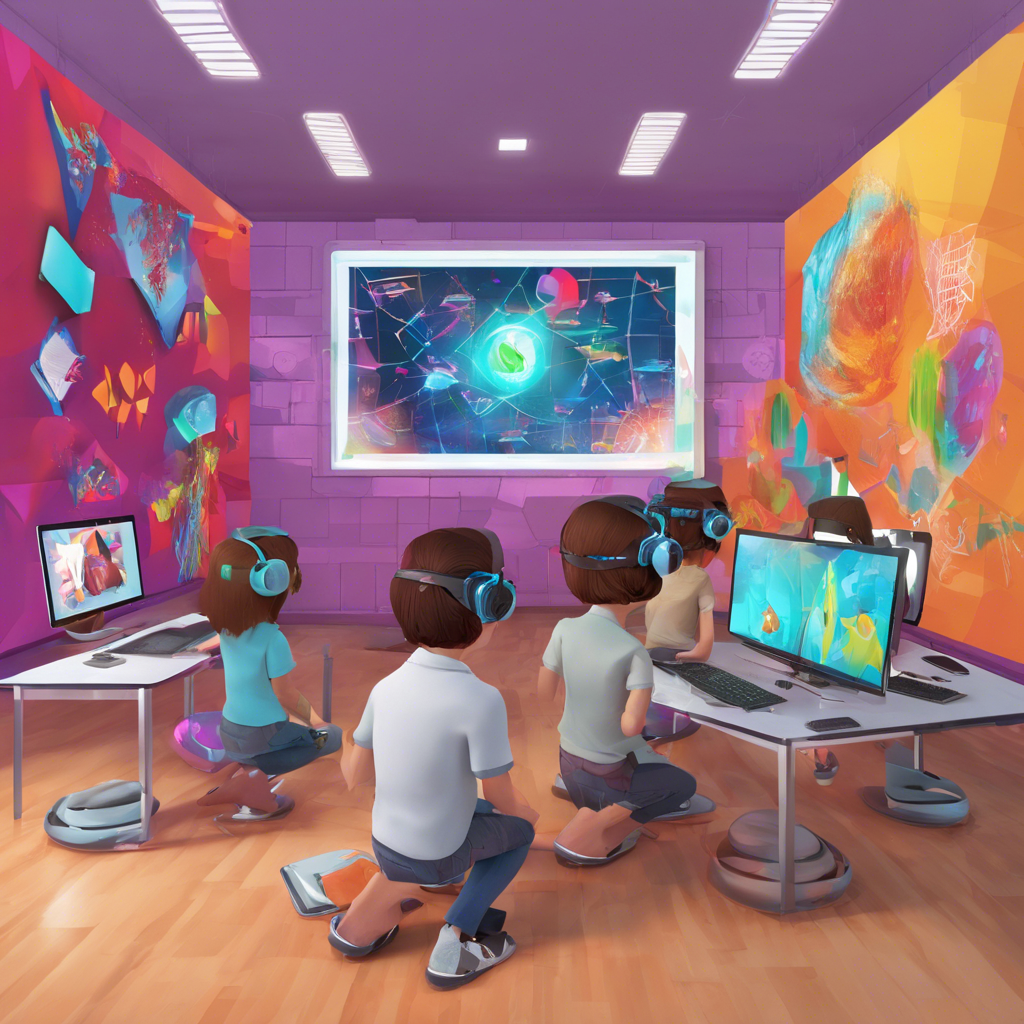
What Are The Psychological Effects Of Immersive Experiences In VR And AR Compared To Traditional Learning Environments?
Introduction
The integration of Virtual Reality (VR) and Augmented Reality (AR) in education is revolutionizing the way immersive learning experiences foster psychological engagement compared to traditional educational methods. This analysis highlights how VR and AR technologies impact learners' cognitive skills, emotional responses, and social interactions in educational settings.
Enhanced Engagement and Immersion in Learning
The immersive experiences offered by VR and AR cultivate a dynamic learning environment that captures students' attention more effectively than conventional teaching techniques. The sense of presence within these virtual realms fosters deeper learning outcomes. The engaging nature of these technologies allows learners to interact with three-dimensional environments and scenarios, making knowledge acquisition more impactful and stimulating.
- Heightened attention and focus due to interactive and visually stimulating virtual experiences.
- Stronger emotional responses that can boost memory retention and comprehension.
- Multi-sensory engagement through visual, auditory, and kinesthetic interactions that accommodate various learning styles.
Managing Cognitive Load for Optimal Learning Outcomes
While immersive experiences can significantly enhance student engagement, they also introduce specific challenges related to cognitive load. Depending on content presentation and task complexity, learners may encounter either positive or detrimental effects. Well-structured immersive lessons can promote better understanding, whereas poorly designed experiences may overwhelm students, resulting in cognitive overload.
- Well-organized immersive experiences can facilitate higher-order thinking skills and meaningful learning.
- Complex virtual environments may induce confusion and reduce learning effectiveness, affecting retention and comprehension.
- Maintaining an optimal balance is crucial to ensure that immersive elements support rather than obstruct the learning process.
Enhancing Social Interactions and Collaborative Learning
VR and AR provide novel opportunities for social learning that exceed those of traditional educational approaches. In virtual settings, learners can engage and collaborate with peers from different geographical locations. This feature nurtures teamwork and cultivates a sense of community among students, thereby enriching the collaborative learning experience.
- Real-time collaboration in shared virtual environments fosters a sense of presence among learners.
- Increased motivation through social interactions and peer feedback as students engage in joint tasks.
- Reduction of social anxiety during collaborative activities because of virtual avatars, facilitating more equitable participation.
Personalized Learning Through Adaptability
Immersive technologies allow for customized learning experiences that adapt to each learner's needs. This level of personalization can greatly enhance motivation and effectiveness in education compared to traditional one-size-fits-all strategies, particularly in diverse classroom settings.
- Individualized learning pathways and pacing through adaptive content delivery methods.
- Timely feedback on performance through interactive features, enabling immediate adjustments.
- The capability to revisit complex concepts in a safe and engaging setting, encouraging mastery of subject material.
Conclusion
In conclusion, immersive experiences in VR and AR provide significant psychological benefits that can improve engagement, learning outcomes, social interactions, and personalized learning when compared to traditional educational environments. Educators should leverage these technologies strategically to maximize their advantages and enhance teaching practices.
Expert Quote
Dr. Jeremy Bailenson, Professor of Communication at Stanford University
The immersive nature of virtual and augmented reality enables a level of engagement and emotional involvement that far exceeds traditional educational methods, significantly enhancing learning outcomes and retention.
Bailenson, J. (2018). Experience on Demand: What Virtual Reality Is, How It Works, and What It Can Do.
Relevant Links
Ethical issues of educational virtual reality - ScienceDirect
https://www.sciencedirect.com/science/article/pii/S294967802300017XThe Cognitive Affective Model of Immersive Learning (CAMIL): a ...
https://link.springer.com/article/10.1007/s10648-020-09586-2A systematic review of immersive virtual reality applications for ...
https://www.sciencedirect.com/science/article/pii/S0360131519303276Do Students Learn Better with Immersive Virtual Reality Videos than ...
https://vhil.stanford.edu/sites/g/files/sbiybj29011/files/media/file/immersion_learning_2022_06v1.pdfAugmented reality in medical education: students' experiences and ...
https://www.ncbi.nlm.nih.gov/pmc/articles/PMC8281102/YouTube Videos
Most popular questions

How Do The Personal Relationships Among Gods Affect Their Decisions In The Iliad?
The intricate relationships among the gods in Homer's epic poem 'The Iliad' play a crucial role in shaping their actions and decisions. These divine interactions create a complex web of fates, where each god's personal alliances and rivalries directly influence the events of the mortal world.

What Strategies Can Parents Use To Educate Their Children About Online Safety Beyond Privacy Settings?
In today's digital landscape, teaching children about online safety is essential for their protection and well-being. While privacy settings play a critical role, parents can implement various strategies to create a thorough understanding of online safety principles among their children.
What Are The Different Types Of Insulation Materials Commonly Used In Buildings, And How Do They Compare In Terms Of Thermal Resistance?
Insulation materials are vital for enhancing energy efficiency in residential and commercial buildings by minimizing heat transfer. Understanding the various insulation types can lead to better choices for thermal resistance and overall comfort.
Most recent questions
How Do Fans Engage Differently In The Digital Space Of Esports Versus In-person Attendance At Live Music Events?
Engagement among fans in esports and live music events manifests itself in distinct ways, shaped by the unique environments and experiences each domain provides. Understanding these variations is essential for realizing how communities thrive in both digital and physical realms.
In What Ways Did The Emergence Of Different Political Ideologies During Global Conflicts Impact The Themes And Subjects Chosen By Artists?
The emergence of diverse political ideologies during major global conflicts has profoundly influenced artists, shaping the themes and subjects of their creations. This dynamic interplay not only reflects societal changes, tensions, and aspirations but also the artists' personal and creative responses to these powerful ideologies.
How Did The Audience Reception Of Independent Films In The 1990s Differ From Blockbuster Films Of The 1980s?
The 1990s marked a transformative period in the film industry, significantly shifting how audiences engaged with independent films compared to the blockbuster-dominated 1980s. This decade witnessed a burgeoning appreciation for independent cinema, which strayed from conventional Hollywood methods, ushering in an era of innovative storytelling and unique cinematic voices.