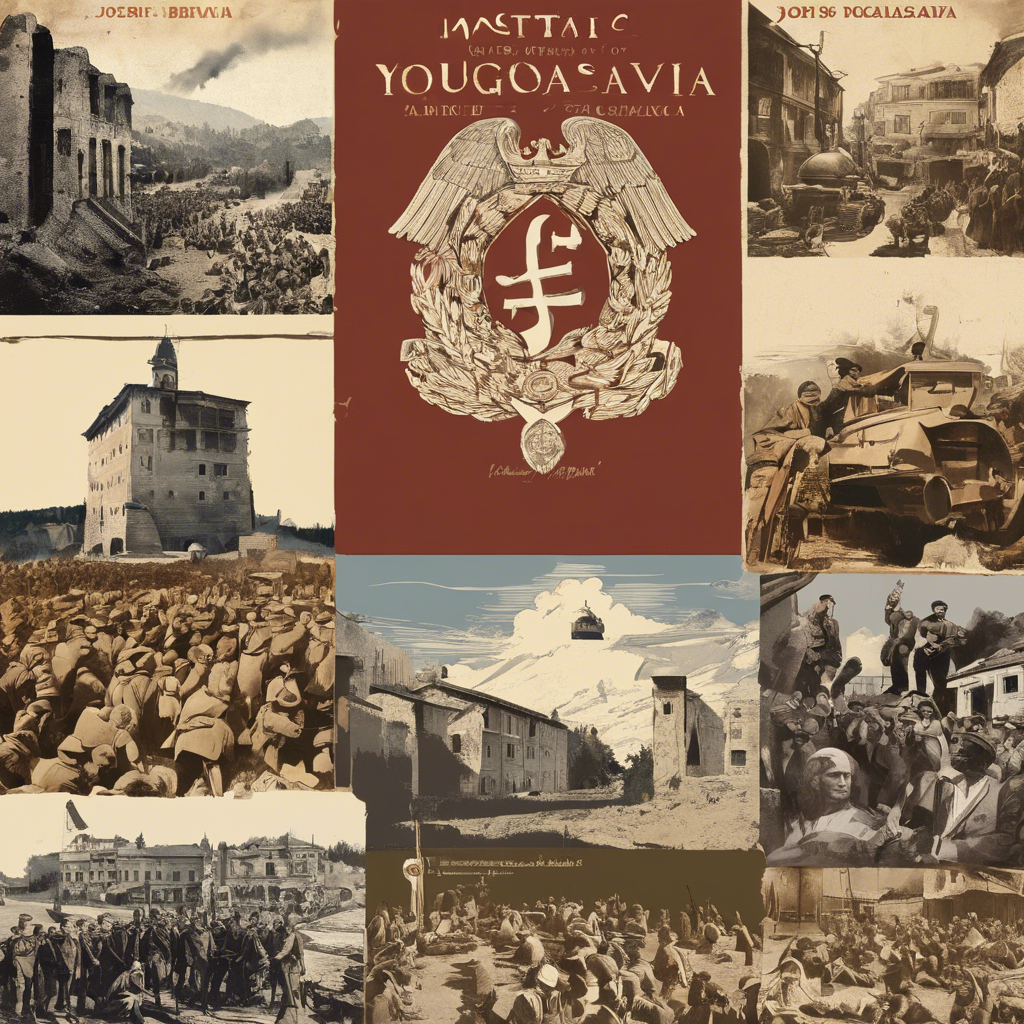
What Is The History Of Yugoslavia And Its Current Region?
Introduction
Yugoslavia was a federal state in Southeast Europe from 1918 until the early 1990s. Its intricate history is characterized by notable political upheavals, ethnic rivalries, and ultimately, violent conflicts, which culminated in the fragmentation of the nation into several independent countries.
Formation and Early Years of Yugoslavia
Yugoslavia was established after World War I in 1918 as the Kingdom of Serbs, Croats, and Slovenes, uniting diverse ethnic groups. This new political entity aimed to foster a South Slavic state, yet intrinsic differences in language, culture, and historical grievances quickly surfaced. In 1929, King Alexander I rebranded the nation as Yugoslavia in an effort to centralize governance and diminish ethnic distinctions, which only fueled discontent among various groups.
- The unification sought to cultivate South Slavic unity and promote national sovereignty.
- King Alexander's authoritative governance heightened tensions and provoked resistance.
World War II and Aftermath in Yugoslavia
In World War II, Yugoslavia faced invasion from Axis powers, resulting in a harsh occupation. Several resistance factions emerged, with Josip Broz Tito leading one of the most significant movements. Following the war, Tito established a socialist federation that granted considerable autonomy to its republics, attempting to balance the diverse ethnic demographics. Although his system maintained relative peace, it did not eliminate the underlying ethnic tensions, which would later resurface violently.
- Tito's partisans resisted Axis occupiers, gaining substantial support from the populace.
- Post-war Yugoslavia embraced a socialist framework with a federal structure that allowed for autonomy among republics.
The Fragmentation of Yugoslavia
Tito's death in 1980 created a leadership void, intensifying nationalist movements among the republics. By the early 1990s, rising ethnic nationalism led to independence declarations from Slovenia, Croatia, Bosnia and Herzegovina, Macedonia (now North Macedonia), Montenegro, and Kosovo. This era was marked by violent conflicts, including the Croatian War of Independence and the Bosnian War, characterized by ethnic cleansing and severe humanitarian crises. The acknowledgment of Bosnia and Herzegovina's independence faced significant opposition, resulting in a tragic conflict involving multiple factions and devastating effects on civilian populations.
- Tito's demise escalated nationalist ambitions and fueled instability across the region.
- The disintegration of Yugoslavia was marked by violence that transformed regional demographics and led to humanitarian catastrophes.
Current Nations and Legacy of Yugoslavia
The present-day area that constituted Yugoslavia is now made up of several sovereign states: Slovenia, Croatia, Bosnia and Herzegovina, Montenegro, North Macedonia, and Serbia. Each nation has forged its unique identity and political landscape, frequently influenced by the remnants of their shared history. The region continues to confront challenges related to nationalism, ethnic relations, and economic development, with some areas experiencing ongoing political tensions stemming from unresolved historical grievances.
- The successor states of Yugoslavia display diverse cultural and political trajectories following independence.
- Current challenges include reconciling ethnic groups and supporting economic recovery initiatives.
Conclusion
Comprehending the history of Yugoslavia is essential for understanding the contemporary social and political landscape of the Balkans. The dissolution of this multi-ethnic federation profoundly impacted international relations and regional stability in Southeast Europe, influencing today's political dynamics and ethnic interactions.
Expert Quote
Dr. Ivo Banac, Professor of History at Yale University
The dissolution of Yugoslavia not only reshaped the political landscape of the Balkans but also exposed the deep-seated ethnic tensions that had been suppressed during Tito's rule, leading to conflicts that resonate to this day.
Banac, Ivo. 'The National Question in Yugoslavia: Origins, History, Politics.' Cornell University Press, 1984.
Relevant Links
History State: The Breakup of Yugoslavia, 1990–1992
https://history.state.gov/milestones/1989-1992/breakup-yugoslaviaThe Lasting Impact of the Breakup of Yugoslavia – EuropeNow
https://www.europenowjournal.org/2020/06/02/the-lasting-impact-of-the-breakup-of-yugoslavia/International Criminal Tribunal for the former Yugoslavia | United ...
https://www.icty.org/Breakup of Yugoslavia - Wikipedia
https://en.wikipedia.org/wiki/Breakup_of_YugoslaviaConflict in Post-War Yugoslavia: The Search for a Narrative | The ...
https://www.nationalww2museum.org/war/articles/conflict-post-war-yugoslaviaYouTube Videos
Most popular questions

How Do The Personal Relationships Among Gods Affect Their Decisions In The Iliad?
The intricate relationships among the gods in Homer's epic poem 'The Iliad' play a crucial role in shaping their actions and decisions. These divine interactions create a complex web of fates, where each god's personal alliances and rivalries directly influence the events of the mortal world.

What Strategies Can Parents Use To Educate Their Children About Online Safety Beyond Privacy Settings?
In today's digital landscape, teaching children about online safety is essential for their protection and well-being. While privacy settings play a critical role, parents can implement various strategies to create a thorough understanding of online safety principles among their children.
What Are The Different Types Of Insulation Materials Commonly Used In Buildings, And How Do They Compare In Terms Of Thermal Resistance?
Insulation materials are vital for enhancing energy efficiency in residential and commercial buildings by minimizing heat transfer. Understanding the various insulation types can lead to better choices for thermal resistance and overall comfort.
Most recent questions
How Do The Dynamics Of Community Moderation In Online Gaming Forums Influence The Types Of Narratives That Are Discussed?
The dynamics of community moderation in online gaming forums play an essential role in shaping the narratives that unfold within these digital platforms. Effective community moderation can foster vibrant discussions and storytelling, while poor moderation can impose restrictions that stifle the exchange of creative ideas.
How Do Aging Processes Affect The Flavor Profiles Of Cheeses And Their Pairing With Wines?
The aging process of cheese, known as affinage, is vital in developing its unique flavor profile while greatly influencing its compatibility with wines. As cheese matures, the transformations in its texture and taste create a rich tasting experience that pairs exquisitely with various wines, enhancing culinary enjoyment.
In What Ways Can The Evolution Of Digital Media Alter Traditional Storytelling Methods?
The evolution of digital media has significantly transformed traditional storytelling methods, seamlessly blending diverse formats and advanced technology to enrich narrative experiences. In this article, we will explore how the rise of digital platforms is reshaping the creation, sharing, and consumption of stories in today’s media landscape.