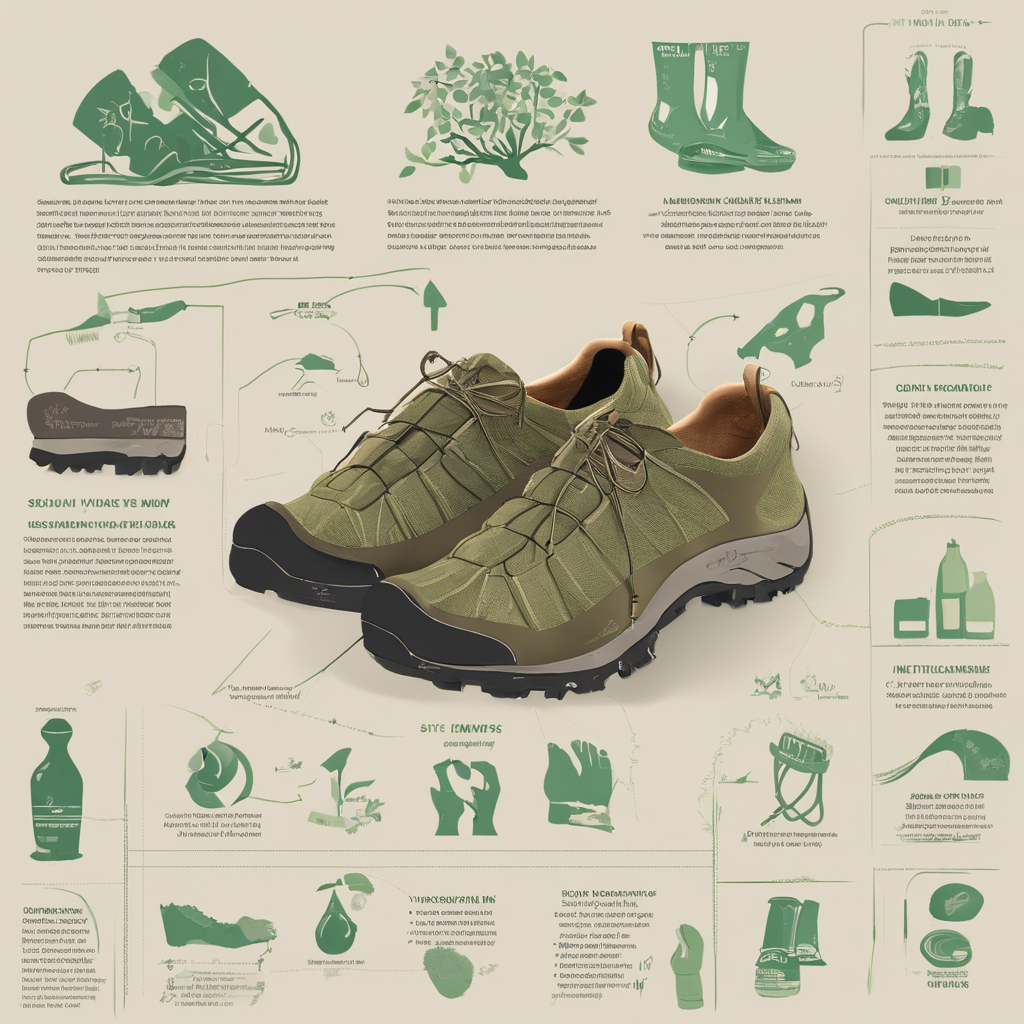
What Materials Are Considered Most Sustainable For Outdoor Footwear Manufacturing, And How Do They Compare In Terms Of Their Ecological Impact?
Introduction
Sustainable materials in outdoor footwear manufacturing are essential for reducing environmental impact. As consumers grow increasingly aware of their ecological footprint, it is crucial to understand which materials are truly sustainable and their effects on our planet.
Essential Sustainable Materials for Outdoor Footwear
Several materials are celebrated for their sustainable characteristics in outdoor footwear production. These include recycled materials, natural fibers, and innovative bio-based alternatives. Each material provides specific advantages while presenting varying ecological impacts throughout its lifecycle.
- Recycled PET (rPET): Crafted from recycled plastic bottles, rPET minimizes plastic waste and significantly lowers energy consumption compared to conventional virgin polyester.
- Organic Cotton: This natural fiber consumes about 90% less water and eliminates toxic pesticide use, providing a sustainable choice for footwear linings and canvases.
- Natural Rubber: Sourced from rubber trees, this biodegradable material is renewable with a significantly lower environmental impact than synthetic rubber options.
Evaluating the Ecological Impact of Sustainable Materials
When evaluating these sustainable materials, it's important to assess their lifecycle impacts, from sourcing to disposal. Key factors to consider include carbon footprint, water usage, and biodegradability. Selecting the appropriate material can dramatically affect a product's overall environmental footprint.
- Recycled materials typically offer a lower carbon footprint due to minimized raw material extraction and more efficient manufacturing processes, which also help divert waste from landfills.
- Natural fibers are often more biodegradable, thus alleviating the issue of plastic pollution in landfills in contrast to synthetic materials.
- Innovations like plant-based leathers are emerging as effective alternatives, replicating traditional leather without the environmental concerns, such as higher energy and water consumption.
Conclusion
In conclusion, choosing sustainable materials for outdoor footwear is crucial for mitigating ecological impacts. Understanding the advantages and comparative analyses of options like recycled plastics, organic cotton, and natural rubber can empower consumers to make eco-friendly decisions. Increasingly, companies are integrating these sustainable practices, leading to a healthier relationship with our environment.
Expert Quote
Dr. Leslie L. Johnson, Environmental Scientist at the University of California, Berkeley
Choosing sustainable materials not only reduces the carbon footprint of products but also promotes responsible consumption, contributing to a healthier planet for future generations.
Article in Environmental Science & Technology, 2022
Relevant Links
2018 Environmental Impact of the Global Apparel and Footwear ...
https://quantis.com/wp-content/uploads/2018/03/measuringfashion_globalimpactstudy_full-report_quantis_cwf_2018a.pdfThe SOLE Jasper Chukka: a shoe 15 years in the making - The ...
https://yoursole.com/blog/us/the-jasper-chukkaIs Gore-Tex still worth getting. Are there better alternatives out there ...
https://www.reddit.com/r/CampingandHiking/comments/11b4xxf/is_goretex_still_worth_getting_are_there_better/Rubber vs. EVA Soles for Sandals - Tread Labs
https://treadlabs.com/blogs/insoles-reach-your-stride/rubber-v-eva-soles-for-sandalsEco-Sustainability of the Textile Production: Waste Recovery and ...
https://www.ncbi.nlm.nih.gov/pmc/articles/PMC7796070/YouTube Videos
Most popular questions

How Do The Personal Relationships Among Gods Affect Their Decisions In The Iliad?
The intricate relationships among the gods in Homer's epic poem 'The Iliad' play a crucial role in shaping their actions and decisions. These divine interactions create a complex web of fates, where each god's personal alliances and rivalries directly influence the events of the mortal world.

What Strategies Can Parents Use To Educate Their Children About Online Safety Beyond Privacy Settings?
In today's digital landscape, teaching children about online safety is essential for their protection and well-being. While privacy settings play a critical role, parents can implement various strategies to create a thorough understanding of online safety principles among their children.
What Are The Different Types Of Insulation Materials Commonly Used In Buildings, And How Do They Compare In Terms Of Thermal Resistance?
Insulation materials are vital for enhancing energy efficiency in residential and commercial buildings by minimizing heat transfer. Understanding the various insulation types can lead to better choices for thermal resistance and overall comfort.
Most recent questions
What Are The Common Challenges Faced When Merging Genres In Filmmaking?
Merging film genres is a powerful technique that can lead to groundbreaking storytelling. However, filmmakers face significant challenges in blending different styles and themes effectively to ensure a seamless and compelling narrative experience for viewers.
How Do Cultural Differences Influence Personal Space Preferences In Both Indoor And Outdoor Social Events?
Understanding personal space preferences is essential as they are greatly influenced by cultural backgrounds. These space preferences can significantly impact social interactions in various settings, both indoors and outdoors, making cultural awareness vital for effective communication.
How Do Societal Changes Influence The Evolving Themes Of Fear In Horror Genres Across Different Time Periods?
The horror genre serves as a powerful mirror, reflecting societal fears and anxieties while evolving with cultural, technological, and social shifts. Historical trends in horror illustrate how fears transform, often revealing what society finds most terrifying at any moment in time.