What Methods Did Ancient Civilizations Use To Transport Goods, And How Did These Methods Evolve Over Time?
Introduction
Ancient civilizations encountered significant challenges in the transportation of goods across extensive distances for the purposes of trade, agriculture, and warfare. Over time, transportation methods experienced remarkable evolution, shaped by technological innovations, geographical factors, and economic demands.
Early Transportation Methods
In the early ages, transportation was primarily dependent on manual labor and rudimentary tools. Civilizations like Mesopotamia and Egypt relied on animal power and waterways for the transfer of goods. The introduction of the wheel around 3500 BC represented a pivotal milestone, enhancing the efficiency of land transport.
- Utilization of human carriers and sleds for short-distance transport.
- Domestication of animals including donkeys, horses, and camels for extended journeys.
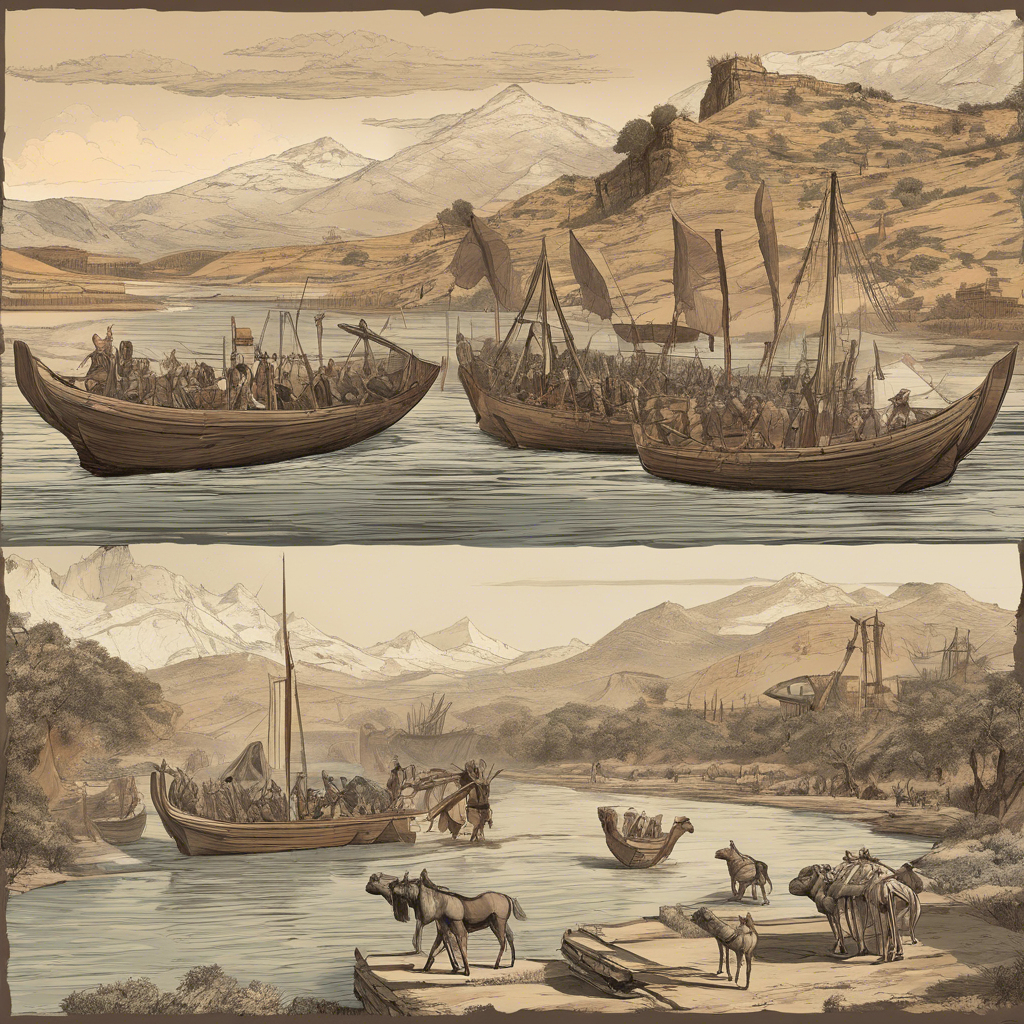
- Rivers served as crucial trade routes, especially for cultures like the Egyptians who navigated the Nile using boats.
The Development of Trade Networks
As ancient civilizations expanded, their trade networks grew in complexity. The construction of expansive road systems, such as the Roman roads, enabled the long-distance movement of goods, which stimulated commercial activities and promoted the exchange of culture and ideas across regions.
- Building of major roads connected urban centers and trade hubs, enhancing logistics and commerce.
- Deployment of ships for maritime trade, with the Phoenicians excelling at Mediterranean navigation.
- Formation of caravans that provided safe travel for merchants, improving overall trade efficiency.
Technological Innovations in Transportation
Historically, a variety of technological advances propelled developments in transportation. The creation of sophisticated vessels and the introduction of navigational tools like the compass revolutionized maritime travel while innovations in wheel designs, notably the spoked wheel during the late Bronze Age, advanced land transport even further.
- Introduction of sails enabled ships to traverse quicker and cover greater distances.
- Invention of the plow facilitated the easier transport of agricultural goods.
- Enhancements in chariot technology during the Bronze Age improved military logistics significantly.
Impact of Geography and Resources
Geographical conditions played a critical role in shaping the transportation methods utilized by civilizations. Societies adapted their techniques in accordance with available resources and the terrain, leading to a variety of transportation strategies distinct to different regions.
- In hilly areas, goods were typically transported on animals' backs, while flat plains allowed for the effective use of carts.
- Island civilizations required the development of innovative boat designs suited for oceanic conditions.
- Desert trade routes frequently relied on caravans of camels, uniquely equipped for navigation through arid landscapes.
Conclusion
The transformation of transportation methods in ancient civilizations highlights human creativity in tackling logistical hurdles. From basic carts to intricate trade networks, these advancements established the groundwork for contemporary transportation systems. Recognizing these historical methods offers invaluable insights into our current logistical practices and economic frameworks.
Expert Quote
Dr. Peter A. Clayton, Archaeologist and Expert on Ancient Trade Routes
The evolution of transportation in ancient civilizations was not merely about logistics, but a portrayal of cultural progression, where advancements in trade practices fostered societal growth and interactions across various regions.
"Trade, Transport, and Society in the Ancient World" (Book, Cambridge University Press, 2018)
Relevant Links
1.3 – The Emergence of Mechanized Transportation Systems | The ...
https://transportgeography.org/contents/chapter1/emergence-of-mechanized-transportation-systems/Silk Road ‑ Facts, History & Location | HISTORY
https://www.history.com/topics/ancient-middle-east/silk-roadi.1 – Defining Seaports | Port Economics, Management and Policy
https://porteconomicsmanagement.org/pemp/contents/introduction/defining-seaports/What are the effects of geographic features on transportation and ...
https://essaygenius.ai/essay/what-are-the-effects-of-geographic-features-on-transportation-and-communicationKey Concept 3.1: Expansion of Networks - World History and ...
https://amessocialstudies.weebly.com/key-concept-31-expansion-of-networks.htmlYouTube Videos
Most popular questions

How Do The Personal Relationships Among Gods Affect Their Decisions In The Iliad?
The intricate relationships among the gods in Homer's epic poem 'The Iliad' play a crucial role in shaping their actions and decisions. These divine interactions create a complex web of fates, where each god's personal alliances and rivalries directly influence the events of the mortal world.

What Strategies Can Parents Use To Educate Their Children About Online Safety Beyond Privacy Settings?
In today's digital landscape, teaching children about online safety is essential for their protection and well-being. While privacy settings play a critical role, parents can implement various strategies to create a thorough understanding of online safety principles among their children.
What Are The Different Types Of Insulation Materials Commonly Used In Buildings, And How Do They Compare In Terms Of Thermal Resistance?
Insulation materials are vital for enhancing energy efficiency in residential and commercial buildings by minimizing heat transfer. Understanding the various insulation types can lead to better choices for thermal resistance and overall comfort.
Most recent questions
What Impact Do Magical Creatures In Literature Have On Human Emotions And Societal Conflicts In Storytelling?
The role of magical creatures in literature is significant as they reflect human emotions and societal conflicts. These enchanting beings not only captivate readers but also serve as a vehicle for exploring complex human experiences, making them essential to storytelling.
What Are Some Examples Of Artworks That Incorporate Audience Participation, And How Do They Differ From Traditional Art Forms?
Art has undergone a remarkable evolution over the years, with audience participation emerging as a dynamic and essential component of contemporary art. This transformation contrasts with traditional art forms, which typically present a fixed array of artistic expressions requiring little to no active engagement from viewers.
How Do Narrative Structures In Literature Compare To Those In Film Regarding Audience Engagement?
Narrative structures play a crucial role in shaping storytelling in both literature and film, significantly influencing audience engagement and emotional connection. By employing various storytelling methods, both mediums captivate their viewers and readers, leading to diverse emotional responses and varying levels of investment in the narrative.