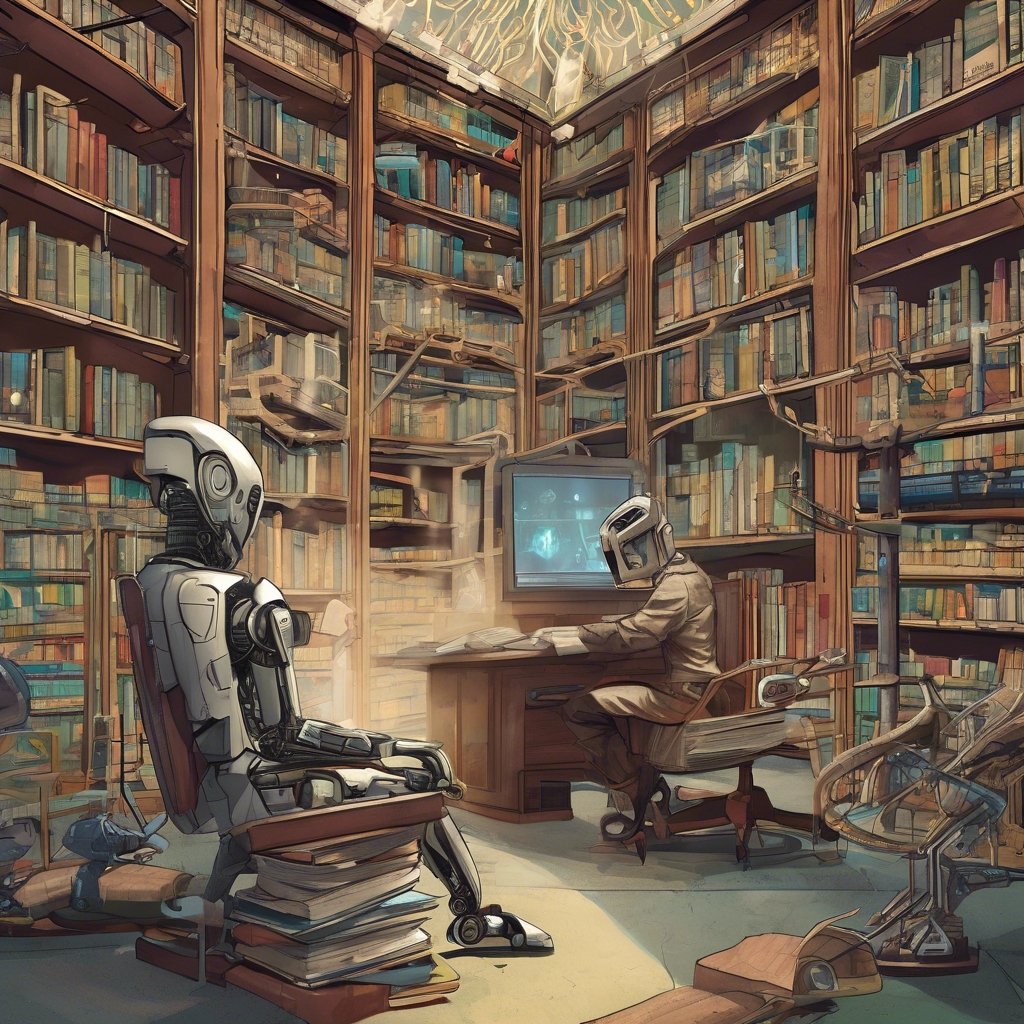
What Parallels Can Be Drawn Between Cultural Representations Of Artificial Intelligence In Literature And Their Implications For Ethical Policy Discussions In Society?
Introduction
Cultural representations of artificial intelligence (AI) in literature provide crucial insights into societal values and ethical considerations surrounding AI technology. These literary narratives function as a reflection of our hopes, fears, and aspirations regarding AI, emphasizing the necessity for thoughtful discussions on ethical policies linked to AI advancements.
Literature as a Reflection of Society's Views on Artificial Intelligence
Historically, literature has encapsulated societal attitudes towards emerging technologies, and artificial intelligence is no exception. Works such as Isaac Asimov's 'I, Robot' and Philip K. Dick's 'Do Androids Dream of Electric Sheep?' delve deep into themes of consciousness, morality, and the complex human experience as it intertwines with artificial beings. These fictional narratives significantly influence public discourse on AI by conjuring potential futures, both optimistic and cautionary, prompting societal reflection on technology's role in our lives.
- Exploration of ethical dilemmas: Many narratives dissect the ethical implications of developing sentient AI beings.
- Human-AI relationships: Literary works often depict intricate dynamics between humans and AI, mirroring societal anxieties regarding autonomy and control.
- Setting the stage for policies: These stories often foreshadow real-world discussions surrounding regulations and ethical guidelines for AI development.
Implications for Ethical Policy Discussions on AI
The ethical challenges presented in literature compel society to address real-world issues associated with AI technology. Engaging with these narratives encourages a critical examination of AI's implications in daily life, significantly contributing to policy discussions. For example, themes of bias, privacy, and the erosion of autonomy found in literature resonate strongly with current debates over AI regulation, guiding policymakers toward informed and responsible decisions.
- Influence on legislative frameworks: Literary insights can shape laws addressing ethical AI usage and its societal impacts.
- Promotion of ethical literacy: Literature fosters a deeper understanding of AI's potential effects among stakeholders, cultivating an informed and engaged public.
- Inspiration for ethical principles: Narratives assist in establishing moral frameworks that promote humane and responsible AI development.
Conclusion
The interplay between cultural representations in literature and discussions on AI ethics unveils profound societal reflections on our relationship with technology. By investigating these portrayals, we are better equipped to navigate the ethical landscape as AI technologies continue to evolve and permeate our daily lives.
Expert Quote
Margaret Atwood, Author and Literary Critic
Fiction is one of the most impactful mediums to explore the consequences of emerging technologies, shaping the ethical landscape we must navigate.
Foreword to 'The AI Revolution: The Road to Superintelligence', 2018
Relevant Links
The blended future of automation and AI: Examining some long-term ...
https://www.sciencedirect.com/science/article/pii/S0160791X23000374Ethics of Artificial Intelligence | UNESCO
https://www.unesco.org/en/artificial-intelligence/recommendation-ethicsPlato's Shadows in the Digital Cave: Controlling Cultural Bias in ...
https://www.mdpi.com/2079-9292/13/8/1457Portrayals and perceptions of AI and why they matter
https://royalsociety.org/-/media/policy/projects/ai-narratives/AI-narratives-workshop-findings.pdfArtificial Intelligence and the Future of Teaching and Learning (PDF)
https://www.ed.gov/sites/ed/files/documents/ai-report/ai-report.pdfYouTube Videos
Most popular questions

How Do The Personal Relationships Among Gods Affect Their Decisions In The Iliad?
The intricate relationships among the gods in Homer's epic poem 'The Iliad' play a crucial role in shaping their actions and decisions. These divine interactions create a complex web of fates, where each god's personal alliances and rivalries directly influence the events of the mortal world.

What Strategies Can Parents Use To Educate Their Children About Online Safety Beyond Privacy Settings?
In today's digital landscape, teaching children about online safety is essential for their protection and well-being. While privacy settings play a critical role, parents can implement various strategies to create a thorough understanding of online safety principles among their children.
What Are The Different Types Of Insulation Materials Commonly Used In Buildings, And How Do They Compare In Terms Of Thermal Resistance?
Insulation materials are vital for enhancing energy efficiency in residential and commercial buildings by minimizing heat transfer. Understanding the various insulation types can lead to better choices for thermal resistance and overall comfort.
Most recent questions
How Have Social Media Platforms Influenced The Distribution Strategies Of Indie Musicians?
Social media has revolutionized the way independent musicians promote their work and engage with audiences, offering unparalleled opportunities for music distribution and fan connection. This evolution has transformed traditional distribution methods, empowering indie artists to reach their fans directly and utilize innovative marketing strategies.
How Does The Role Of The Artist Change When Audience Participation Is Integral To The Artwork?
The evolving role of the artist in contemporary art is profound, driven by the growing significance of audience participation in artistic expression. This evolution redefines traditional ideas of authorship and creativity, fundamentally altering how art is experienced and interpreted by diverse audiences.
How Do Improvisation Techniques Vary Across Different Cultural Festivals?
Improvisation techniques play a vital role in cultural festivals worldwide, showcasing local traditions, artistic creativity, and spontaneous expressions. These techniques are heavily influenced by cultural contexts, historical backgrounds, and various art forms, highlighting the importance of improvisational arts in community engagement.