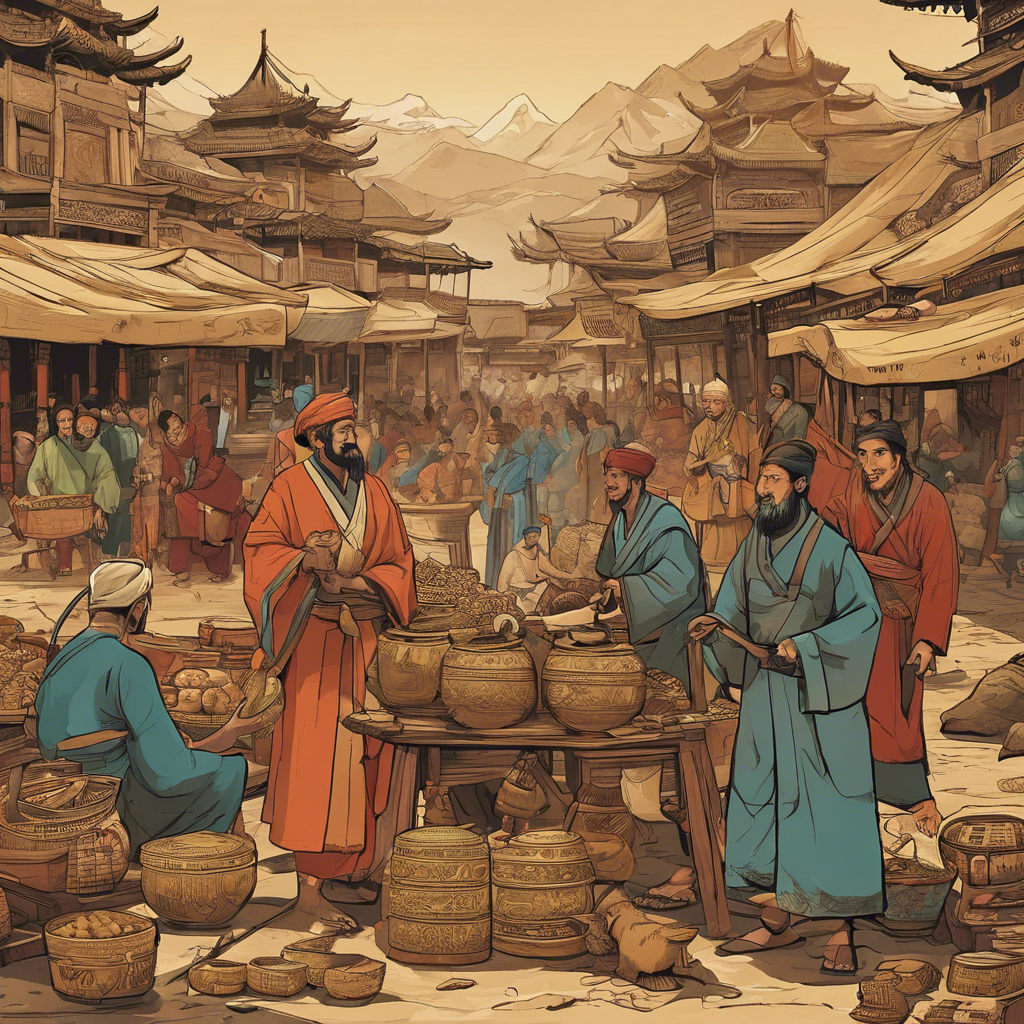
What Role Did Cultural Artifacts, Exchanged Along Ancient Trade Routes, Play In Shaping The International Law Principles Seen Today?
Introduction
Cultural artifacts exchanged along ancient trade routes played a pivotal role in influencing the evolution of international law principles. These artifacts were not just objects; they embodied rich cultural, ethical, and legal implications that bridged nations and established foundational elements of modern legal systems.
Cultural Exchange and Legal Concepts
Ancient trade routes, including the Silk Road and the Incense Route, facilitated not only the exchange of goods but also the spread of ideas, customs, and legal practices. As merchants and travelers engaged in trade, they brought their unique laws and cultural norms, culminating in the integration and adaptation of various legal principles across diverse civilizations. Notably, the concept of contracts and trade agreements can be traced back to these intercultural interactions, where trust became a cornerstone for successful commerce. This historical dialogue significantly contributed to the establishment of contemporary international commercial law.
- The evolution of contracts was driven by traders' needs to formalize cross-cultural agreements.
- Legal principles like property rights and conflict resolution mechanisms emerged to address disputes.
Impact on Modern International Law
The foundational principles developed through these ancient exchanges continue to support modern international law. The amalgamation of varied legal traditions has created a comprehensive understanding of global rights and obligations. For instance, the principles of equity and fairness in trade have their roots in the interactions that occurred along these trade routes. In today's landscape, international treaties and agreements often mirror the blend of legal traditions that stemmed from these early exchanges, enhancing cooperation and conflict resolution.
- Modern trade agreements frequently feature dispute resolution practices influenced by ancient traditions.
- Cultural artifacts serve as a testament to the enduring legacy of legal concepts shared across civilizations.
Conclusion
Cultural artifacts have played a crucial role in shaping international law, creating an intricate tapestry influenced by centuries of trade and intercultural interaction. Recognizing this rich history underlines the significance of cultural exchange in developing the legal principles that govern international relations in today's interconnected world.
Expert Quote
Dr. Amira K. El-Azhary, Professor of International Relations at the University of Chicago
The cultural exchanges along ancient trade routes were crucial in shaping the very fabric of international law; they allowed for the blending of diverse legal perspectives that contributed to the principles of justice and mutual respect we strive for today.
Cultural Interactions in Global Trade: The Evolution of International Law, Journal of International Law, 2022
Relevant Links
About the Silk Roads | Silk Roads Programme
https://en.unesco.org/silkroad/about-silk-roadsGlobalTrends_2040.pdf
https://www.dni.gov/files/ODNI/documents/assessments/GlobalTrends_2040.pdfNational Curriculum Standards for Social Studies: Chapter 2—The ...
https://www.socialstudies.org/national-curriculum-standards-social-studies-chapter-2-themes-social-studiesIssues Brief - Globalization: A Brief Overview
https://www.imf.org/external/np/exr/ib/2008/053008.htmThe Impact of Digital Platforms on News and Journalistic Content
https://www.accc.gov.au/system/files/ACCC+commissioned+report+-+The+impact+of+digital+platforms+on+news+and+journalistic+content,+Centre+for+Media+Transition+(2).pdfYouTube Videos
Most popular questions

How Do The Personal Relationships Among Gods Affect Their Decisions In The Iliad?
The intricate relationships among the gods in Homer's epic poem 'The Iliad' play a crucial role in shaping their actions and decisions. These divine interactions create a complex web of fates, where each god's personal alliances and rivalries directly influence the events of the mortal world.

What Strategies Can Parents Use To Educate Their Children About Online Safety Beyond Privacy Settings?
In today's digital landscape, teaching children about online safety is essential for their protection and well-being. While privacy settings play a critical role, parents can implement various strategies to create a thorough understanding of online safety principles among their children.
What Are The Different Types Of Insulation Materials Commonly Used In Buildings, And How Do They Compare In Terms Of Thermal Resistance?
Insulation materials are vital for enhancing energy efficiency in residential and commercial buildings by minimizing heat transfer. Understanding the various insulation types can lead to better choices for thermal resistance and overall comfort.
Most recent questions
In What Ways Do Privacy Features Shaped By User Feedback Alter The Development Strategies Of Social Media Platforms?
Privacy features in social media platforms play a crucial role in enhancing user experience and building trust. As users increasingly express their concerns and preferences about online privacy, these platforms are compelled to adapt their strategies significantly to meet user expectations.
How Do Different Board Sizes Affect Strategy In Other Grid-based Games Like Go?
In grid-based strategy games like Go, the dimensions of the board are crucial for shaping player strategies. Variations in board sizes significantly alter game dynamics, influencing tactics and overall strategies. This article explores how different board dimensions impact gameplay in Go and other similar strategy games.
In What Ways Do Cultural Preferences In Different Regions Impact The Types Of Content Offered By Streaming Services?
Streaming services have transformed the way we access media, but the content varied by region is heavily influenced by cultural preferences that shape viewer tastes and demands. Understanding these cultural influences is key to explaining why certain shows gain popularity in some areas while falling short in others.