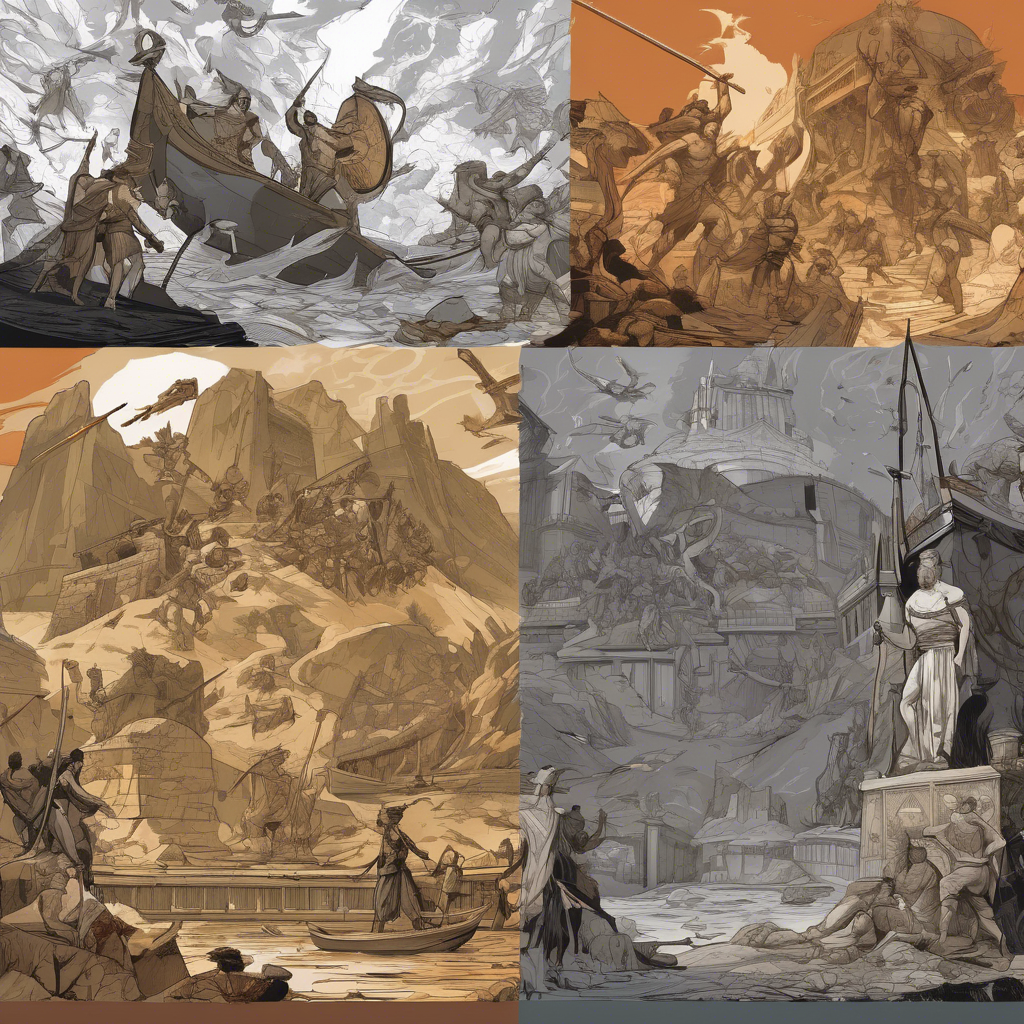
What Role Do Cultural And Historical Contexts Play In Shaping Character Development In Traditional Versus Modern Literature?
Introduction
Understanding cultural and historical contexts is essential for analyzing character development in literature, both classic and contemporary. These contexts significantly affect character portrayal, the values they represent, and the conflicts they encounter, reflecting the dynamics of the societies in which they exist.
Impact of Cultural Contexts
Cultural contexts consist of the values, beliefs, and social standards that define a specific group during a specific period. They play a crucial role in shaping character development by determining the traits that are esteemed and the ways individuals interact. In classic literature, characters often exemplify cultural ideals, acting as symbols of societal values. For instance, in ancient myths, heroes are commonly depicted with attributes such as bravery and honor, echoing the cultural standards of excellence. In contrast, contemporary literature often delves into a wider array of human experiences, frequently illustrating characters who challenge or reject cultural norms.
- Classic literature frequently idealizes cultural heroes, such as Odysseus in Greek mythology.
- Contemporary literature presents diverse characters from various backgrounds, mirroring the complexities of modern society.
Influence of Historical Contexts
Historical contexts pertain to the time in which a narrative occurs or is written, encompassing the political, social, and economic circumstances of that period. In classic literature, historical events frequently serve as a backdrop, shaping characters' journeys and interactions. For example, characters from stories set during wars may exhibit resilience or sacrifice. In modern literature, the historical context facilitates an exploration of themes like systemic injustice or personal trauma, enriching character depth and relatability. Present-day authors often leverage historical events to probe contemporary issues, linking past struggles to the present narrative.
- Characters in classic literature often confront challenges tied to key historical events, such as war or colonization.
- Modern literature often combines historical context with sociocultural critiques, leading to more intricate character portrayals.
Conclusion
In conclusion, cultural and historical contexts are pivotal in shaping character development in literature, emphasizing the values and struggles relevant to different time periods. Classic literature often reinforces societal ideals, whereas modern literature permits a more in-depth exploration of character issues and societal challenges. Gaining insight into these contexts enhances our understanding and appreciation of literature.
Expert Quote
Dr. Edward Said, Professor of English and Comparative Literature at Columbia University
Literature is not merely a reflection of cultural practices; it actively participates in shaping and defining those practices. Characters serve as conduits through which societal norms and historical conditions are articulated and critiqued.
Culture and Imperialism, Knopf, 1993
Relevant Links
Cultural Influences on Child Development | Maryville Online
https://online.maryville.edu/blog/cultural-influences-on-child-development/Gender Roles in Modern Society - One World Education
https://www.oneworldeducation.org/our-students-writing/gender-roles-in-modern-society/Parenting and child mental health: a cross-cultural perspective - PMC
https://pmc.ncbi.nlm.nih.gov/articles/PMC3799257/Gender Roles & Gender Norms: Definition & Examples | United Way ...
https://unitedwaynca.org/blog/gender-norms/Cultural Approaches to Parenting - PMC
https://pmc.ncbi.nlm.nih.gov/articles/PMC3433059/YouTube Videos
Most popular questions

How Do The Personal Relationships Among Gods Affect Their Decisions In The Iliad?
The intricate relationships among the gods in Homer's epic poem 'The Iliad' play a crucial role in shaping their actions and decisions. These divine interactions create a complex web of fates, where each god's personal alliances and rivalries directly influence the events of the mortal world.

What Strategies Can Parents Use To Educate Their Children About Online Safety Beyond Privacy Settings?
In today's digital landscape, teaching children about online safety is essential for their protection and well-being. While privacy settings play a critical role, parents can implement various strategies to create a thorough understanding of online safety principles among their children.
What Are The Different Types Of Insulation Materials Commonly Used In Buildings, And How Do They Compare In Terms Of Thermal Resistance?
Insulation materials are vital for enhancing energy efficiency in residential and commercial buildings by minimizing heat transfer. Understanding the various insulation types can lead to better choices for thermal resistance and overall comfort.
Most recent questions
What Role Do Social Media Platforms Play In Amplifying Fan Theories During A Media Release Campaign?
Social media platforms have become essential channels in shaping and amplifying fan theories during media release campaigns, especially within the entertainment industry. These platforms function as dynamic hubs for discussion, sharing, and speculation, significantly enhancing fan engagement with upcoming films, shows, and music releases.
How Do Fans Engage Differently In The Digital Space Of Esports Versus In-person Attendance At Live Music Events?
Engagement among fans in esports and live music events manifests itself in distinct ways, shaped by the unique environments and experiences each domain provides. Understanding these variations is essential for realizing how communities thrive in both digital and physical realms.
How Do Aging Processes Affect The Flavor Profiles Of Cheeses And Their Pairing With Wines?
The aging process of cheese, known as affinage, is vital in developing its unique flavor profile while greatly influencing its compatibility with wines. As cheese matures, the transformations in its texture and taste create a rich tasting experience that pairs exquisitely with various wines, enhancing culinary enjoyment.