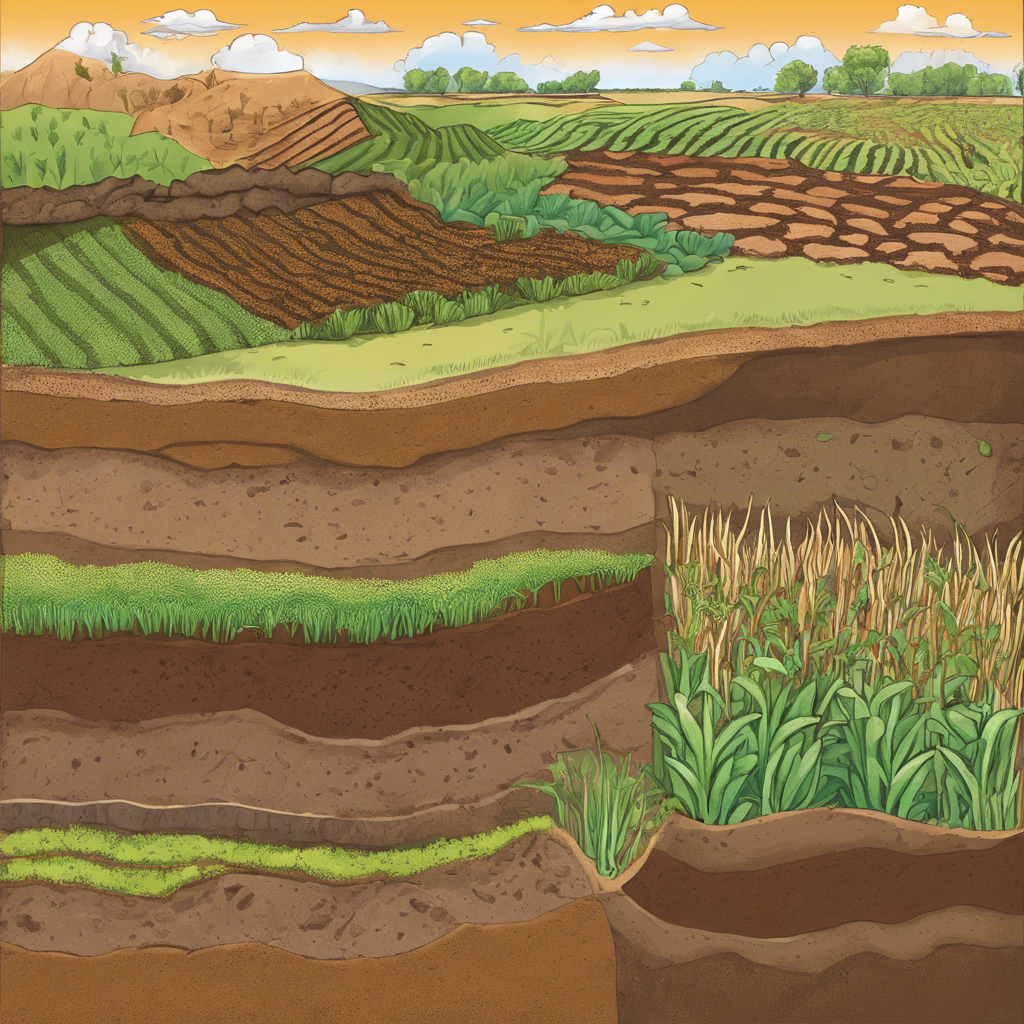
What Role Do Soil Characteristics Play In The Selection Of Crops And Farming Techniques In Various Countries?
Introduction
Soil characteristics such as texture, fertility, pH, and drainage are essential in determining suitable crops for cultivation and effective farming practices across varied regions. By understanding these soil properties, farmers can maximize agricultural yields and sustainability while promoting soil health and ecological balance.
The Significance of Soil Texture
Soil texture, defined by the particle size of the soil, significantly influences key agricultural properties such as water retention, nutrient availability, and root development. For example, sandy soils drain rapidly, which may limit nutrient retention, making them ideal for drought-resistant crops. In contrast, clay soils capture moisture but can become compacted, adversely affecting root penetration and aeration. Understanding soil texture helps farmers select appropriate crops and adapt their management strategies to create optimal growth conditions.
- Sandy soils are perfect for cultivating drought-resistant crops like carrots and potatoes due to their excellent drainage capabilities.
- Clay soils are optimal for moisture-loving crops such as rice and various vegetables that require consistent water.
Soil Fertility and Nutrient Accessibility
Soil fertility represents the soil's ability to provide essential nutrients to plants. Highly fertile soils contain abundant organic matter and minerals, while soils low in fertility may need fertilizers or organic amendments. Fertile regions, such as alluvial floodplains, support intensive agriculture and diverse crop rotations. Regular soil testing allows farmers to monitor nutrient levels and make necessary amendments to enhance crop yields and maintain soil health.
- Fertile soils support high-yield cash crops like corn and soybeans, leading to profitable harvests.
- Soils with lower fertility may require cover crops and organic amendments to boost nutrient availability and improve overall soil quality.
The Role of Soil pH in Crop Selection
Soil pH is a critical factor affecting nutrient availability and microbial activity, both vital for healthy crop growth. Most crops thrive in a pH range of 6.0 to 7.5. In regions with acidic soils (pH below 6), crops such as blueberries can thrive, while alkaline soils (pH above 7.5) favor plants like asparagus. Farmers can modify soil pH by applying lime to increase pH or sulfur to reduce it, enabling tailored farming practices that align with specific soil conditions.
- Blueberries thrive in acidic soils (pH 4.5 to 5.5), crucial for optimal nutrient uptake.
- Asparagus grows best in soils with a pH level around 7.0 to 8.0, facilitating its successful cultivation.
Soil Drainage and Effective Water Management
Soil drainage is vital for crop health and productivity. Well-drained soils prevent waterlogging, which can cause root rot, while poorly drained soils result in suffocated roots. In regions subject to heavy rainfall, farmers implement effective drainage systems or choose flood-resistant crops. Understanding the drainage characteristics of soil is critical for farmers to select suitable irrigation practices and planting schedules, thereby mitigating the risk of crop damage due to excess moisture.
- Flood-resistant crops like rice are cultivated in regions with high rainfall and challenging drainage conditions.
- Well-drained, loamy soils support a diverse range of vegetables and contribute positively to root health.
Conclusion
In conclusion, understanding soil characteristics is fundamental for effective crop selection and farming methods across diverse agricultural landscapes. By comprehensively evaluating these factors, farmers can tailor their practices to achieve sustainable crop yields, prioritize soil health, and maintain environmental stewardship.
Expert Quote
Dr. Rattan Lal, Professor of Soil Science at Ohio State University
Soil health is imperative for sustainable agriculture. By understanding soil characteristics, farmers can make educated decisions that not only increase crop productivity but also strengthen ecosystem functions and resilience to climate change.
Lecture at the International Conference on Sustainable Agriculture, 2022
Relevant Links
Farmers Employ Strategies To Reduce Risk of Drought ... - USDA ERS
https://www.ers.usda.gov/amber-waves/2017/june/farmers-employ-strategies-to-reduce-risk-of-drought-damages/Why is topography important in agriculture
https://geopard.tech/blog/topography-and-nutrition-content-in-soil-and-yield/Role of organic farming for achieving sustainability in agriculture ...
https://www.sciencedirect.com/science/article/pii/S2949911923000059Soil: The Foundation of Agriculture | Learn Science at Scitable
https://www.nature.com/scitable/knowledge/library/soil-the-foundation-of-agriculture-84224268/Biotechnology FAQs | Home
https://www.usda.gov/farming-and-ranching/plants-and-crops/biotechnology/biotechnology-faqsYouTube Videos
Most popular questions

How Do The Personal Relationships Among Gods Affect Their Decisions In The Iliad?
The intricate relationships among the gods in Homer's epic poem 'The Iliad' play a crucial role in shaping their actions and decisions. These divine interactions create a complex web of fates, where each god's personal alliances and rivalries directly influence the events of the mortal world.

What Strategies Can Parents Use To Educate Their Children About Online Safety Beyond Privacy Settings?
In today's digital landscape, teaching children about online safety is essential for their protection and well-being. While privacy settings play a critical role, parents can implement various strategies to create a thorough understanding of online safety principles among their children.
What Are The Different Types Of Insulation Materials Commonly Used In Buildings, And How Do They Compare In Terms Of Thermal Resistance?
Insulation materials are vital for enhancing energy efficiency in residential and commercial buildings by minimizing heat transfer. Understanding the various insulation types can lead to better choices for thermal resistance and overall comfort.
Most recent questions
How Does User-generated Content Influence Purchasing Decisions Among Millennials?
User-generated content, often abbreviated as UGC, is essential in influencing purchasing decisions, especially among Millennials who prioritize authenticity and relatability in their shopping experiences.
How Do The Pricing Strategies Of Streaming Platforms Influence Consumer Access To Diverse Content?
The pricing strategies of streaming platforms are crucial in determining consumer access to a wide range of content. These strategies impact subscription costs and significantly influence the diversity and richness of available programming. Understanding this relationship is vital for consumers who seek access to an extensive selection of viewing options.
In What Ways Does The Number Of Players In A Card Game Affect The Psychological Dynamics Among Players?
The psychological interactions between players in card games are deeply influenced by the number of participants. Recognizing these interactions is critical for both casual gamers and competitive players, as they directly impact strategy, emotional engagement, and overall enjoyment of the game.