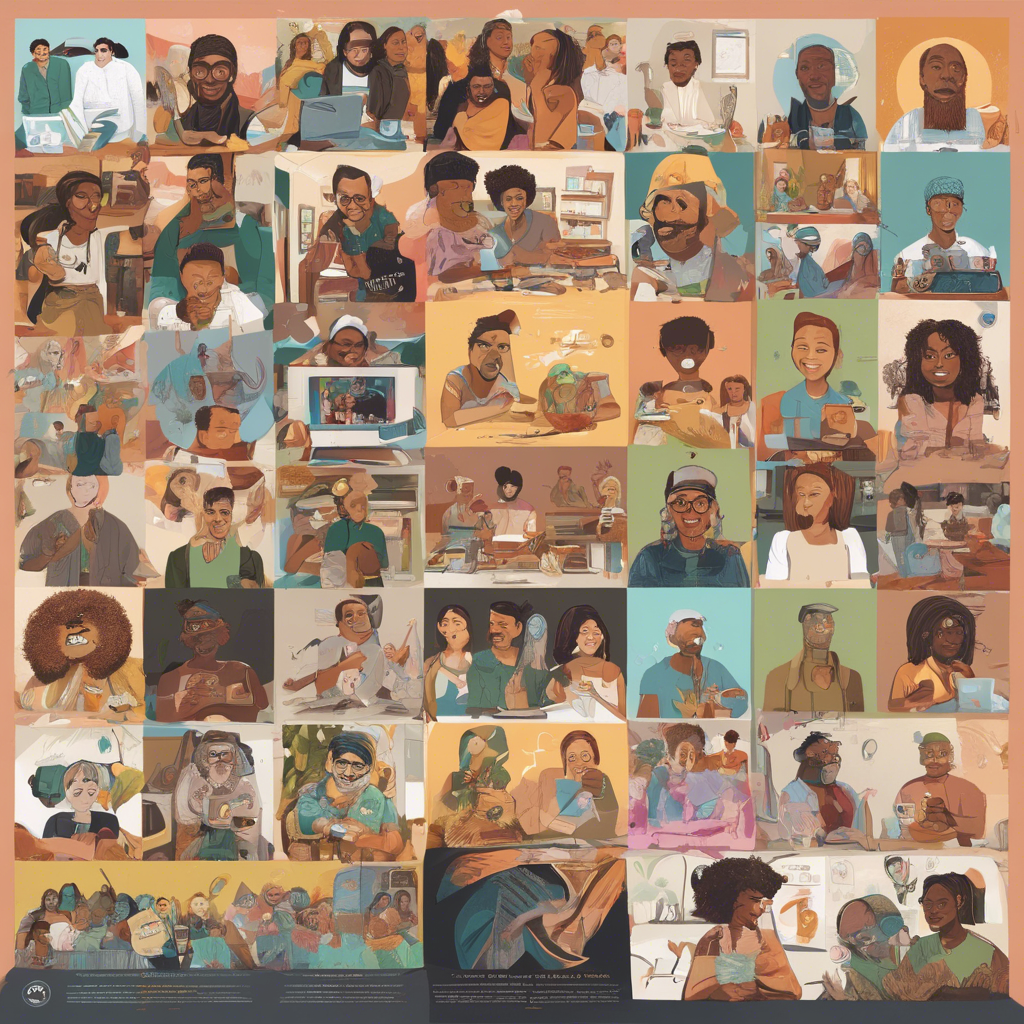
What Role Does Language Play In Shaping Interactions Within Online Communities Versus In-person Gatherings?
Introduction
Language is a critical tool for communication that shapes our interactions, whether they occur in digital environments or in-person encounters. Understanding the dynamics of language in these different contexts can reveal important insights into communication effectiveness and interpersonal relationships.
The Influence of Language in Online Communities
In the realm of online communities, language develops distinctive characteristics tailored for digital interactions. This encompasses a range of expressive forms, including text messaging, emojis, GIFs, and memes, creating a diverse landscape of communication. The absence of non-verbal signals may lead to miscommunications, making the careful selection of words even more important. For example, sarcasm may easily be misinterpreted in written form without accompanying vocal inflections or facial expressions. Furthermore, the digital environment promotes a sense of anonymity that affects language use, leading some individuals to communicate more openly while others may resort to hostile communication styles.
- Online communication frequently utilizes abbreviations, resulting in the adoption of acronyms and internet slang.
- The lack of physical presence alters the interpretation of non-verbal cues, such as body language, which are often absent.
- Anonymity in online settings can encourage candid expression but may also lead to negative behaviors like trolling.
The Role of Language in In-Person Gatherings
Conversely, in-person gatherings provide a richer environment for communication. Language here is complemented by non-verbal elements like gestures, eye contact, and intonation, which significantly enhance meaning and foster connection. For instance, a warm smile can transform a neutral statement into a friendly conversation. Additionally, the opportunity for real-time dialogue enables dynamic exchanges, promoting deeper understanding and stronger relationships as individuals adapt their verbal and non-verbal language based on immediate feedback.
- Face-to-face interactions allow for immediate feedback, clarifications, and adjustments in dialogue.
- Facial expressions and body language contribute substantial meaning to spoken words.
- In-person communication can strengthen emotional connections through shared experiences and physical presence.
Conclusion
In summary, language is fundamental in shaping interactions and must adapt to the distinct contexts of online and in-person communication. By recognizing these differences, individuals can significantly improve their communication skills, whether engaging through digital platforms or face-to-face.
Expert Quote
Dr. Sherry Turkle, Professor of Social Studies of Science and Technology at MIT
We think we communicate more with our devices, but we actually communicate less and often in more shallow ways that do not allow for the complexities of face-to-face conversations.
TED Talk discussion, 'Connected, but Alone?', 2012
Relevant Links
Metaverse beyond the hype: Multidisciplinary perspectives on ...
https://www.sciencedirect.com/science/article/pii/S0268401222000767Leading Teams in the Digital Age: Four Perspectives on Technology ...
https://pmc.ncbi.nlm.nih.gov/articles/PMC7453931/Social Media Impact: How Social Media Sites Affect Society ...
https://www.apu.apus.edu/area-of-study/business-and-management/resources/how-social-media-sites-affect-society/Social Media and Mental Health: Benefits, Risks, and Opportunities ...
https://pmc.ncbi.nlm.nih.gov/articles/PMC7785056/The power of language: How words shape people, culture | Stanford ...
https://news.stanford.edu/stories/2019/08/the-power-of-language-how-words-shape-people-cultureYouTube Videos
Most popular questions

How Do The Personal Relationships Among Gods Affect Their Decisions In The Iliad?
The intricate relationships among the gods in Homer's epic poem 'The Iliad' play a crucial role in shaping their actions and decisions. These divine interactions create a complex web of fates, where each god's personal alliances and rivalries directly influence the events of the mortal world.

What Strategies Can Parents Use To Educate Their Children About Online Safety Beyond Privacy Settings?
In today's digital landscape, teaching children about online safety is essential for their protection and well-being. While privacy settings play a critical role, parents can implement various strategies to create a thorough understanding of online safety principles among their children.
What Are The Different Types Of Insulation Materials Commonly Used In Buildings, And How Do They Compare In Terms Of Thermal Resistance?
Insulation materials are vital for enhancing energy efficiency in residential and commercial buildings by minimizing heat transfer. Understanding the various insulation types can lead to better choices for thermal resistance and overall comfort.
Most recent questions
How Have Changes In Officiating Standards Affected Player Aggression In Soccer?
The evolution of soccer officiating standards has profoundly influenced player behavior on the field, particularly regarding aggression. Referees and governing bodies actively revise rules and interpretations to enhance player safety and uphold the integrity of the game. This article delves into how these officiating changes have affected player aggression in soccer.
How Do The Nomination And Voting Processes For Artistic Awards Impact Representation In The Final Outcomes?
The nomination and voting processes for prestigious artistic awards are essential in determining which works and individuals gain recognition in the arts. These crucial steps significantly impact representation and diversity among award recipients, shaping societal perceptions of artistic merit and cultural narratives.
What Specific Social Media Platforms Are Most Popular Among Users Who Engage With Home-recorded Music?
In recent years, the music promotion landscape has experienced a remarkable transformation due to the rise of social media platforms. For musicians focused on home-recorded music, these platforms serve not only as spaces to showcase their artistry but also as dynamic communities where they can engage with listeners and connect with fellow artists.