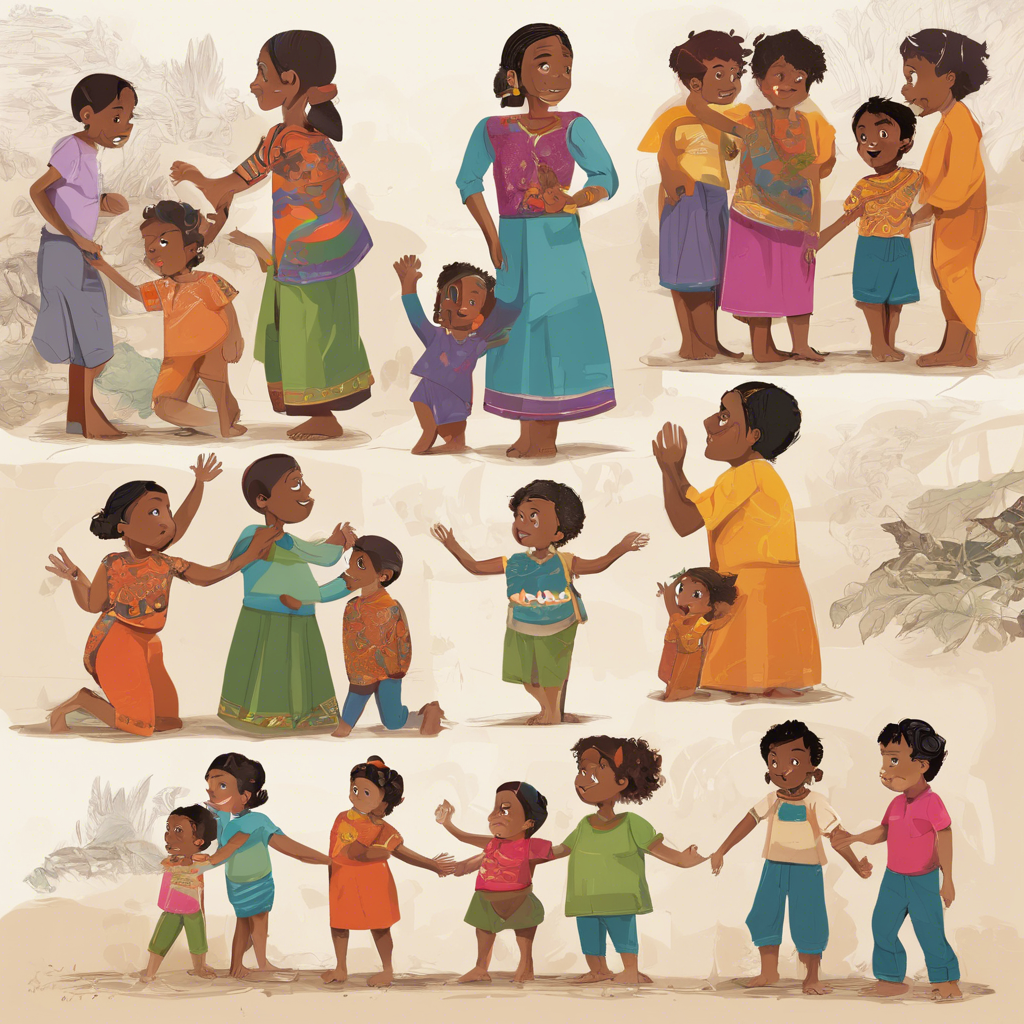
What Role Does Language Proficiency Play In Shaping A Child's Social Identity In Bicultural Families Compared To Monocultural Ones?
Introduction
The relationship between language proficiency and social identity in children is a complex topic, particularly within the context of bicultural versus monocultural families. This interplay influences how children communicate, view themselves, and how others perceive them in their social environments, highlighting the importance of language skills in identity development.
Understanding Language Proficiency in Children
Language proficiency refers to an individual's ability to communicate and understand a language effectively. For children, especially those in bicultural families, language proficiency significantly impacts social interactions and the formation of social identity. Kids navigating multiple languages experience unique social dynamics. Language serves as a crucial vehicle for cultural expression and community belonging, shaping how children relate to their diverse cultural identities.
- Language as a catalyst for social integration: Fluent children find it easier to form friendships and engage in activities with their peers.
- Bicultural children may feel pressure to choose between cultural identities, often struggling with the expectations that accompany their varying language skills.
Social Identity Formation in Bicultural and Monocultural Families
In monocultural families, language proficiency often aligns with the dominant culture, allowing children to develop a clear, cohesive social identity that is more homogeneous. Conversely, bicultural children tend to develop a more complex social identity that integrates elements from both cultures. While this richness can empower bicultural children, it can also lead to challenges that affect their self-esteem and social interactions based on their language abilities and cultural understanding.
- Monocultural children typically encounter fewer identity conflicts, engaging more with a singular cultural perspective.
- Bicultural children frequently navigate a multifaceted identity shaped by their proficiency in various languages, enhancing their adaptability in diverse environments.
Conclusion
In conclusion, language proficiency significantly influences children's social identity, with notable differences observed between bicultural and monocultural family contexts. Understanding these dynamics can equip caregivers with the tools to support their children's navigation through unique cultural landscapes, ultimately fostering a strong sense of self-identity.
Expert Quote
Dr. Katherine K. Perkins, Child Development Expert and Linguist
Language is not only a means of communication but also a key factor in the formation of social identity, particularly in bicultural settings where children must navigate multiple cultural landscapes.
Perkins, K. K. (2022). The Role of Language in Identity Development: A Child's Perspective. Journal of Developmental Psychology.
Relevant Links
Language, Culture, and Adaptation in Immigrant Children - PMC
https://www.ncbi.nlm.nih.gov/pmc/articles/PMC3526379/Role of Bilingualism and Biculturalism as Assets in ... - Frontiers
https://www.frontiersin.org/journals/psychology/articles/10.3389/fpsyg.2019.02122/fullFluid Identity Play: A Case Study of a Bilingual Child's Ethnic Identity ...
https://commons.und.edu/cgi/viewcontent.cgi?article=1007&context=tlpp-facInside the kaleidoscope: unravelling the “feeling different ... - Frontiers
https://www.frontiersin.org/journals/psychology/articles/10.3389/fpsyg.2024.1376076/fullTIP 59: Improving Cultural Competence
https://store.samhsa.gov/sites/default/files/sma14-4849.pdfYouTube Videos
Most popular questions

How Do The Personal Relationships Among Gods Affect Their Decisions In The Iliad?
The intricate relationships among the gods in Homer's epic poem 'The Iliad' play a crucial role in shaping their actions and decisions. These divine interactions create a complex web of fates, where each god's personal alliances and rivalries directly influence the events of the mortal world.

What Strategies Can Parents Use To Educate Their Children About Online Safety Beyond Privacy Settings?
In today's digital landscape, teaching children about online safety is essential for their protection and well-being. While privacy settings play a critical role, parents can implement various strategies to create a thorough understanding of online safety principles among their children.
What Are The Different Types Of Insulation Materials Commonly Used In Buildings, And How Do They Compare In Terms Of Thermal Resistance?
Insulation materials are vital for enhancing energy efficiency in residential and commercial buildings by minimizing heat transfer. Understanding the various insulation types can lead to better choices for thermal resistance and overall comfort.
Most recent questions
What Impact Have Rule Changes, Like The Shot Clock Reduction, Had On Game Pace And Player Performance In The NBA?
In the ever-evolving landscape of the NBA, recent rule changes have significantly accelerated the game and improved the spectator experience. A pivotal change was the reduction of the shot clock from 24 seconds to 14 seconds on offensive rebounds, introduced in the 2018-2019 season. This important rule has not only reshaped game dynamics but also transformed player performance and strategic approaches in basketball.
What Specific Types Of User-generated Content Are Most Influential In Maintaining Player Engagement Within Gaming Communities?
User-generated content (UGC) is vital for boosting player engagement in gaming communities. It includes various creative expressions from players that significantly enhance the gaming experience while cultivating a dynamic community atmosphere.
How Do Feedback Loops From Audience Interactions Influence The Direction Of Collaborative Storytelling?
In the world of collaborative storytelling, audience interactions are critical for shaping compelling narratives. Feedback loops generated from these interactions not only boost engagement but also empower creators to enhance their stories, fostering a dynamic connection between audiences and storytellers.