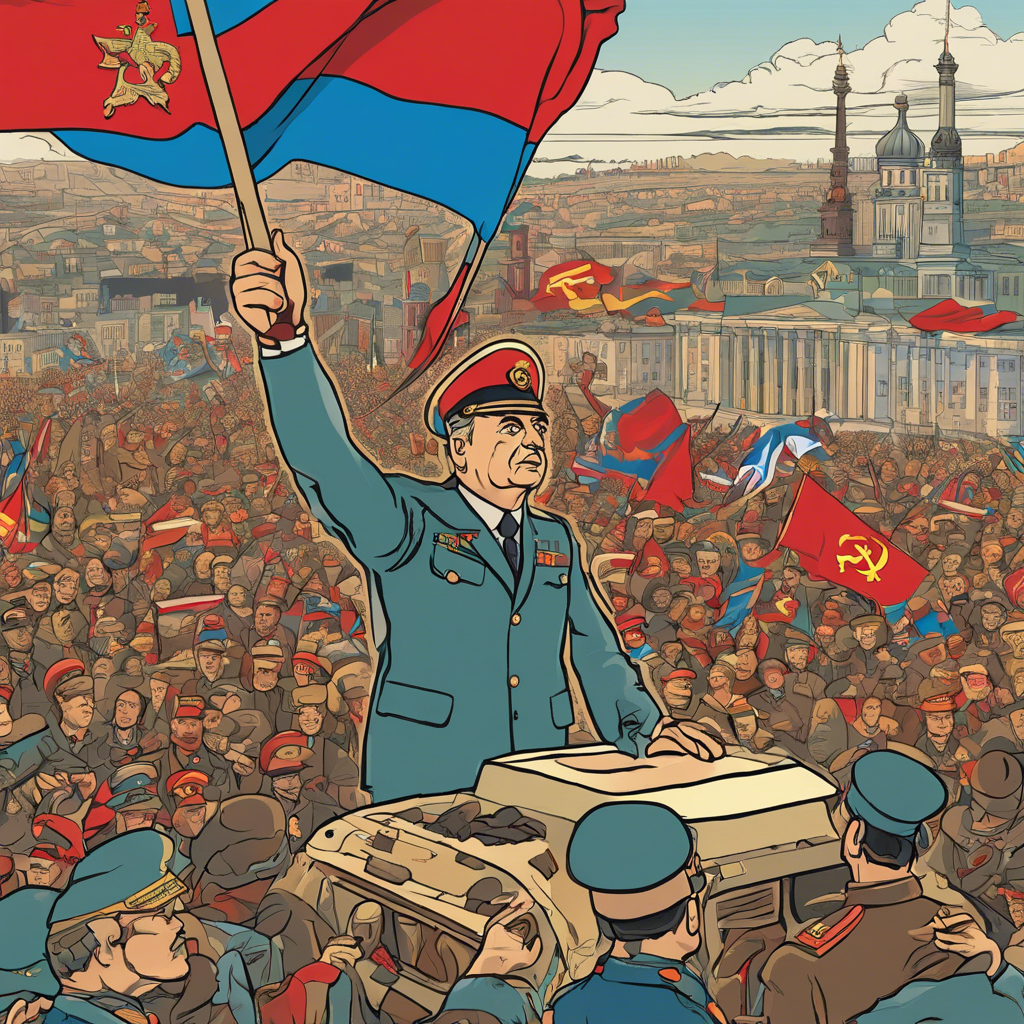
What Specific Policies Of The Soviet Union Had The Most Significant Impact On The Governance Of Eastern European Countries Before 1989?
Introduction
The governance of Eastern European countries prior to 1989 was significantly shaped by specific Soviet Union policies, which influenced political structures, societal norms, and economic systems. Understanding these policies is essential for analyzing the intricate relationship between the Soviet Union and its Eastern European allies during the Cold War era.
The Brezhnev Doctrine and Soviet Control
The Brezhnev Doctrine, introduced in 1968, proclaimed the Soviet Union's right to intervene in any socialist nation facing threats to its communist governance. This doctrine legitimized Soviet military interventions and reinforced the control of communist regimes in Eastern Europe.
- Reinforced Soviet dominance and influence over Eastern Europe.
- Stymied political reform and sustained authoritarian governance.
- Undermined national sovereignty and enforced uniform communist rule.
COMECON: Economic Policies Under Soviet Influence
The Council for Mutual Economic Assistance (COMECON), formed in 1949, facilitated economic collaboration among communist states. However, Soviet influence on economic policies often prioritized the USSR's interests over those of Eastern European nations, resulting in systemic inefficiencies and economic reliance.
- Economic decisions centralized in Moscow, frequently ignoring regional demands.
- Standardized economic models led to stagnation in diverse local economies.
- Restricted engagement with Western trade partners, significantly limiting economic advancement.
Censorship: Controlling Information in Eastern Europe
The Soviet Union imposed strict censorship and control over media, education, and cultural expression throughout Eastern Europe. This suppressive environment not only curbed dissent but also propagated a singular narrative aligned with Soviet ideologies, limiting critical thought.
- Establishment of state-run media to spread Soviet propaganda.
- Extensive censorship and persecution of dissenting voices.
- Promotion of socialist realism, constricting cultural expression and diversity.
Warsaw Pact: Military Dominance in Eastern Europe
Created in 1955, the Warsaw Pact served as a military alliance among Soviet-aligned nations, reinforcing the USSR's military presence in Eastern Europe. This dominance curtailed local autonomy and instilled fear of potential reprisals against dissent.
- Enabled swift Soviet military response to dissent, exemplified by the Prague Spring in 1968.
- Generated an atmosphere of intimidation among Eastern European leaders.
- Conducted military drills to assert Soviet strength and visibility.
Conclusion
The policies of the Soviet Union, encompassing the Brezhnev Doctrine, COMECON economic control, stringent information censorship, and military dominance through the Warsaw Pact, profoundly affected governance in Eastern European countries before 1989. These policies shaped the region's political and societal structures, leaving a lasting impact that influenced the transition to democracy after the Cold War.
Expert Quote
Dr. Mark Kramer, Professor of Russian and Eurasian Studies at Harvard University
The Soviet policies, particularly the Brezhnev Doctrine and the mechanisms of COMECON, were instrumental in establishing a rigid form of governance in Eastern Europe that stifled reform and reinforced dependency on the Soviet Union.
Article in the Journal of Cold War Studies, Volume 15, 2013
Relevant Links
Fall of Communism in Eastern Europe, 1989
https://history.state.gov/milestones/1989-1992/fall-of-communismDeclassified: A short history of NATO - NATO
https://www.nato.int/cps/en/natohq/declassified_139339.htmThe Breakup of Yugoslavia, 1990–1992
https://history.state.gov/milestones/1989-1992/breakup-yugoslaviaUnited States Relations with Russia: The Cold War
https://2001-2009.state.gov/r/pa/ho/pubs/fs/85895.htmConsequences of the Collapse of the Soviet Union | Norwich ...
https://online.norwich.edu/online/about/resource-library/consequences-collapse-soviet-unionYouTube Videos
Most popular questions

How Do The Personal Relationships Among Gods Affect Their Decisions In The Iliad?
The intricate relationships among the gods in Homer's epic poem 'The Iliad' play a crucial role in shaping their actions and decisions. These divine interactions create a complex web of fates, where each god's personal alliances and rivalries directly influence the events of the mortal world.

What Strategies Can Parents Use To Educate Their Children About Online Safety Beyond Privacy Settings?
In today's digital landscape, teaching children about online safety is essential for their protection and well-being. While privacy settings play a critical role, parents can implement various strategies to create a thorough understanding of online safety principles among their children.
What Are The Different Types Of Insulation Materials Commonly Used In Buildings, And How Do They Compare In Terms Of Thermal Resistance?
Insulation materials are vital for enhancing energy efficiency in residential and commercial buildings by minimizing heat transfer. Understanding the various insulation types can lead to better choices for thermal resistance and overall comfort.
Most recent questions
How Does The Integration Of Multimedia In Digital Narratives Enhance Audience Engagement Compared To Traditional Storytelling Methods?
The integration of multimedia in digital storytelling significantly transforms how narratives are conveyed and experienced. Unlike traditional storytelling, which typically relies on text or spoken word, multimedia storytelling fuses various formats such as images, audio, video, and interactive elements, resulting in a richer and more engaging experience for the audience.
What Role Do Other Elements Like Decor And Lighting Play In Creating The Overall Ambiance Of An Italian Restaurant Alongside Music?
Creating the ideal atmosphere in an Italian restaurant requires a harmonious blend of essential elements such as decor, lighting, and music. Each of these factors plays a significant role in shaping the overall dining experience, inviting guests to relax and savor their meals in a delightful Italian setting.
In What Ways Can The Evolution Of Digital Media Alter Traditional Storytelling Methods?
The evolution of digital media has significantly transformed traditional storytelling methods, seamlessly blending diverse formats and advanced technology to enrich narrative experiences. In this article, we will explore how the rise of digital platforms is reshaping the creation, sharing, and consumption of stories in today’s media landscape.