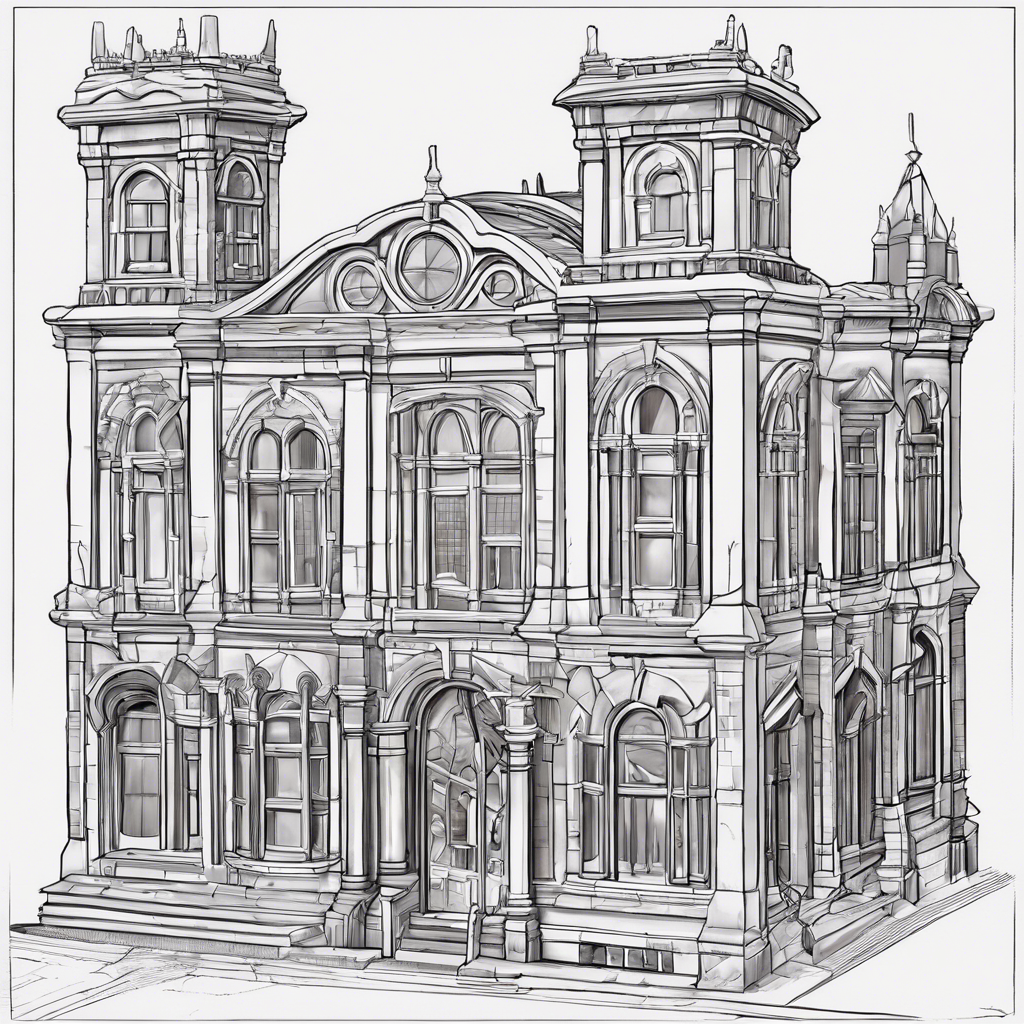
What Were The Key Architectural Styles Used In Public Buildings During The Industrial Revolution?
Introduction
The Industrial Revolution, which took place from the late 18th century to the mid-19th century, ushered in transformative changes in technology, economy, and society. This epoch profoundly influenced public building architecture, representing styles that symbolized progress, authority, and modernity. Understanding the architecture of this period is essential for grasping the legacy of industrialization.
Victorian Architecture
Victorian architecture rose to prominence during the Industrial Revolution, characterized by intricate detailing and a nostalgic homage to medieval styles. This architectural movement encompasses several sub-styles, including Gothic Revival, Italianate, and Romanesque. Public structures such as railway stations, museums, and town halls were designed with elaborate facades and detailed decorations that showcased the advancements of the era while invoking a sense of historical grandeur.
- Gothic Revival includes features like pointed arches, intricate stonework, and spires, as seen in the iconic Houses of Parliament in London.
- The Italianate style is marked by low-pitched roofs, wide eaves, and tall narrow windows, frequently found in public library designs.
- Romanesque architecture incorporates rounded arches, thick walls, and substantial towers, often utilized in churches and governmental buildings.
Neoclassical Architecture
Neoclassicism, inspired by ancient Greek and Roman designs, gained traction prior to the Industrial Revolution but experienced a resurgence during this period. This architectural style is notable for its emphasis on symmetry, monumental scale, and the incorporation of columns and porticos. Public buildings crafted in this style conveyed notions of stability and democracy. Prominent examples include city halls, courthouses, and museums, which became symbols of civic pride.
- Large columns and domes contribute to a grand and authoritative appearance of Neoclassical structures.
- These buildings often showcase pediments and friezes adorned with sculptures, enhancing their visual appeal.
- Neoclassical architecture reflects a cultural aspiration towards the ideals of democracy and civic pride.
Utilitarian Structures
In conjunction with ornate architectural styles, the Industrial Revolution also sparked the emergence of utilitarian architecture. Structures such as factories, warehouses, and transportation hubs prioritized functionality over aesthetic design. This practical approach gave rise to simpler, more efficient buildings, while materials like iron and glass facilitated the creation of innovative structures that embodied the spirit of industrial progress.
- Cast-iron frames allowed for the construction of taller buildings featuring expansive windows, illustrating advanced industrial techniques.
- The Crystal Palace, erected for the 1851 Great Exhibition, exemplified the capabilities of glass and iron within public architecture.
- Utilitarian design focused on optimizing space efficiency, catering to the demands of an increasingly urban population.
Conclusion
In conclusion, the primary architectural styles that emerged during the Industrial Revolution reflect the era's rapid technological advancements and societal transformations. From the ornate features of Victorian architecture to the grandeur of Neoclassicism and the practical nature of utilitarian structures, these styles provide valuable insight into a pivotal period in architectural history.
Expert Quote
Dr. Robert Adam, Architectural Historian and Author
The architectural styles that flourished during the Industrial Revolution, such as Victorian and Neoclassical, not only reflected technological advancements but also embodied the cultural aspirations of their time, seeking to bridge the past with the future.
The Architecture of the Industrial Revolution, Yale University Press, 2015
Relevant Links
[Ask] Why is modern architecture so "ugly" to the public eye? Why ...
https://www.reddit.com/r/architecture/comments/f0trt3/ask_why_is_modern_architecture_so_ugly_to_the/Architecture in Mississippi: From Prehistoric to 1900 - 2009-12
http://www.mshistorynow.mdah.ms.gov/issue/architecture-in-mississippi-from-prehistoric-to-1900Explore by Architectural Style | GSA
https://www.gsa.gov/real-estate/historic-preservation/explore-historic-buildings/explore-by-architectural-styleARCHITECTURAL PERIODS AND STYLES IN SAN Francisco
https://sfplanning.org/sites/default/files/documents/preserv/bulletins/HistPres_Bulletin_18.PDFBrutalist architecture - Wikipedia
https://en.wikipedia.org/wiki/Brutalist_architectureYouTube Videos
Most popular questions

How Do The Personal Relationships Among Gods Affect Their Decisions In The Iliad?
The intricate relationships among the gods in Homer's epic poem 'The Iliad' play a crucial role in shaping their actions and decisions. These divine interactions create a complex web of fates, where each god's personal alliances and rivalries directly influence the events of the mortal world.

What Strategies Can Parents Use To Educate Their Children About Online Safety Beyond Privacy Settings?
In today's digital landscape, teaching children about online safety is essential for their protection and well-being. While privacy settings play a critical role, parents can implement various strategies to create a thorough understanding of online safety principles among their children.
What Are The Different Types Of Insulation Materials Commonly Used In Buildings, And How Do They Compare In Terms Of Thermal Resistance?
Insulation materials are vital for enhancing energy efficiency in residential and commercial buildings by minimizing heat transfer. Understanding the various insulation types can lead to better choices for thermal resistance and overall comfort.
Most recent questions
How Do Immersive Technologies Alter The Ways In Which Consumers Engage With Brands In Comparison To Conventional Marketing Strategies?
Immersive technologies, including virtual reality (VR) and augmented reality (AR), are significantly transforming consumer engagement strategies across various industries. These advanced technologies facilitate interactive environments, allowing consumers to engage with brands and products in dynamic ways that traditional marketing methods cannot achieve.
How Do Different Board Sizes Affect Strategy In Other Grid-based Games Like Go?
In grid-based strategy games like Go, the dimensions of the board are crucial for shaping player strategies. Variations in board sizes significantly alter game dynamics, influencing tactics and overall strategies. This article explores how different board dimensions impact gameplay in Go and other similar strategy games.
How Do The Narrative Techniques Used In Mockumentaries Influence Viewer Engagement Compared To Those In Traditional Documentaries?
Mockumentaries uniquely combine the storytelling techniques of traditional documentaries with fictional narratives, effectively engaging audiences through humor, satire, and dynamic character-driven plots. This innovative genre offers a refreshing take on documentary filmmaking, attracting viewers seeking both entertainment and insight into real-world issues.