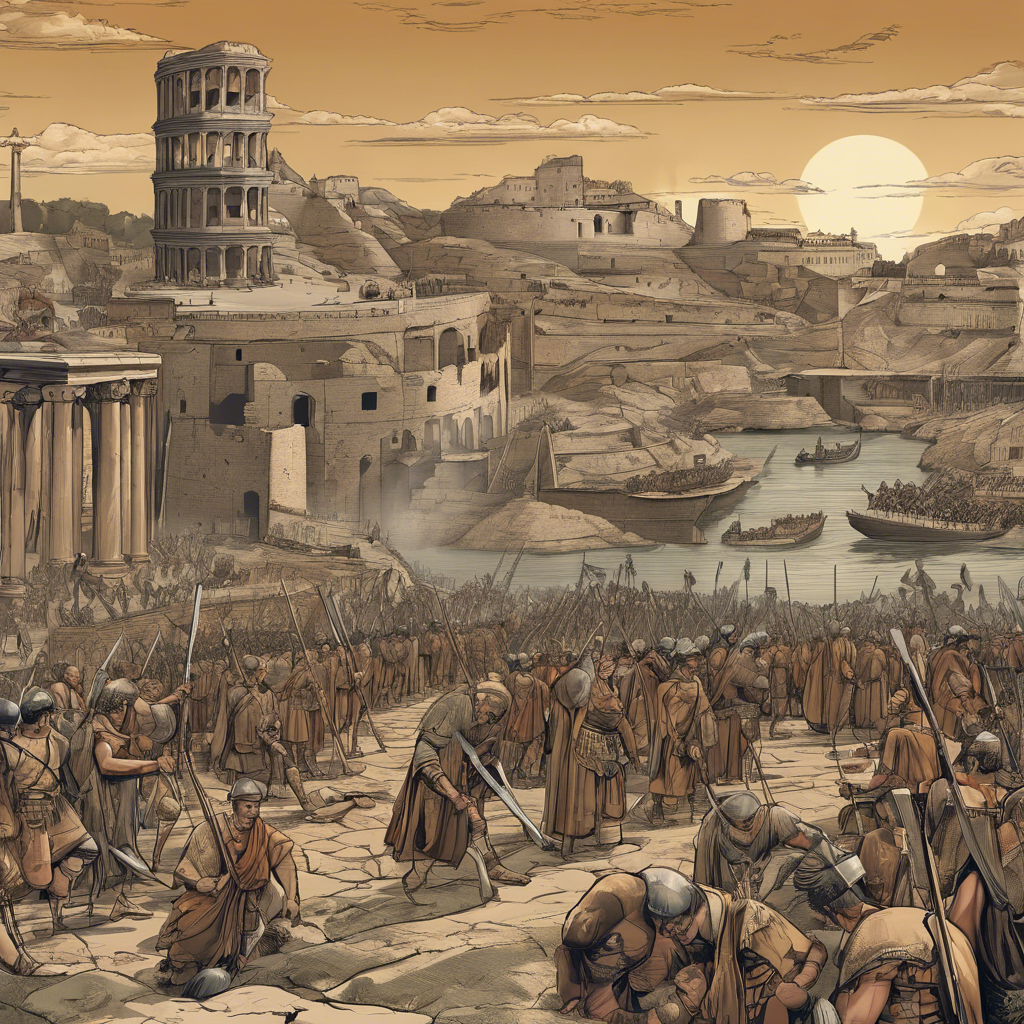
What Were The Key Economic Factors That Contributed To The Decline Of The Roman Empire?
Introduction
The decline of the Roman Empire was a multifaceted process influenced by numerous economic factors. Understanding these economic elements is essential in clarifying how financial instability significantly contributed to the downfall of one of history's most notable civilizations, the Roman Empire.
Economic Overextension and Military Fiscal Management
The vast territorial expansion of the Roman Empire necessitated considerable military resources for the defense of its extensive borders. A significant portion of the empire's budget was allocated to military spending. As Rome expanded its territories, the financial strain of maintaining a large standing army and securing its borders became increasingly unsustainable, leading to economic challenges.
- Increased taxation on Roman citizens to finance military campaigns.
- Heavy reliance on mercenaries, resulting in decreased loyalty and rising costs.
- Financial burdens from constructing fortifications and securing military supplies.
Hyperinflation and Currency Devaluation
In the later years of the Roman Empire, currency debasement became widespread as emperors responded to urgent financial needs by increasing the money supply. This practice resulted in hyperinflation, which significantly eroded the purchasing power of the denarius, Rome's primary currency. Such currency devaluation led to diminished trust and instability within the economy, aggravating its financial crisis.
- Decline in trade as merchants faced unpredictable price volatility.
- Erosion of confidence in currency, leading to an increase in barter trade.
- Growing economic inequality as wealthy citizens preserved their resources amid instability.
Trade Deficits and Resource Scarcity
As the Roman Empire engaged in extensive trade, significant imbalances arose between exports and imports. Rome predominantly imported luxury goods while exporting raw materials, leading to trade deficits. This discrepancy, worsened by resource depletion through overexploitation, led to scarcity within the empire, thus further straining the economy.
- Dependency on grain imports from provinces, risking potential food shortages.
- Disruptions in trade routes due to barbarian invasions jeopardizing supply chains.
- Limited access to essential goods, triggering social unrest.
Conclusion
In conclusion, a variety of economic factors, including military overextension, currency devaluation, and trade deficits, significantly contributed to the decline of the Roman Empire. A detailed exploration of these aspects provides valuable insights into the complex reasons behind the empire's fall and underscores the crucial role of economic stability in the longevity of any civilization.
Expert Quote
Dr. Peter Heather, Professor of Ancient History at King's College London
The economic factors that contributed to the decline of the Roman Empire are intrinsically linked to its overreliance on military expenditure and the mismanagement of currency, which ultimately undermined the very foundations of Roman society.
The Fall of the Roman Empire: A New History of Rome and the Barbarians, 2005
Relevant Links
8 Reasons Why Rome Fell | HISTORY
https://www.history.com/news/8-reasons-why-rome-fellWorld History Flashcards | Quizlet
https://quizlet.com/443368869/world-history-flash-cards/The Economics of Government and the Fall of Rome.
https://eric.ed.gov/?id=EJ1024291Fall of the Roman Empire | History & Causes - Lesson | Study.com
https://study.com/academy/lesson/the-fall-of-rome.htmlEconomic Reasons for the Fall of Rome
https://www.thoughtco.com/economic-reasons-for-fall-of-rome-118357YouTube Videos
Most popular questions

How Do The Personal Relationships Among Gods Affect Their Decisions In The Iliad?
The intricate relationships among the gods in Homer's epic poem 'The Iliad' play a crucial role in shaping their actions and decisions. These divine interactions create a complex web of fates, where each god's personal alliances and rivalries directly influence the events of the mortal world.

What Strategies Can Parents Use To Educate Their Children About Online Safety Beyond Privacy Settings?
In today's digital landscape, teaching children about online safety is essential for their protection and well-being. While privacy settings play a critical role, parents can implement various strategies to create a thorough understanding of online safety principles among their children.
What Are The Different Types Of Insulation Materials Commonly Used In Buildings, And How Do They Compare In Terms Of Thermal Resistance?
Insulation materials are vital for enhancing energy efficiency in residential and commercial buildings by minimizing heat transfer. Understanding the various insulation types can lead to better choices for thermal resistance and overall comfort.
Most recent questions
How Can Cultural Elements From Traditional Folk Music Be Incorporated Into Modern Marketing Techniques To Appeal To Younger Audiences?
In the rapidly evolving digital landscape, marketers are on a constant quest to find fresh and innovative strategies to engage younger audiences. A highly effective approach is to infuse elements of traditional folk music into contemporary marketing techniques. This creative blend not only draws from rich cultural heritage but also resonates on an emotional level with consumers, making it an ideal strategy for modern brands.
How Do Variations In Poker Game Types (i.e., Cash Games Vs. Tournaments) Impact Player Earnings In The Long Run?
In the competitive landscape of poker, enthusiasts frequently analyze the advantages and disadvantages of various game formats, primarily cash games versus tournaments. The structure, rules, and dynamics of each format heavily affect players' strategies, risk tolerance, and, ultimately, long-term profitability.
What Are Some Examples Of Artworks That Incorporate Audience Participation, And How Do They Differ From Traditional Art Forms?
Art has undergone a remarkable evolution over the years, with audience participation emerging as a dynamic and essential component of contemporary art. This transformation contrasts with traditional art forms, which typically present a fixed array of artistic expressions requiring little to no active engagement from viewers.