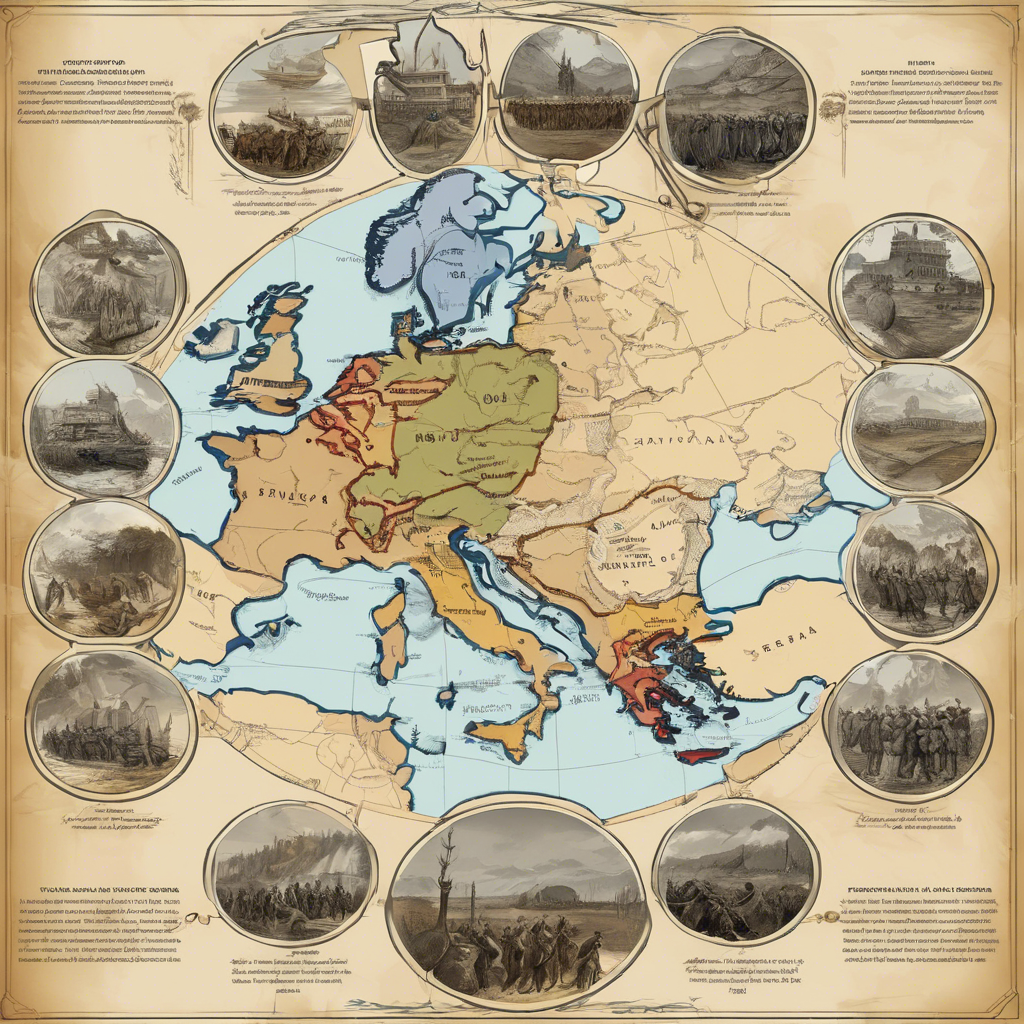
What Were The Key International Agreements Or Treaties That Influenced The Recognition Of Yugoslavia's Borders?
Introduction
The recognition of Yugoslavia's borders was significantly influenced by several key international agreements and treaties throughout its complex history. These treaties were essential in shaping not only the borders of Yugoslavia but also its international status and diplomatic relationships with neighboring countries in the Balkans.
Treaty of Versailles (1919)
Post-World War I, the Treaty of Versailles established a framework for many European borders, indirectly impacting the formation of Yugoslavia. While this treaty did not directly create Yugoslavia, it initiated territorial adjustments in the aftermath of the war, leading to the establishment of the Kingdom of Serbs, Croats, and Slovenes in 1918, which subsequently transformed into Yugoslavia. The agreement emphasized the redistribution of territories previously controlled by the Austro-Hungarian Empire, highlighting the ethnic diversities and tensions within the new nation.
- Indirectly contributed to the formation of Yugoslavia through territorial redistribution.
- Highlighted the ethnic complexities and challenges in the interwar period.
The Balkan Wars (1912-1913)
The Balkan Wars were pivotal in shaping the geopolitical landscape of the Balkans, directly influencing national borders and ethnic divisions. These conflicts resulted in significant territorial adjustments, allowing Serbia to expand its influence over neighboring regions, which was crucial for the formation of Yugoslavia. It is vital to recognize that although Serbia gained territories during the Balkan Wars, the official creation of Yugoslavia occurred following World War I and the Treaty of Versailles, unifying the South Slavic peoples.
- Led to territorial gains for Serbia and strengthened its regional influence.
- Set the stage for ethnic tensions that would permeate Yugoslavia's history.
Yalta Conference (1945)
In the context of World War II, the Yalta Conference brought together Allied leaders to deliberate on post-war reorganization. The outcomes from this conference had profound implications for Eastern Europe, particularly for Yugoslavia. The Allied powers acknowledged Josip Broz Tito’s leadership and his resistance movement, bolstering the acceptance of Yugoslavia's borders post-war. The endorsement of Tito and the establishment of a communist government solidified its geopolitical status during the Cold War era.
- Affirmed Tito's leadership and the territorial integrity of Yugoslavia after World War II.
- Shaped regional power dynamics in the early Cold War period.
The Dayton Agreement (1995)
The Dayton Agreement, which concluded the Bosnian War, was crucial in recognizing the political landscape of the former Yugoslav republics. This peace agreement delineated the map of Bosnia and Herzegovina, stressing the necessity of multi-ethnic governance to secure peace among the diverse ethnic groups that emerged from the conflict. While it highlighted the significance of ethnicity, it also reinforced the newly established boundaries of the successor states formed after Yugoslavia's disintegration.
- Established the framework for Bosnia and Herzegovina’s borders within the context of the former Yugoslavia.
- Promoted acknowledgment of ethnic groups' territories while striving for stability.
Conclusion
The recognition of Yugoslavia's borders was significantly impacted by treaties and agreements that illustrated the complex interplay of national and ethnic identities in the Balkans. Each treaty served a crucial role in defining territorial integrity, often amidst conflicts and geopolitical negotiations that have left an enduring influence on the region's historical landscape, shaping the fates of its diverse populations.
Expert Quote
Dr. John R. Lampe, Historian and Author of 'Yugoslavia as History'
The borders of Yugoslavia were not only a product of local dynamics but were heavily influenced by the outcomes of international agreements that often reflected the Great Power politics of the time.
Book: 'Yugoslavia as History', Cambridge University Press, 2000
Relevant Links
Declassified: A short history of NATO - NATO
https://www.nato.int/cps/en/natohq/declassified_139339.htmUphold International Law | United Nations
https://www.un.org/en/our-work/uphold-international-lawMultilateral Treaties Deposited with the Secretary-General
https://treaties.un.org/pages/historicalinfo.aspxthe heritage of states: the principle of uti possidetis juris today
https://academic.oup.com/bybil/article-pdf/67/1/75/6706882/67-1-75.pdf1. Convention on the Recognition and Enforcement of Foreign ...
https://treaties.un.org/pages/viewdetails.aspx?src=treaty&mtdsg_no=xxii-1&chapter=22&clang=_enYouTube Videos
Most popular questions

How Do The Personal Relationships Among Gods Affect Their Decisions In The Iliad?
The intricate relationships among the gods in Homer's epic poem 'The Iliad' play a crucial role in shaping their actions and decisions. These divine interactions create a complex web of fates, where each god's personal alliances and rivalries directly influence the events of the mortal world.

What Strategies Can Parents Use To Educate Their Children About Online Safety Beyond Privacy Settings?
In today's digital landscape, teaching children about online safety is essential for their protection and well-being. While privacy settings play a critical role, parents can implement various strategies to create a thorough understanding of online safety principles among their children.
What Are The Different Types Of Insulation Materials Commonly Used In Buildings, And How Do They Compare In Terms Of Thermal Resistance?
Insulation materials are vital for enhancing energy efficiency in residential and commercial buildings by minimizing heat transfer. Understanding the various insulation types can lead to better choices for thermal resistance and overall comfort.
Most recent questions
What Impact Do Magical Creatures In Literature Have On Human Emotions And Societal Conflicts In Storytelling?
The role of magical creatures in literature is significant as they reflect human emotions and societal conflicts. These enchanting beings not only captivate readers but also serve as a vehicle for exploring complex human experiences, making them essential to storytelling.
What Were The Social Impacts Of Increased Restrictions On Nightlife In New York City During The 1990s?
In the 1990s, New York City underwent significant transformations in its nightlife scene due to stringent regulations designed to enhance public safety and reduce urban crime. These changes not only impacted the local economy but also had deep-seated social implications that reshaped community interactions and fostered new cultural expressions.
In What Ways Do Music Streaming Services Influence The Music Industry Economics Compared To Traditional Album Sales?
The emergence of music streaming services has radically transformed the economics of the music industry, shifting away from traditional album sales. This significant change impacts artists, record labels, and music consumers, redefining how music is created, distributed, and monetized in the digital era.