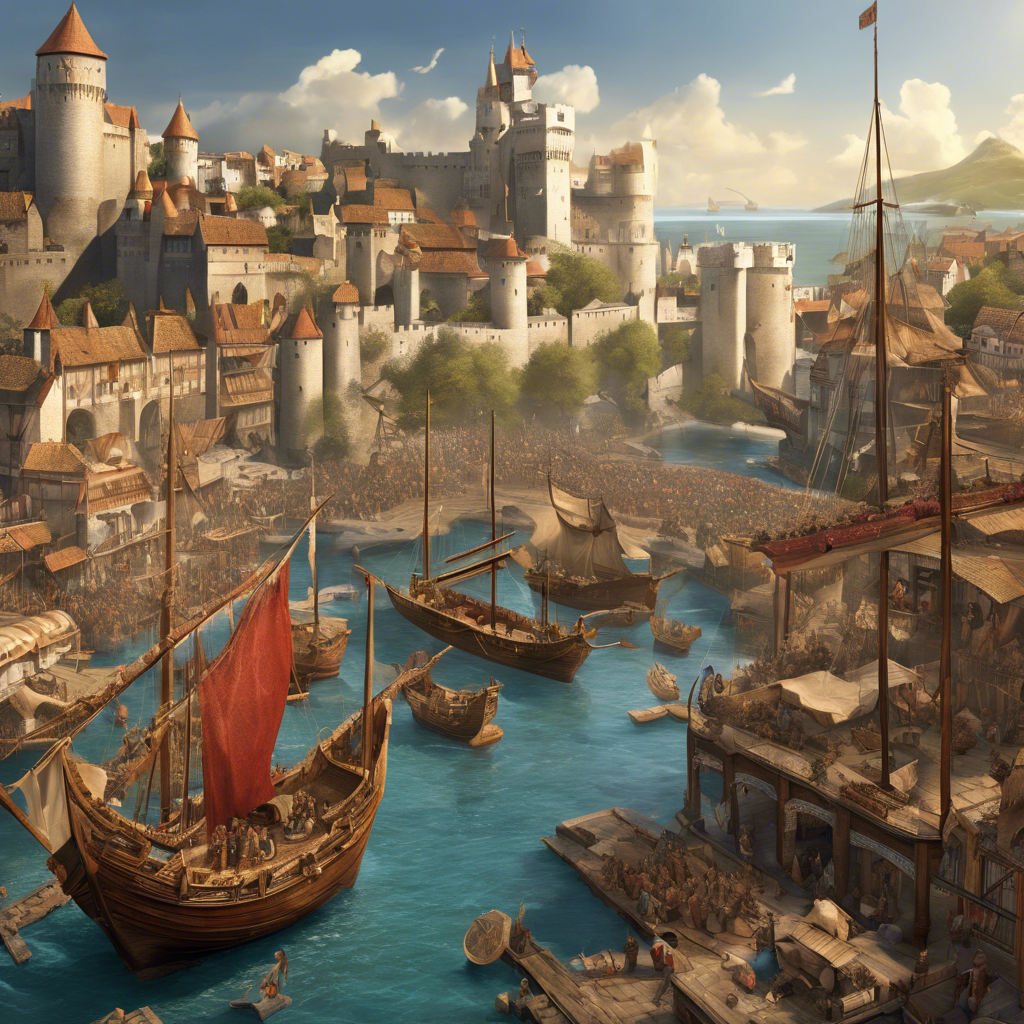
What Were The Main Factors That Contributed To The Establishment Of New Trade Routes During The Medieval Period?
Introduction
During the medieval period, various pivotal factors contributed to the creation and expansion of new trade routes, facilitating cultural exchange, economic growth, and the distribution of goods across continents. Understanding these influential elements provides valuable insights into the complexities of medieval commerce and trade networks, essential for studying historical trade dynamics.
Economic Drivers of Medieval Trade
The significant demand for diverse goods such as spices, silk, and precious metals greatly fueled the development of new trade routes. As populations expanded, so did the thirst for varied products, prompting merchants to find quicker and safer pathways to meet these consumer demands.
- Rising demand for luxury goods from Asia, particularly silk and spices shaped trade patterns.
- The growth of towns and urban centers created new marketplaces for diverse trade.
- The establishment of the Hanseatic League fostered robust trade networks among Northern European cities.
Political and Social Influences on Trade Routes
Medieval kings and rulers pursued wealth and resources, often catalyzing the formation of new trade routes. Strategic alliances between different kingdoms also played a critical role in ensuring safe passage for merchants and traders.
- Centralized monarchies invested heavily in infrastructure, enhancing roads and ports to support trade.
- The Crusades broadened exposure to Eastern goods, increasing the desire for trade partnerships.
- Royal trading companies established by monarchies bolstered official trade initiatives.
Technological Innovations in Navigation and Trade
Technological advancements in navigation and shipbuilding during the medieval period enabled longer voyages and heightened trading efficiency. Tools like the astrolabe and improved cartography contributed to safer sea travel and exploration opportunities.
- The development of the magnetic compass revolutionized navigation at sea, ensuring safer maritime journeys.
- The construction of more durable ships, including the caravel and cog, vastly improved capabilities for long-distance maritime trade.
Cultural Exchanges along Trade Routes
The establishment of extensive trade routes also served as a vital conduit for cultural exchange. As merchants journeyed, they traded not only goods but also ideas, technologies, and cultural practices, fostering a more interconnected world.
- The exchange of knowledge and education across regions enriched fields such as science and art.
- Introduction of new food products to differing cultures via trade routes, inclusive of rice, citrus fruits, and various spices.
Conclusion
The emergence of new trade routes during the medieval period was influenced by economic demands, political goals, technological innovations, and cultural exchanges. These interconnected factors not only revolutionized commerce but also significantly shaped the societies involved, laying the groundwork for future global trade networks.
Expert Quote
Dr. Peter Frankopan, Professor of Global History at Oxford University
The medieval period witnessed the birth of a global economy, driven by the movement of goods, ideas, and cultures along trade routes that reshaped societies and economies across the world.
Book: 'The Silk Roads: A New History of the World', 2015
Relevant Links
About the Silk Roads | Silk Roads Programme
https://en.unesco.org/silkroad/about-silk-roadsThe Spread of Islam in West Africa: Containment, Mixing, and ...
http://spice.fsi.stanford.edu/docs/the_spread_of_islam_in_west_africa_containment_mixing_and_reform_from_the_eighth_to_the_twentieth_centuryFlorida's State Academic Standards – Social Studies, 2023
https://www.fldoe.org/core/fileparse.php/20653/urlt/6-4.pdfA brief history of globalization | World Economic Forum
https://www.weforum.org/agenda/2019/01/how-globalization-4-0-fits-into-the-history-of-globalization/Trade and Geography in the Spread of Islam - PMC
https://www.ncbi.nlm.nih.gov/pmc/articles/PMC8046173/YouTube Videos
Most popular questions

How Do The Personal Relationships Among Gods Affect Their Decisions In The Iliad?
The intricate relationships among the gods in Homer's epic poem 'The Iliad' play a crucial role in shaping their actions and decisions. These divine interactions create a complex web of fates, where each god's personal alliances and rivalries directly influence the events of the mortal world.

What Strategies Can Parents Use To Educate Their Children About Online Safety Beyond Privacy Settings?
In today's digital landscape, teaching children about online safety is essential for their protection and well-being. While privacy settings play a critical role, parents can implement various strategies to create a thorough understanding of online safety principles among their children.
What Are The Different Types Of Insulation Materials Commonly Used In Buildings, And How Do They Compare In Terms Of Thermal Resistance?
Insulation materials are vital for enhancing energy efficiency in residential and commercial buildings by minimizing heat transfer. Understanding the various insulation types can lead to better choices for thermal resistance and overall comfort.
Most recent questions
What Are The Common Challenges Faced When Merging Genres In Filmmaking?
Merging film genres is a powerful technique that can lead to groundbreaking storytelling. However, filmmakers face significant challenges in blending different styles and themes effectively to ensure a seamless and compelling narrative experience for viewers.
How Do Audience Demographics Influence The Selection Of Materials Used In Theater Construction?
Understanding audience demographics is essential in the theater industry because it significantly influences the design, materials, and overall construction of performance spaces. Key demographics such as age, cultural background, socioeconomic status, and personal preferences shape the theater experience for diverse audiences.
What Strategies Can Be Implemented To Reduce Carbon Emissions In Live Concert Performances?
Live concert performances are vital to cultural expression and artistic enjoyment. However, these events often lead to high levels of carbon emissions. To promote sustainability and eco-friendliness within the music industry, it is essential to adopt strategies aimed at reducing these emissions effectively.